Students are introduced to short-vowel word families and learn to sort words alone and with a partner using the Word Family Sort activity.

Word Sorts for Beginning and Struggling Readers

What Did They Say? Dialect in The Color Purple
Y'all set down a spell and learn ‘bout dialects!" In other words, your students will use The Color Purple to explore dialect and how it reveals information about the characters.
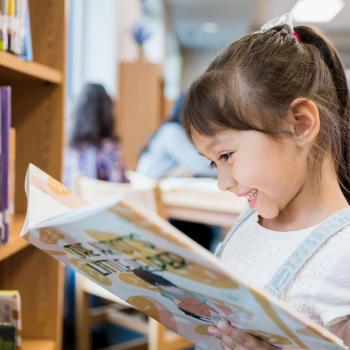
Diagram It! Identifying, Comparing, and Writing About Nonfiction Texts
Students compare the traits fact and fiction by using a Venn diagram to compare fiction and nonfiction books about Native Americans.

Using Historical Fiction to Learn About the Civil War
Students in grades 4 and 5 discuss inferential comprehension and visualization as they use a think-aloud questioning strategy to develop a deeper understanding of a historical novel.
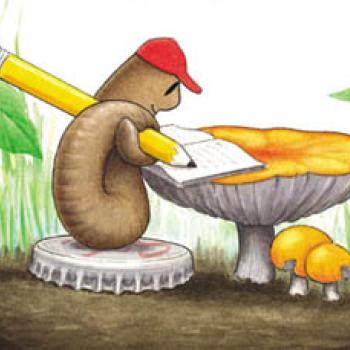
Fact or Fiction: Learning About Worms Using Diary of a Worm
Students often believe that fiction writers make everything up, seldom realizing how research worms its way into entertaining writing. In this lesson, students read Diary of a Worm to find out how fact merges with fiction.

Writing Free Verse in the "Voice" of Cesar Chavez
Poetry and politics combine in this lesson where students write a free verse poem in the voice of Cesar Chavez.

Telling a Story About Me: Young Children Write Autobiographies
Students tell their life stories in this lesson about autobiographies based on family photographs.
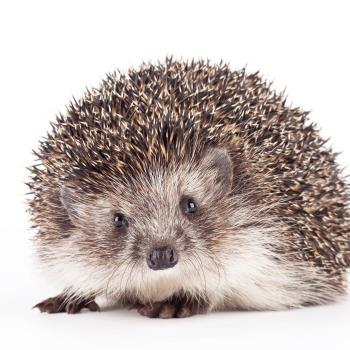
Readers Theatre With Jan Brett
Students in grades 1-2 use Jan Brett's Hedgie's Surprise for a Readers Theatre experience.

Astronomy Poetry: Combining Poetry With the Content Areas
Students' responses to this lesson will be out of this world after they've researched astronomy to write poetry and compile a poetry book.

A Biography Study: Using Role-Play to Explore Authors' Lives
Students read biographies and explore websites of selected American authors and then role-play as the authors.

A High-Interest Novel Helps Struggling Readers Confront Bullying in Schools
Students read a work of realistic fiction about bullying and gain understanding through writing, Readers Theatre, and discussion.
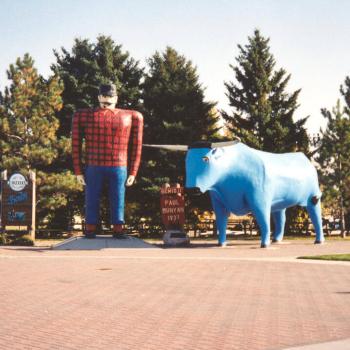
Thundering Tall Tales: Using Read-Aloud as a Springboard to Writing
Imagination and application are key to this tall tale lesson in which students take what they know about tall tales to spin a yarn of their own.

Predicting and Gathering Information With Nonfiction Texts
Students take a walk on the wild side when they develop an understanding of nonfiction texts with hands-on experiences and intense analysis.

Sequencing: A Strategy to Succeed at Reading Comprehension
Did Paul Bunyan gouge out the Grand Canyon before or after he dug the Great Lakes? Students create a life-sized timeline showing the sequence of events in this tall tale.

Learning Vocabulary Down By the Bay
Students sing a popular children's song, follow along with a picture book that contains the lyrics and illustrations, and then participate in activities to reinforce learning of the vocabulary words.

Developing a Living Definition of Reading in the Elementary Classroom
Using the guiding question, "What is reading?" students interact with a variety of texts as they uncover the skills necessary to interact with texts and develop a definition of reading.
Beyond History Books: Researching With Twin Texts and Technology
Students in grades 4–8 activate prior knowledge and research information about a historic event through fiction and nonfiction literature and exploration of relevant websites.
Using Story Innovation to Teach Fluency, Vocabulary, and Structure
An instructional strategy called story innovation teaches students fluency, comprehension, vocabulary, and story structure. This unique strategy can be adapted for many purposes.

Seeking Social Justice Through Satire: Jonathan Swift's "A Modest Proposal"
This lesson assists advanced students in grades 10–12 in comprehending Jonathan Swift's "A Modest Proposal" and developing a presentation to satirize a contemporary social issue.

What's Under the Slide? Making Inferences Using Microscopes
Students hone their critical thinking skills by learning how to make inferences from textual clues.