What's in a narrative? Students find out in this lesson in which they explore four narrative elements—setting, characters, problem/solution, and plot, through purpose-driven read-alouds and independent reading.

Story Elements Alive!
The Magnetism of Language: Parts of Speech, Poetry, and Word Play
What wonderful ways words work! The parts of speech are the highlight of this lesson in which students identify parts of speech in a nonsensical poem and then create their own wild and wacky rhymes.
Developing Searching, Skimming, and Scanning Skills With Internet Bingo
Student pairs aim to be the first team to call out "bingo" in this lesson in which they use skimming and scanning to locate information about ancient Greece and Rome.
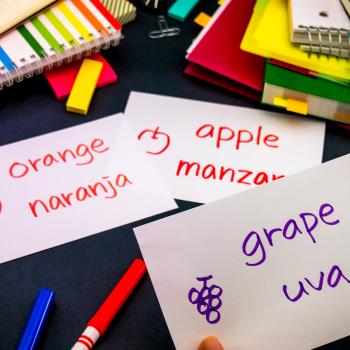
Let's Read It Again: Comprehension Strategies for English-Language Learners
Help Spanish-speaking English-language learners unlock the mysteries of their new language by using a bilingual book to recognize unfamiliar words and construct meaning from the text.

Guided Comprehension in Action: Teaching Summarizing With the Bio-Cube
Students learn the ins and outs of writing biographies by researching a contemporary or historical figure and writing a summary.

Casting Shadows Across Literacy and Science
Shadows, shadows, everywhere! In this lesson, students read fiction, informational text, and poetry about shadows to extend their knowledge of the concept before casting their own shadow poetry.
Zines for Kids: Multigenre Texts About Media Icons
Special edition! Students use ReadWriteThink tools to create magazines about prominent figures using a variety of writing genres and styles.
Writing a Movie: Summarizing and Rereading a Film Script
Lights! Camera! Action! In this lesson, students view a scene with no dialogue from E.T., write a script for that scene, and perform a dramatic reading while the scene plays.

Learning Centers: From Shared to Independent Practice
Seven blind mice—see how they spend each day of the week in this lesson that uses the book Seven Blind Mice to guide students through shared reading, writing, and listening activities.

Readers Theatre
Students develop scripts, perform, and use their voices to depict characters from texts, giving them the opportunity to develop fluency and further enhance comprehension of what they are reading.
Poetry Portfolios: Using Poetry to Teach Reading
Teach your students about sentence structure, rhyming words, sight words, vocabulary, and print concepts using a weekly poem.

Lights, Camera, Action: Interviewing a Book Character
Students get the inside scoop on a story when they create interview questions and answers for characters in the books they read.
A is for Apple: Building Letter-Recognition Fluency
Students apply and build their knowledge of letters and letter sounds as they play games and interact with letters online, creating their own ABC book as a final activity.
Using a Predictable Text to Teach High-Frequency Words
After reading an engaging yet predictable text about a child looking for his cat, students use a similar format and high-frequency words to craft tales about their own lost pets.

Alaska Native Stories: Using Narrative to Introduce Expository Text
Tradition and technology come together in this lesson in which students learn about Alaskan animals through Native American tales and their own online research.
Building Phonemic Awareness With Phoneme Isolation
Students improve phonemic awareness through games and chants that help them isolate beginning and ending sounds and connect them with their written symbols (graphemes).
Multimedia Responses to Content Area Topics Using Fact-"Faction"-Fiction
Students climb into the mind of a spider in this lesson that asks them to compose a spider diary using spider facts, fiction, and "faction"fiction that sounds like fact.

Gingerbread Phonics
"Run, run, as fast as you can." Students use this refrain from The Gingerbread Man to learn letter-sound correspondence. Students use their new skills to write an online story.

From Fact to Fiction: Drawing and Writing Stories
Students gather factual information about frogs and toads to create nonfiction and fiction stories. Drawing is used for prewriting.

Exploring World Cultures Through Folk Tales
Journey around the world with students as they read a Japanese, African, or Welsh folk tale, create a visual depiction of the tale, research the tale's culture, and present findings.