This lesson plan asks students to pay attention to the technologies they use. They graphically map their interactions with technology and compose narratives of their most significant interactions with technology.

Paying Attention to Technology: Writing Technology Autobiographies

Paying Attention to Technology: Exploring a Fictional Technology
Students complete a short survey to establish their beliefs about technology. They compare their opinions to the ideas in a novel that depicts technology (such as 1984 or Fahrenheit 451).
Investigating Junk Mail: Negotiating Critical Literacy at the Mailbox
Students increase their media literacy skills by critically examining and revising junk mail.

Authentic Persuasive Writing to Promote Summer Reading
Turn summer reading lists from a teacher-centered requirement to a student-driven exploration by asking students to create brochures and flyers that suggest books to explore during the summer months.

Imagine That! Playing with Genre through Newspapers and Short Stories
Students identify genre characteristics for short stories and newspaper articles then practice both genres by turning a short story into a news article and an article into a short story.
Picture Books as Framing Texts: Research Paper Strategies for Struggling Writers
Students use picture books as framing texts for research, freeing them from the language of encyclopedia sources and allowing them to focus their attention on the content of their papers.

An Exploration of Text Sets: Supporting All Readers
Students create text sets on a high interest topic and use the texts to practice three strategies for reading for information.

Write Right Back: Recognizing Readers' Needs and Expectations for E-mail Replies
Students who know how to compose and send simple e-mail messages learn to use the reply function with audience needs and expectations in mind.

What's the Difference? Beginning Writers Compare E-mail with Letter Writing
Students compare e-mails to traditional letters, identifying style and intended audience for each. They then write both an e-mail and a letter about the same topic.

Authentic Writing Experiences and Math Problem-Solving Using Shopping Lists
Students use their emerging writing skills to write shopping lists. They work within a budget, use problem-solving skills to create lists, and buy their favorite treats at the class store.

Book Report Alternative: Writing Resumes for Characters in Historical Fiction
Students write resumes for historical fiction characters. They first explore help wanted ads to see what employers want, and then draft resumes for the characters they've chosen.

Reading and Analyzing Multigenre Texts
Students develop a definition of multigenre texts by exploring multigenre picture books. They brainstorm what it takes to read these texts successfully and discuss strategies needed to comprehend the texts.
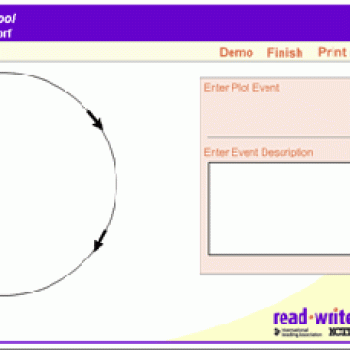
Unwinding A Circular Plot: Prediction Strategies in Reading and Writing
Students use graphic organizers to explore plot in circular stories while focusing on prediction and sequencing. After exploring the features of circular plot stories, students write their own stories.
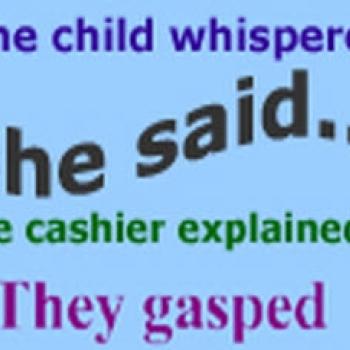
Choosing Clear and Varied Dialogue Tags: A Minilesson
In this minilesson, students explore the use of dialogue tags such as "he said" or "she answered" in picture books and novels, discussing their purpose, form, and style.

He Said/She Said: Analyzing Gender Roles through Dialogue
Students analyze dialogue tags used with male and female characters in a book they have read. They then evaluate the message the dialogue tags convey about gender roles.
Making Connections to Myth and Folktale: The Many Ways to Rainy Mountain
Following the model of N. Scott Momaday's The Way To Rainy Mountain, students write three-voice narratives based on Kiowa folktales, an interview with an Elder, and personal connections to theme.

Choosing the Best Verb: An Active and Passive Voice Minilesson
Students explore how active and passive voices are appropriate to different audiences. They examine online resources, and then draw conclusions about verb use, which they apply to their own writing.

Weaving the Multigenre Web
Students analyze the elements of a novel in many different genres and then hyperlink these pieces together on student-constructed Websites.

Teaching the Compare and Contrast Essay through Modeling
The compare and contrast essay is taught through modeling from the brainstorming phase through the first draft.
Writing Poetry with Rebus and Rhyme
This lesson encourages students to use rhyming words to write rebus poetry modeled on rebus books, which substitute pictures for the words that young students cannot yet identify or decode.