ReadWriteThink - Powered by NCTE
  • About
  • Classroom Resources
    • Lesson Plans
    • Teaching Comics
    • Teaching With Primary Resources
    • Calendar
    • Printouts
    • Student Interactives
  • Collections
    • Assessment
    • Authors
    • Booklists
    • Media Literacy
    • Poetry
    • Primary Sources
    • Writing
  • Professional Development
    • Strategy Guides
    • Professional Library
    • Meetings & Events
  • Join NCTE
  • Contact Us
  • About
  • Classroom Resources
    • Lesson Plans
    • Teaching Comics
    • Teaching With Primary Resources
    • Calendar
    • Printouts
    • Student Interactives
  • Collections
    • Assessment
    • Authors
    • Booklists
    • Media Literacy
    • Poetry
    • Primary Sources
    • Writing
  • Professional Development
    • Strategy Guides
    • Professional Library
    • Meetings & Events
  • Join NCTE
  • Contact Us
  • Facebook
  • Twitter
  • Instagram
  • Pinterest
  • YouTube

Breadcrumb

  1. Home

Type

  • Classroom Resources
  • Professional Development

Grades

  • 1 (102)
  • 2 (107)
  • 3 (216)
  • 4 (220)
  • 5 (240)
  • 6 (257)
  • 7 (267)
  • 8 (280)
  • 9 (319)
  • 10 (316)
  • 11 (317)
  • 12 (315)
  • K (86)

Learning Objectives

  • (-) collaboration (458)
  • (-) literary analysis (367)
  • Comprehension (508)
  • critical thinking (649)
  • digital literacy (154)
  • Grammar (57)
  • inquiry / research (350)
  • listening (182)
  • Media literacy (205)
  • metacognition (302)
  • multicultural awareness (113)
  • multimodal literacy (260)
  • oral communication (224)
  • phonological awareness (61)
  • print awareness (89)
  • reading fluency (67)
  • reading genres (290)
  • Spelling (51)
  • text structure / story structure (242)
  • Vocabulary (191)
  • writing genres (382)
  • writing process (421)

Topics

  • arts
  • careers
  • community
  • drama
  • ELL
  • Family
  • fiction
  • Mathematics
  • Mobile Learning
  • nonfiction
  • poetry
  • science
  • seasons / holidays
  • social action
  • social studies / history
  • Sports
  • STEM
Poetry Plus! Creating 21st Century Poems with Web Tools
Grades
3 - 5
|
Lesson Plan
|
Minilesson
Poetry Plus! Creating 21st Century Poems with Web Tools
This lesson encourages students to immerse themselves in poetry as they share their original poems orally and digitally with published poets and peers nationwide.
Amelia Bedelia Up Close! Closely Reading a Classic Story
Grades
1 - 2
|
Lesson Plan
|
Standard Lesson
Amelia Bedelia Up Close! Closely Reading a Classic Story
Through a close reading of Amelia Bedelia, students reread the material to discuss text-dependent questions, promoting deep thinking about the text and its characters.

Bringing Economic Vocabulary to Life Through Video Posters
Grades
2 - 5
|
Lesson Plan
|
Minilesson
Bringing Economic Vocabulary to Life Through Video Posters
Imagine if vocabulary could come alive with the click of a button! Students create video posters to demonstrate knowledge of new economics vocabulary.

Resumes and Cover Letters for High School Students
Grades
9 - 12
|
Lesson Plan
|
Unit
Resumes and Cover Letters for High School Students

High school students are taught how to use resumes and cover letters to highlight their skills and make them stand out, whether applying to college or for a job.
Using Story Innovation to Teach Fluency, Vocabulary, and Structure
Grades
3 - 6
|
Lesson Plan
|
Recurring Lesson
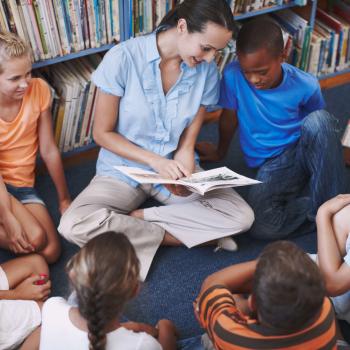
Using Story Innovation to Teach Fluency, Vocabulary, and Structure
An instructional strategy called story innovation teaches students fluency, comprehension, vocabulary, and story structure. This unique strategy can be adapted for many purposes.

Seeking Social Justice Through Satire: Jonathan Swift's "A Modest Proposal"
Grades
10 - 12
|
Lesson Plan
|
Unit
Seeking Social Justice Through Satire: Jonathan Swift's "A Modest Proposal"
This lesson assists advanced students in grades 10–12 in comprehending Jonathan Swift's "A Modest Proposal" and developing a presentation to satirize a contemporary social issue.

Creating a Feast for the Senses With Mentor Texts
Grades
3 - 6
|
Lesson Plan
|
Minilesson
Creating a Feast for the Senses With Mentor Texts
This lesson teaches intermediate students to "use the experts" to learn how to revise to create sharp, sensory-rich experiences for their readers.
Playlist for Holden: Character Analysis With Music and Lyrics
Grades
7 - 12
|
Lesson Plan
|
Minilesson
Playlist for Holden: Character Analysis With Music and Lyrics
Students compile a playlist of 10 songs representing a literary character and explain their choices based on the book's dialogue, plot, conflict, and resolution.

What is Poetry? Contrasting Poetry and Prose
Grades
6 - 8
|
Lesson Plan
|
Standard Lesson
What is Poetry? Contrasting Poetry and Prose

Students often find poetry frustrating and meaningless. By helping students think critically about the differences between poetry and prose, this introduction sets the stage for different strategies for comprehending poetic texts.

Creating an Online Community Through Electronic Portfolios
Grades
9 - 12
|
Lesson Plan
|
Recurring Lesson
Creating an Online Community Through Electronic Portfolios
Students publish their work in an electronic portfolio, which enables them to respond to each other's content online.

e-Book Reading and Response: Innovative Ways to Engage with Texts
Grades
5 - 12
|
Lesson Plan
|
Standard Lesson
e-Book Reading and Response: Innovative Ways to Engage with Texts
Students in grades 5 through 12 read and respond to electronic books by using e-book tools and features, including digital note-taking capabilities.

Reading Idol! Bringing Readers Theatre Center Stage in Your Classroom
Grades
3 - 5
|
Lesson Plan
|
Standard Lesson
Reading Idol! Bringing Readers Theatre Center Stage in Your Classroom
Students produce a Readers Theatre performance to compete to be named the Reading Idol. Students vote on the final performances and record them as podcasts.

Talking About Books to Improve Comprehension
Grades
3 - 5
|
Lesson Plan
|
Recurring Lesson
Talking About Books to Improve Comprehension
This lesson is a conversation-starter! In this lesson, students learn about striking up deep-thought conversations and staying on topic in the form of a book talk.

Rain, Ice, Steam: Using Reading to Support Inquiry About the Water Cycle
Grades
K - 2
|
Lesson Plan
|
Unit
Rain, Ice, Steam: Using Reading to Support Inquiry About the Water Cycle
Water is always moving in a continuous cycle from liquid to solid to gas and back again. Students study this never-ending cycle through shared readings, center activities, and experiments.

Using Children's Literature to Develop Classroom Community
Grades
3 - 6
|
Lesson Plan
|
Standard Lesson
Using Children's Literature to Develop Classroom Community
Conversation and cooperation bring out the best in students when they hold dialogues about their individual strengths, abilities, and talents.
Lonely as a Cloud: Using Poetry to Understand Similes
Grades
4 - 8
|
Lesson Plan
|
Standard Lesson
Lonely as a Cloud: Using Poetry to Understand Similes
Students identify similes in poetry and gain experience in using similes as a poetic device in their own work.
Using Technology to Analyze and Illustrate Symbolism in <em>Night</em>
Grades
6 - 8
|
Lesson Plan
|
Standard Lesson
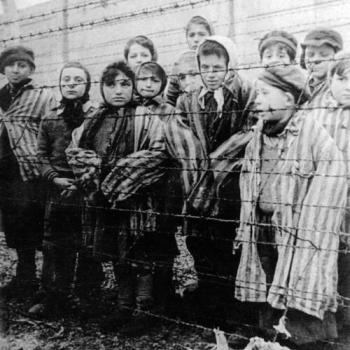
Using Technology to Analyze and Illustrate Symbolism in Night
Images have power—they can trigger memories or symbolize abstract ideas. Students put the power of images to the test as they analyze symbolism in Night and create symbolic photomontages.

Integrating Literacy Into the Study of the Earth's Surface
Grades
3 - 5
|
Lesson Plan
|
Standard Lesson
Integrating Literacy Into the Study of the Earth's Surface
Water covers 71% of the earth's surface—does it get the instructional time it deserves in your busy curriculum? Students wade right in to the study of bodies of water as they read and discuss science trade books and work together to develop Readers Theater scripts based on selected titles.
Shhh! Bear's Sleeping: Learning About Nonfiction and Fiction Using Read-Alouds
Grades
K - 2
|
Lesson Plan
|
Standard Lesson
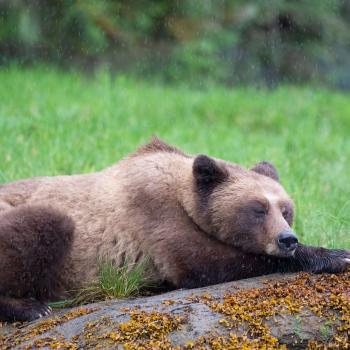
Shhh! Bear's Sleeping: Learning About Nonfiction and Fiction Using Read-Alouds

Students explore the distinction between the fiction story Bear Snores On and the nonfiction book Every Autumn Comes the Bear.

Using Word Storms to Explore Vocabulary and Encourage Critical Thinking
Grades
3 - 5
|
Lesson Plan
|
Recurring Lesson
Using Word Storms to Explore Vocabulary and Encourage Critical Thinking
Students learn that dogs are more than just pets in this lesson, which teaches them to use research and vocabulary-acquisition strategies to learn and write about working dogs.

Pagination

  • First page « First
  • Previous page ‹‹
  • …
  • Page 20
  • Page 21
  • Page 22
  • Page 23
  • Page 24
  • Page 25
  • Page 26
  • Page 27
  • Page 28
  • …
  • Next page ››
  • Last page Last »

Explore Resources by Grade

  • KindergartenK
  • 1-2
  • 3-4
  • 5-6
  • 7-8
  • 9-10
  • 11-12

RWT-logo

Powered By NCTE

Footer 1 Menu

  • About
  • Classroom Resources
  • Professional Development
  • Collections
  • Contact Us

Footer 2 Menu

  • National Council of Teachers of English
  • Contribute to RWT
  • FAQs
  • Join NCTE

Footer 3 Menu

  • Legal Notices
  • Privacy Policy
  • Promotional Materials
  • Site Demonstrations

Want to stay in touch with RWT and NCTE? Sign up here!

  • Facebook
  • Twitter
  • Instagram
  • Pinterest
  • YouTube

© NCTE 2026. All rights reserved