Students are often asked to perform speeches, but rarely do we require students to analyze speeches as carefully as we study works of literature. In this unit, students are required to identify the rhetorical strategies in a famous speech and the specific purpose for each chosen device. They will write an essay about its effectiveness and why it is still famous after all these years.

Analyzing Famous Speeches as Arguments

Language and Power in The Handmaid's Tale and the World
Students work in small groups to examine Margaret Atwood's use of and observations about language in The Handmaid's Tale. Through this activity, students discover and articulate overarching thematic trends in the book and then can extend their observations about official or political language to examples from their own world.

Analyzing the Stylistic Choices of Political Cartoonists
Students explore and analyze the techniques that political (or editorial) cartoonists use and draw conclusions about why the cartoonists choose those techniques to communicate their messages.
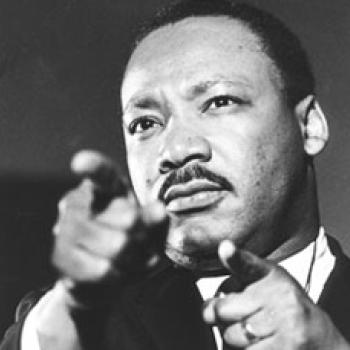
Living the Dream: 100 Acts of Kindness
This lesson provides the "action piece" for any study of Dr. Martin Luther King, Jr. In this project, students participate in Dr. King's dream by doing 100 acts of kindness.

Examining History with Maya Angelou's Poetry
To understand the historical background that influenced Maya Angelou's poems, students research events to produce trading cards using the ReadWriteThink Trading Card Student Interactive. Through the sharing of these trading cards, students understand the historical background as they analyze Angelou's poetry.
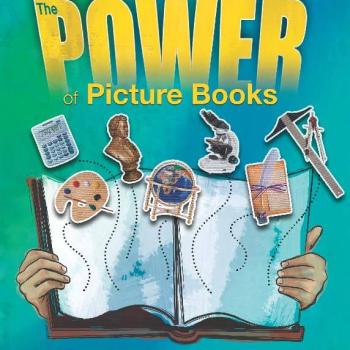
Power of Picture Books, The: Using Content Area Literature in Middle School
Featuring descriptions and activities for fifty exceptional titles, Mary Jo Fresch and Peggy Harkins offer a wealth of ideas for harnessing the power of picture books to improve reading and writing in the content areas.

Nonfiction Roundup
With each annual crop of new nonfiction, teens have the opportunity to discover and explore new disciplinary worlds. Tune in to hear about an array of recently-published nonfiction titles that will engage teens in learning about history, science, economics, and medicine. You'll hear about junk food and advertising, the atomic bomb and civil rights, bird watching and volcanoes – books written in a variety of formats for a variety of teen readers.

A Conversation with Coe Booth
Tune in to hear how Coe Booth worked through the challenges of writing Bronxwood, how she makes sense of her characters' actions, and how her books challenge readers to develop critical social consciousness.

Books about Bullying
Tune in to hear insights on bullying from bullying expert CJ Bott, author of The Bully in the Book and the Classroom and More Bullies in More Books. You'll also hear about a variety of fiction and nonfiction books for teens that explore the problem of bullying.

#weneeddiversebooks
Even if they are few in number, diverse books do exist. Tune in to hear about recently-published YA titles that celebrate diversity in a range of genres. There's something for every reader here: comic book superheroes, Civil Rights history, love stories, humorous essays, poetry, artwork, and stories of suspense.

A Conversation with Walter Dean Myers
If there is anyone in the world of children's and young adult literature who could be described as a living legend, it's Walter Dean Myers. Tune in to hear how his own experiences as a reader have shaped his approach to storytelling, what he seeks to offer young people through his writing, and the thinking behind a select handful of his novels – books that incorporate concepts as varied as magical realism, the social contract, and oral histories with our nation's war veterans.

Using the RAFT Writing Strategy
This strategy guide introduces the RAFT technique and offers practical ideas for using this technique to teach students to experiment with various perspectives in their writing.

Guideline on The Students' Right to Read
The current edition of The Students' Right to Read is an adaptation and updating of the original Council statement, including "Citizen's Request for Reconsideration of a Work."

Persuading the Principal: Writing Persuasive Letters About School Issues
Students learn that you don't have to raise your voice to raise a point. Writing a persuasive letter to your principal is a great way to get your opinions heard.
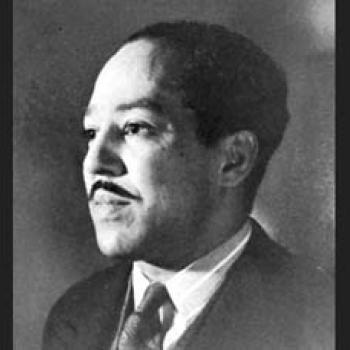
Discovering a Passion for Poetry With Langston Hughes
Through a study of Langston Hughes' poetry, students connect his writing to his place in history.

A Bad Case of Bullying: Using Literature Response Groups
Students learn how to effectively deal with bullying by participating in literature response groups and writing about when they experienced a similar situation or emotion as a fictional character.

Seeking Social Justice Through Satire: Jonathan Swift's "A Modest Proposal"
This lesson assists advanced students in grades 10–12 in comprehending Jonathan Swift's "A Modest Proposal" and developing a presentation to satirize a contemporary social issue.