Students first analyze Walt Whitman's "I Hear America Singing," then use Whitman's poem as a model as they create their own list poems.
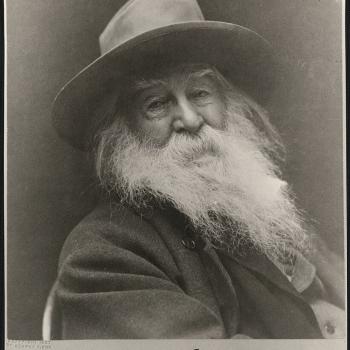
Walt Whitman as a Model Poet: "I Hear My School Singing"

Put That on the List: Independently Writing a Catalog Poem
In this follow-up to writing collaborative catalog poems, students write individual catalog poems about what really matters in their lives, based on Carver's poem "The Car."

Put That on the List: Collaboratively Writing a Catalog Poem
Using the structure of a list poem, students combine creative expression with poetic techniques and language exploration in order to write group poems about what really matters in their lives.
Discovering Traditional Sonnet Forms
Students read sonnets, charting the poems' characteristics and using their observations to deduce traditional sonnet forms. They then write original sonnets, using a poem they have analyzed as a model.
Unlocking the Underlying Symbolism and Themes of a Dramatic Work
This lesson plan invites students to consider characters from Lorraine Hansberry's A Raisin in the Sun. Students explore a selected character and write poems about objects associated with that character.

Childhood Remembrances: Life and Art Intersect in Nikki Giovanni's "Nikki-Rosa"
Students explore what Carol Jago calls the place "where life and art intersect" by reading Nikki Giovanni's poem, "Nikki-Rosa," and then writing about childhood memories of their own.

Examining History with Maya Angelou's Poetry
To understand the historical background that influenced Maya Angelou's poems, students research events to produce trading cards using the ReadWriteThink Trading Card Student Interactive. Through the sharing of these trading cards, students understand the historical background as they analyze Angelou's poetry.

Seasonal Haiku: Writing Poems to Celebrate Any Season
After listening to haiku poetry, students use seasonal descriptive words to write their own haiku, following the traditional format. They then publish their poems by mounting them on illustrated backgrounds.

Color of Silence: Sensory Imagery in Pat Mora's Poem "Echoes"
Pat Mora's poem "Echoes" demonstrates that our senses are powerful tools for literary analysis and comprehension as students use their senses to discover new ways to read and write.

Analyzing and Comparing Medieval and Modern Ballads
Students explore the ballads genre by reading medieval ballads to deduce their characteristics, acting out the ballads, comparing medieval and modern ballads using Venn diagrams, and composing their own ballads.

Exploring Change through Allegory and Poetry
Students read an example of allegory, review literary concepts, complete literary elements maps and plot diagrams, create a pictorial allegory, and write diamante poems related to the theme of change.
Weaving the Old into the New: Pairing The Odyssey with Contemporary Works
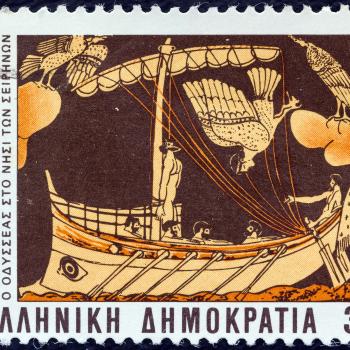
After exploring The Odyssey and a contemporary epic, students choose paired characters from the texts, complete a graphic organizer, and place their characters in hypothetical contemporary situations.

Many Years Later: Responding to Gwendolyn Brooks' "We Real Cool"
Students analyze the Gwendolyn Brooks' poem "We Real Cool" and then write about how the character's pool hall days might influence who the character becomes fifty years in the future.
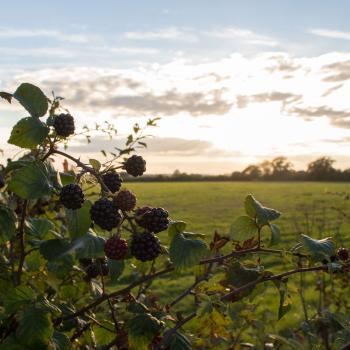
Thinking Inductively: A Close Reading of Seamus Heaney's "Blackberry Picking"
This lesson eases students' fear of interpreting complex poetry by teaching them a strategy with which they determine patterns of imagery, diction, and figurative language in order to unlock meaning.
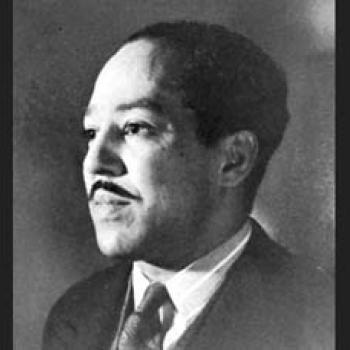
Discovering a Passion for Poetry With Langston Hughes
Through a study of Langston Hughes' poetry, students connect his writing to his place in history.

What is Poetry? Contrasting Poetry and Prose
Students often find poetry frustrating and meaningless. By helping students think critically about the differences between poetry and prose, this introduction sets the stage for different strategies for comprehending poetic texts.

Lonely as a Cloud: Using Poetry to Understand Similes
Students identify similes in poetry and gain experience in using similes as a poetic device in their own work.
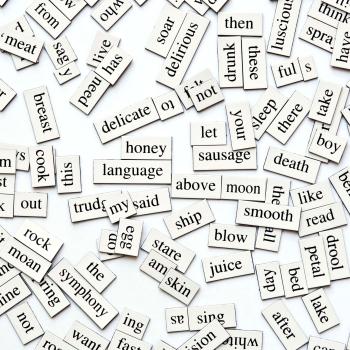
The Magnetism of Language: Parts of Speech, Poetry, and Word Play
What wonderful ways words work! The parts of speech are the highlight of this lesson in which students identify parts of speech in a nonsensical poem and then create their own wild and wacky rhymes.
Poetry Portfolios: Using Poetry to Teach Reading
Teach your students about sentence structure, rhyming words, sight words, vocabulary, and print concepts using a weekly poem.

A Race With Grace: Sports Poetry in Motion
In this lesson, athletics, aesthetics, and poetics intersect in new ways as developing literacy learners experiment together with the forms of language.