After exploring Orson Welles' 1938 broadcast of H. G. Wells' War of the Worlds, students create their own audio dramatization of a text they have read.

Audio Broadcasts and Podcasts: Oral Storytelling and Dramatization

You're the Top! Pop Culture Then and Now
Students analyze the lyrics to Cole Porter's "You're the Top!" and then update them to include current "tops" in pop culture.
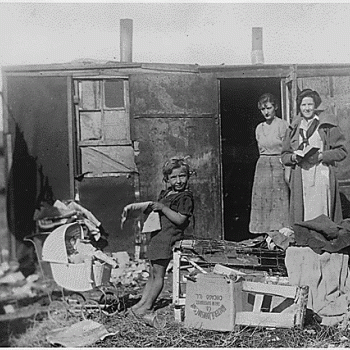
Designing Museum Exhibits for The Grapes of Wrath: A Multigenre Project
Using The Grapes of Wrath as a backdrop, students conduct research on issues that the novel addresses, publishing their findings in a multigenre museum exhibit.

Engaging Students in a Collaborative Exploration of the Gettysburg Address
In small groups, students closely examine one sentence from the Gettysburg Address and create a multigenre project communicating what they have discovered about the meaning and significance of the text.

Myth and Truth: The Gettysburg Address
By exploring myths and truths surrounding Abraham Lincoln's Gettysburg Address, students think critically about commonly believed stories regarding this famous speech from the Civil War era.

Using Student-Centered Comprehension Strategies with Elie Wiesel's Night
Working in small groups, students read and discuss Elie Wiesel's memoir Night and then take turns assuming the "teacher" role, as the class works with four different comprehension strategies.

Creating Family Timelines: Graphing Family Memories and Significant Events
Students interview family members, and then create graphic family timelines based on important and memorable family events.

Graphing Plot and Character in a Novel
In this graphical mapping project, students assign a value to the events, characters, and themes in a novel and think about how the elements of the story are all interconnected.

Copyright Infringement or Not? The Debate over Downloading Music
This lesson takes advantage of students' interest in music and audio sharing. Students investigate multiple perspectives in the music downloading debate and develop a persuasive argument for a classroom debate.

Looking at Landmarks: Using a Picture Book to Guide Research
This lesson uses Ben's Dream by Chris Van Allsburg to highlight ten major landmarks of the world. Students research the landmarks and present their findings to the class.
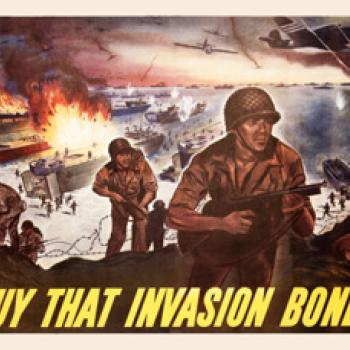
Argument, Persuasion, or Propaganda? Analyzing World War II Posters
Students analyze World War II posters, as a group and then independently, to explore how argument, persuasion and propaganda differ.

Bridging Literature and Mathematics by Visualizing Mathematical Concepts
During interactive read-aloud sessions, students identify how an author conveys mathematical information about animals' sizes and abilities. They then conduct research projects focusing on the same mathematical concepts.

Building Vietnam War Scavenger Hunts through Web-Based Inquiry
Students research the effects of the Vietnam war on a specific group of people who were involved. They then create Internet scavenger hunts to share with the class.

Talking, Writing, and Reasoning: Making Thinking Visible with Math Journals
Students explore how their problem-solving strategies work by writing in math journals as they work in small groups to solve a math puzzle with multiple solutions.

Exploring Sets through Math-Related Book Pairs
After reading two math-related books, students investigate their home and school environments to find examples of objects that come in sets and then create their own books on sets.
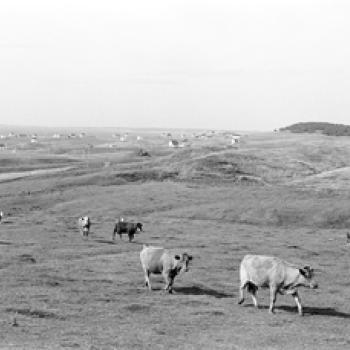
What If We Changed the Book? Problem-Posing with Sixteen Cows
After reading a piece of math-related children's literature aloud, students pose and solve new problems by asking what-if questions about the events in the story.
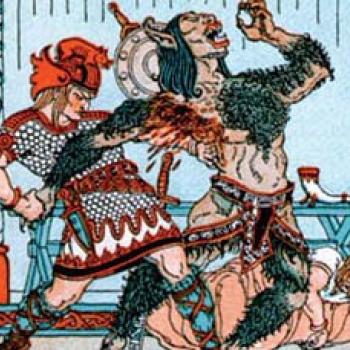
An Introduction to Beowulf: Language and Poetics
Students are introduced to Old English and the poetic devices of alliteration, kenning, and compounding in preparation for reading the epic poem Beowulf.

The History Behind Song Lyrics
Students research the items listed in the song "We Didn't Start the Fire" by Billy Joel, noting their historical relevance, and then document their findings using an online chart.
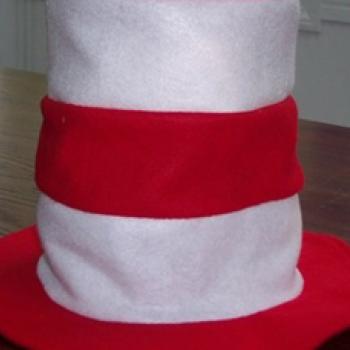
Id, Ego, and Superego in Dr. Seuss's The Cat in the Hat
Dr. Seuss's The Cat in the Hat is used as a primer to teach students how to analyze a literary work using plot, theme, characterization, and psychoanalytical criticism.

Literary Characters on Trial: Combining Persuasion and Literary Analysis
Students stage a mock trial for a literary character, with groups of students acting as the prosecution, defense, and jury.