ReadWriteThink - Powered by NCTE
  • About
  • Classroom Resources
    • Lesson Plans
    • Teaching Comics
    • Teaching With Primary Resources
    • Calendar
    • Printouts
    • Student Interactives
  • Collections
    • Assessment
    • Authors
    • Booklists
    • Media Literacy
    • Poetry
    • Primary Sources
    • Writing
  • Professional Development
    • Strategy Guides
    • Professional Library
    • Meetings & Events
  • Join NCTE
  • Contact Us
  • About
  • Classroom Resources
    • Lesson Plans
    • Teaching Comics
    • Teaching With Primary Resources
    • Calendar
    • Printouts
    • Student Interactives
  • Collections
    • Assessment
    • Authors
    • Booklists
    • Media Literacy
    • Poetry
    • Primary Sources
    • Writing
  • Professional Development
    • Strategy Guides
    • Professional Library
    • Meetings & Events
  • Join NCTE
  • Contact Us
  • Facebook
  • Twitter
  • Instagram
  • Pinterest
  • YouTube

Breadcrumb

  1. Home

Type

  • Classroom Resources
  • Professional Development

Grades

  • 1 (77)
  • 2 (75)
  • 3 (114)
  • 4 (111)
  • 5 (116)
  • 6 (113)
  • 7 (112)
  • 8 (119)
  • 9 (113)
  • 10 (111)
  • 11 (110)
  • 12 (110)
  • (-) K (69)

Learning Objectives

  • (-) Spelling (31)
  • (-) text structure / story structure (44)
  • collaboration (76)
  • Comprehension (72)
  • critical thinking (66)
  • digital literacy (17)
  • Grammar (10)
  • inquiry / research (48)
  • listening (40)
  • literary analysis (30)
  • Media literacy (20)
  • metacognition (30)
  • multicultural awareness (14)
  • multimodal literacy (32)
  • oral communication (42)
  • phonological awareness (47)
  • print awareness (36)
  • reading fluency (30)
  • reading genres (42)
  • Vocabulary (54)
  • writing genres (51)
  • writing process (77)

Topics

  • arts
  • careers
  • community
  • drama
  • ELL
  • Family
  • fiction
  • Mathematics
  • Mobile Learning
  • nonfiction
  • poetry
  • science
  • seasons / holidays
  • social action
  • social studies / history
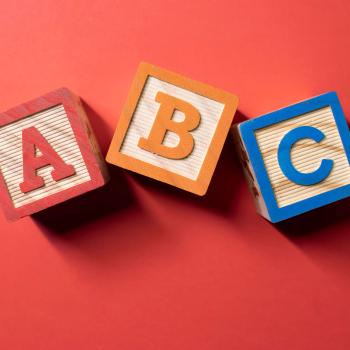
Our Community: Creating ABC Books as Assessment
Grades
K - 2
|
Lesson Plan
|
Standard Lesson
Our Community: Creating ABC Books as Assessment
Students create alphabet books, which are used as an integrated assessment with science, health, social studies, and any other content area. This lesson plans looks at the theme of community.
Grades
K - 2
|
Lesson Plan
|
Standard Lesson
Completing the Circle: The Craft of Circular Plot Structure
Students identify, explore and apply the elements of circle plot structures to their own stories by using graphic organizers, reading and writing stories, and using checklists to assess their work.
Grades
K - 2
|
Lesson Plan
|
Standard Lesson
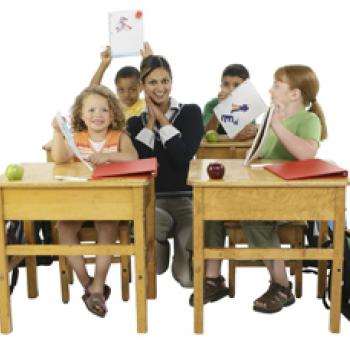
What's the Difference? Beginning Writers Compare E-mail with Letter Writing
Students compare e-mails to traditional letters, identifying style and intended audience for each. They then write both an e-mail and a letter about the same topic.
Grades
K - 2
|
Lesson Plan
|
Standard Lesson
Building a Matrix for Leo Lionni Books: An Author Study
In this author study, students listen to and discuss four books by Leo Lionni. They identify similarities and differences in the stories and then compare two stories of their choice.
Designing Elements of Story in <i>Little Blue and Little Yellow</i>
Grades
K - 5
|
Lesson Plan
|
Standard Lesson
Designing Elements of Story in Little Blue and Little Yellow
In this series of four lessons, students will explore key elements of design in Little Blue and Little Yellow to learn about setting, character relationships, and plot.
Literature Response in Primary Classrooms
Grades
K - 2
|
Lesson Plan
|
Recurring Lesson
Literature Response in Primary Classrooms

This step-by-step literature response template for use with read-alouds asks students to use drawing and writing to respond to increasingly-complex prompts which address literary elements as well as personal connections.

Dr. Seuss's Sound Words: Playing with Phonics and Spelling
Grades
K - 2
|
Lesson Plan
|
Standard Lesson
Dr. Seuss's Sound Words: Playing with Phonics and Spelling
Boom! Br-r-ring! Cluck! Moo!—Everywhere you turn, you find exciting sounds. Students use these sounds to write their own poems based on Dr. Seuss's Mr. Brown Can MOO! Can You?

Persuasive Writing: What Can Writing in Family Message Journals Do for Students?
Grades
K - 2
|
Lesson Plan
|
Standard Lesson
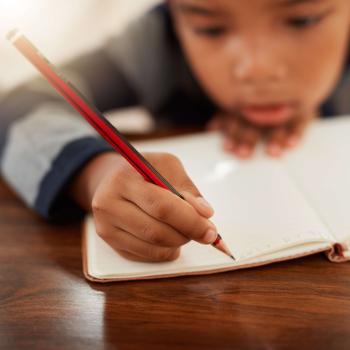
Persuasive Writing: What Can Writing in Family Message Journals Do for Students?
This lesson engages children in using writing to their families as a persuasive tool to get what they want and need.
Family Message Journals Teach Many Purposes for Writing
Grades
K - 2
|
Lesson Plan
|
Standard Lesson
Family Message Journals Teach Many Purposes for Writing
This lesson encourages children to explore authentic reasons for writing by writing messages to their family in a family message journal.
Launching Family Message Journals
Grades
K - 2
|
Lesson Plan
|
Standard Lesson
Launching Family Message Journals
This lesson introduces Family Message Journals—a teacher-tested tool for encouraging family involvement and supporting writing to reflect and to learn.
ReadAcrossAmerica
Grades
K - 12
|
Calendar Activity
|
Literacy-Related Event
Read Across America Day: Celebrate a Nation of Diverse Readers

Bring the celebration of reading and literacy into your classroom, library, school, and home all year long.
Stapleless Book
Grades
K - 12
|
Student Interactive
|
Writing & Publishing Prose
Stapleless Book

The Stapleless Book can be used for taking notes while reading, making picture books, collecting facts, or creating vocabulary booklets . . . the possibilities are endless!

Crossword Puzzles
Grades
K - 12
|
Student Interactive
|
Organizing & Summarizing
Crossword Puzzles
This tool allows students to complete crossword puzzles on a variety of grade-appropriate topics, and also create and print their own crossword puzzles.
Diamante Poems
Grades
K - 12
|
Student Interactive
|
Writing Poetry
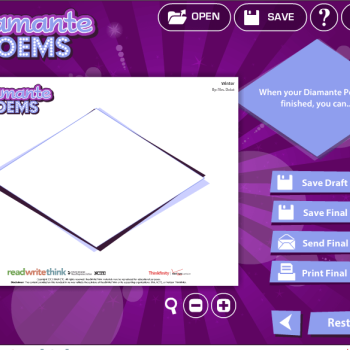
Diamante Poems

This online tool enables students to learn about and write diamante poems.
Word Family Sort
Grades
K - 5
|
Student Interactive
|
Learning About Language
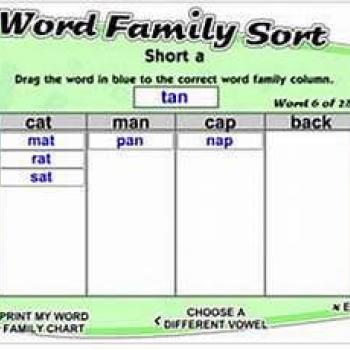
Word Family Sort

This online activity helps students recognize word patterns by having them sort a series of words into short-vowel word families.
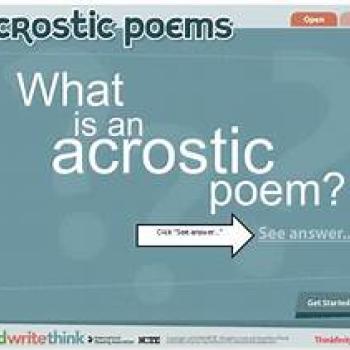
AcrosticPoem
Grades
K - 12
|
Student Interactive
|
Writing Poetry
Acrostic Poems

This online tool enables students to learn about and write acrostic poems. Elements of the writing process are also included.
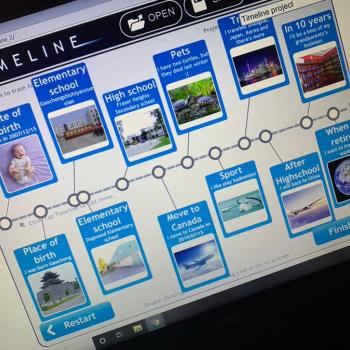
Timeline
Grades
K - 12
|
Student Interactive
|
Organizing & Summarizing
Timeline

Students generate descriptive timelines and can include images in the description.
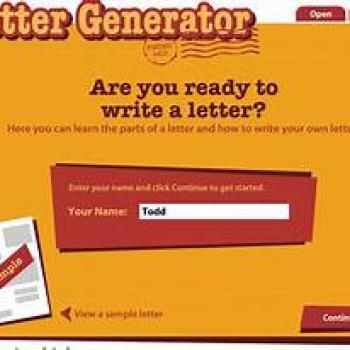
Letter Generator
Grades
K - 12
|
Student Interactive
|
Writing & Publishing Prose
Letter Generator

The Letter Generator is a useful tool for students to learn the parts of a business or friendly letter and then compose and print letters for both styles of correspondence.
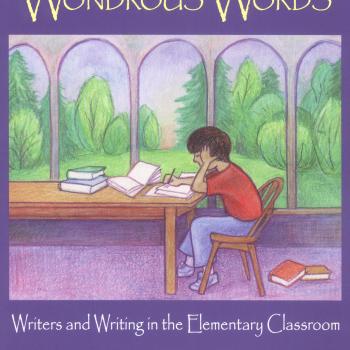
Wondrous Words: Writers and Writing in the Elementary Classroom
Grades
K - 6
|
Professional Library
|
Book
Wondrous Words: Writers and Writing in the Elementary Classroom
Katie Wood Ray explains in practical terms the theoretical underpinnings of how elementary and middle school students learn to write from their reading.
Grades
K - 2
|
Lesson Plan
|
Standard Lesson
The Day Jimmy's Boa Taught Cause and Effect
This lesson introduces the concept of cause and effect with Trinka Hakes Noble's books about Jimmy and his boa constrictor.

Pagination

  • Page 1
  • Page 2
  • Page 3
  • Page 4
  • Next page ››
  • Last page Last »

Explore Resources by Grade

  • KindergartenK
  • 1-2
  • 3-4
  • 5-6
  • 7-8
  • 9-10
  • 11-12

RWT-logo

Powered By NCTE

Footer 1 Menu

  • About
  • Classroom Resources
  • Professional Development
  • Collections
  • Contact Us

Footer 2 Menu

  • National Council of Teachers of English
  • Contribute to RWT
  • FAQs
  • Join NCTE

Footer 3 Menu

  • Legal Notices
  • Privacy Policy
  • Promotional Materials
  • Site Demonstrations

Want to stay in touch with RWT and NCTE? Sign up here!

  • Facebook
  • Twitter
  • Instagram
  • Pinterest
  • YouTube

© NCTE 2026. All rights reserved