Students use word webs to choose synonyms for generic adjectives and to learn to adjust their word usage for different contexts.

Using Word Webs to Teach Synonyms for Commonly Used Words

Scaling Back to Essentials: Scaffolding Summarization With Fishbone Mapping
Students work in pairs and groups as they complete fishbone maps that highlight main ideas and relevant details from a cause-effect text and then write summaries of content area texts.

ABC Bookmaking Builds Vocabulary in the Content Areas
V is for vocabulary. A content area unit provides the theme for a specialized ABC book, as students select, research, define, and illustrate a word for each alphabet letter.
Using Songwriting to Build Awareness of Beginning Letter Sounds
"Bessie bird lives in a barn" in this lesson in which students create alliterative animal songs to help them learn letter names and consonant sounds and build phonemic awareness.

Persuasive Essay: Environmental Issues
How can we convince others to agree with us on important issues? In this lesson, students explore relevant environmental issues and gather information to write persuasive essays.
A-Hunting We Will Go: Teaching Rhyming Through Musical Verse
Adapting the song "A-Hunting We Will Go," students put a whale in a pail and even "take a little bear and hug it if we dare."
Using the Four-Square Strategy to Define and Identify Poetic Terms
How do poets play with language? Students will explore some answers to this question as they search through poems for examples of alliteration, assonance, simile, and rhyme.

Flip-a-Chip: Examining Affixes and Roots to Build Vocabulary
Do your students detest having to define vocabulary words? Don"t confine them to worksheetsturn the study of affixes and roots into a hands-on contest to create context-rich vocabulary puzzles.
The Big Green Monster Teaches Phonics in Reading and Writing
A big green monster helps students build their reading fluency and word recognition skills through choral reading, literacy center activities, and writing stories.

Biography Project: Research and Class Presentation
Classroom biography study offers high-interest reading with a purpose, as students begin with inquiry and research, summarize and organize their information, and prepare oral presentations to share with the class.
Teaching Audience Through Interactive Writing
Through interactive writing, students work together and then independently to create invitation letters for a group of their peers and their families.

Let's Build a Snowman
In this lesson, students use both fiction and nonfiction texts, the Internet, and a K-W-L chart to learn about how animals survive the winter.

Spelling Cheerleading: Integrating Movement and Spelling Generalizations
"2-4-6-8, students will be spelling great" in this lesson that teaches the y rule for adding suffixes through cheering the spelling of words aloud, word sorts, and writing stories.

Using QARs to Develop Comprehension and Reflective Reading Habits
Students are introduced to question-answer relationships (QARs). Using the QAR strategy, students identify different types of questions and learn how to determine the appropriate response for each question type.
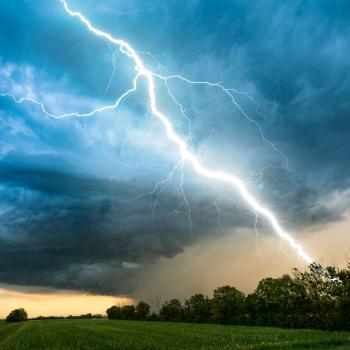
Weather: A Journey in Nonfiction
Questions about weather clear up when students use what they learned from their books to create a presentation to share with the rest of the class.

Everyone Loves a Mystery: A Genre Study
Students track the elements of mystery stories through Directed Learning-Thinking Activities, story maps, and puzzles. Then they offer clues for other readers as they plan and write original mystery stories.

Word Sorts for Beginning and Struggling Readers
Students are introduced to short-vowel word families and learn to sort words alone and with a partner using the Word Family Sort activity.

Mind Pictures: Strategies That Enhance Mental Imagery While Reading
Students create mental images while reading using a three-pronged approach: developing schemata and visual awareness; Watch-Read-Watch-Read (W-R-W-R), using video clips; and a strategy similar to the think-aloud approach.

Diagram It! Identifying, Comparing, and Writing About Nonfiction Texts
Students compare the traits fact and fiction by using a Venn diagram to compare fiction and nonfiction books about Native Americans.
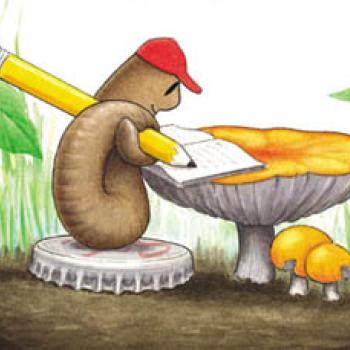
Fact or Fiction: Learning About Worms Using Diary of a Worm
Students often believe that fiction writers make everything up, seldom realizing how research worms its way into entertaining writing. In this lesson, students read Diary of a Worm to find out how fact merges with fiction.