This lesson gives teachers resources and guidance to create reading, listening, computer, and poetry Literacy Centers in their own classrooms.

Literacy Centers: Getting Started
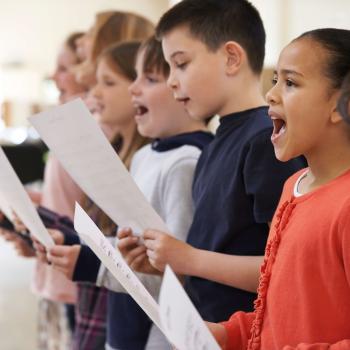
Improving Fluency through Group Literary Performance
Students participate in shared reading, choral reading, and readers theater, using books by Bill Martin, Jr. Repeated readings and literary performances help students with their reading accuracy, expression, and rate.
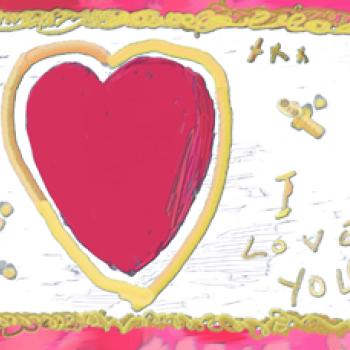
Writing Poetry with Rebus and Rhyme
This lesson encourages students to use rhyming words to write rebus poetry modeled on rebus books, which substitute pictures for the words that young students cannot yet identify or decode.
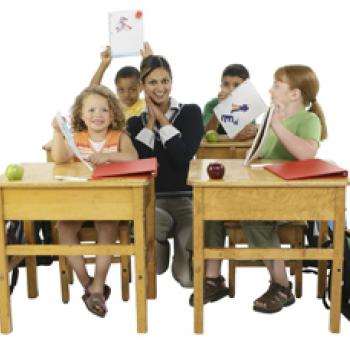
Building a Matrix for Leo Lionni Books: An Author Study
In this author study, students listen to and discuss four books by Leo Lionni. They identify similarities and differences in the stories and then compare two stories of their choice.

Literature Response in Primary Classrooms
This step-by-step literature response template for use with read-alouds asks students to use drawing and writing to respond to increasingly-complex prompts which address literary elements as well as personal connections.
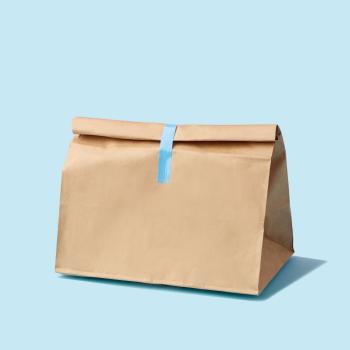
Guess What's in the Bag: A Language-based Activity
Students play a guessing game to practice using descriptive language.

Using Songwriting to Build Awareness of Beginning Letter Sounds
"Bessie bird lives in a barn" in this lesson in which students create alliterative animal songs to help them learn letter names and consonant sounds and build phonemic awareness.
The Big Green Monster Teaches Phonics in Reading and Writing
A big green monster helps students build their reading fluency and word recognition skills through choral reading, literacy center activities, and writing stories.

Spelling Cheerleading: Integrating Movement and Spelling Generalizations
"2-4-6-8, students will be spelling great" in this lesson that teaches the y rule for adding suffixes through cheering the spelling of words aloud, word sorts, and writing stories.
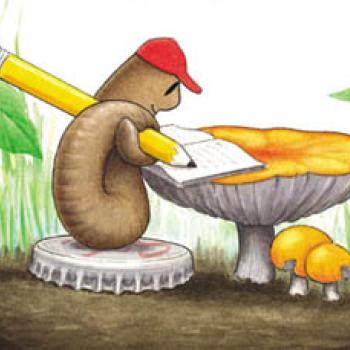
Fact or Fiction: Learning About Worms Using Diary of a Worm
Students often believe that fiction writers make everything up, seldom realizing how research worms its way into entertaining writing. In this lesson, students read Diary of a Worm to find out how fact merges with fiction.
Junie B. Jones Introduces Literacy Mystery Boxes
Like Junie B. Jones, students will be saying "Wait till you hear this" after listening to a Junie B. story and creating mystery boxes to help retell the story.
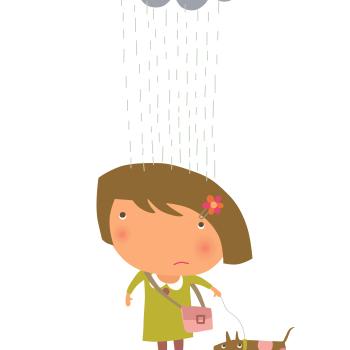
Exploring the Subtext Strategy: Thinking Beyond the Text
What is it like to have a terrible, horrible, no good, very bad day? Students find out in this lesson in which they "become" the characters in Judith Viorst's book.

Bringing Economic Vocabulary to Life Through Video Posters
Imagine if vocabulary could come alive with the click of a button! Students create video posters to demonstrate knowledge of new economics vocabulary.

Inspire Healthful Reading Using Unconventional Texts
This minilesson encourages children to seek out and appropriately react to nutrition labels and to make healthy food choices, integrating science, math, health, and literacy.

Going Digital: Using e-Book Readers to Enhance the Reading Experience
Students use various tools and features of digital readers to develop vocabulary, support comprehension, respond to text, improve fluency, and enhance the reading experience.

Using American Sign Language to Improve Comprehension and Vocabulary
American Sign Language is combined with the hilarious poetry and pictures of Sam's Sandwich, a lift-the-flap book, to engage all types of learners in acquiring key vocabulary.

Shared Poetry Reading: Teaching Print Concepts, Rhyme, and Vocabulary
The rhyme and reason behind this lesson is that students will need to develop important reading skills to increase their reading fluency.

Family Ties: Making Connections to Improve Reading Comprehension
Families are all about connections between people. In this lesson, students read three books about different families and make text-to-self, text-to-text, and text-to-world connections to those texts.
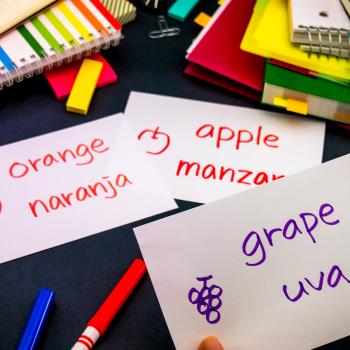
Let's Read It Again: Comprehension Strategies for English-Language Learners
Help Spanish-speaking English-language learners unlock the mysteries of their new language by using a bilingual book to recognize unfamiliar words and construct meaning from the text.
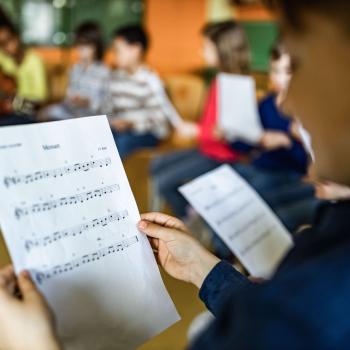
Read a Song: Using Song Lyrics for Reading and Writing
This lesson will be music to the students' ears when they hear that they get to read song lyrics and compose original lyrics for a familiar song.