ReadWriteThink - Powered by NCTE
  • About
  • Classroom Resources
    • Lesson Plans
    • Teaching Comics
    • Teaching With Primary Resources
    • Calendar
    • Printouts
    • Student Interactives
  • Collections
    • Assessment
    • Authors
    • Booklists
    • Media Literacy
    • Poetry
    • Primary Sources
    • Writing
  • Professional Development
    • Strategy Guides
    • Professional Library
    • Meetings & Events
  • Join NCTE
  • Contact Us
  • About
  • Classroom Resources
    • Lesson Plans
    • Teaching Comics
    • Teaching With Primary Resources
    • Calendar
    • Printouts
    • Student Interactives
  • Collections
    • Assessment
    • Authors
    • Booklists
    • Media Literacy
    • Poetry
    • Primary Sources
    • Writing
  • Professional Development
    • Strategy Guides
    • Professional Library
    • Meetings & Events
  • Join NCTE
  • Contact Us
  • Facebook
  • Twitter
  • Instagram
  • Pinterest
  • YouTube

Breadcrumb

  1. Home

Type

  • (-) Professional Development
    • Professional Library
    • Strategy Guide

Grades

  • 1 (3)
  • 2 (3)
  • 3 (4)
  • 4 (5)
  • 6 (12)
  • 7 (11)
  • 8 (11)
  • 9 (10)
  • 10 (10)
  • 11 (10)
  • 12 (10)
  • K (3)
  • (-) 5 (8)

Learning Objectives

  • collaboration (2)
  • Comprehension (4)
  • critical thinking (6)
  • digital literacy (2)
  • inquiry / research (3)
  • listening (2)
  • literary analysis (1)
  • Media literacy (2)
  • metacognition (5)
  • multimodal literacy (3)
  • oral communication (4)
  • reading fluency (1)
  • text structure / story structure (1)
  • Vocabulary (2)
  • writing genres (3)
  • writing process (2)

Topics

  • (-) community
  • careers
  • drama
  • Family
  • fiction
  • Mathematics
  • Mobile Learning
  • nonfiction
  • poetry
  • seasons / holidays
  • social action
  • social studies / history
  • Sports
  • STEM
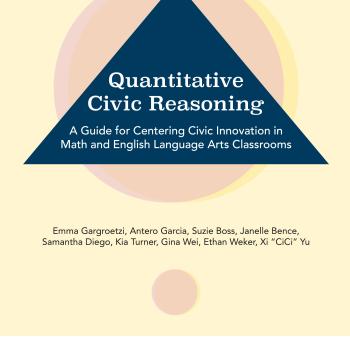
Quantitative Civic Reasoning
Grades
4 - 12
|
Professional Library
|
Professional Library
Quantitative Civic Reasoning: A Guide for Centering Civic Innovation in Math and English Language Arts Classrooms

This guide explores quantitative civic reasoning in English and math classrooms.
Making Connections
Grades
Grades
3 - 8
|
Strategy Guide
Making Connections
In this strategy guide, you'll learn to model how students can make three different kinds of connections (text-to-text, text-to-self, text-to-world). Students then use this knowledge to find their own personal connections to a text.

Using the RAFT Writing Strategy
Grades
Grades
5 - 12
|
Strategy Guide
Using the RAFT Writing Strategy
This strategy guide introduces the RAFT technique and offers practical ideas for using this technique to teach students to experiment with various perspectives in their writing.

Persuasive Writing
Grades
Grades
K - 5
|
Strategy Guide
Persuasive Writing
This strategy guide focuses on persuasive writing and offers specific methods on how you can help your students use it to improve their critical writing and thinking skills.
Facilitating Participation with Silent Conversations
Grades
Grades
5 - 12
|
Strategy Guide
Facilitating Participation with Silent Conversations
This guide introduces silent conversations, a collaborative learning technique that has students thinking, sharing, and reflecting about important questions—but through writing rather than talk.
Using Paired Reading to Increase Fluency and Peer Cooperation
Grades
Grades
K - 6
|
Strategy Guide
Using Paired Reading to Increase Fluency and Peer Cooperation
In this strategy, students read aloud to each other, pairing more fluent readers with less fluent readers. This strategy can also be used to pair older students with younger students to create "reading buddies."

Bringing Lessons to Life with Animoto
Grades
Grades
5 - 12
|
Strategy Guide
Bringing Lessons to Life with Animoto
Using Animoto, a free Web 2.0 tool, students can develop short digital videos that include music, photos, video clips, and text as well as share their creations electronically.
Code of Best Practices in Fair Use for Media Literacy Education
Grades
K - 12
|
Professional Library
|
Position Statement
Code of Best Practices in Fair Use for Media Literacy Education

This document is a code of best practices that helps educators using media literacy concepts and techniques to interpret the copyright doctrine of fair use.

Explore Resources by Grade

  • KindergartenK
  • 1-2
  • 3-4
  • 5-6
  • 7-8
  • 9-10
  • 11-12

RWT-logo

Powered By NCTE

Footer 1 Menu

  • About
  • Classroom Resources
  • Professional Development
  • Collections
  • Contact Us

Footer 2 Menu

  • National Council of Teachers of English
  • Contribute to RWT
  • FAQs
  • Join NCTE

Footer 3 Menu

  • Legal Notices
  • Privacy Policy
  • Promotional Materials
  • Site Demonstrations

Want to stay in touch with RWT and NCTE? Sign up here!

  • Facebook
  • Twitter
  • Instagram
  • Pinterest
  • YouTube

© NCTE 2026. All rights reserved