ReadWriteThink - Powered by NCTE
  • About
  • Classroom Resources
    • Lesson Plans
    • Teaching Comics
    • Teaching With Primary Resources
    • Calendar
    • Printouts
    • Student Interactives
  • Collections
    • Assessment
    • Authors
    • Booklists
    • Media Literacy
    • Poetry
    • Primary Sources
    • Writing
  • Professional Development
    • Strategy Guides
    • Professional Library
    • Meetings & Events
  • Join NCTE
  • Contact Us
  • About
  • Classroom Resources
    • Lesson Plans
    • Teaching Comics
    • Teaching With Primary Resources
    • Calendar
    • Printouts
    • Student Interactives
  • Collections
    • Assessment
    • Authors
    • Booklists
    • Media Literacy
    • Poetry
    • Primary Sources
    • Writing
  • Professional Development
    • Strategy Guides
    • Professional Library
    • Meetings & Events
  • Join NCTE
  • Contact Us
  • Facebook
  • Twitter
  • Instagram
  • Pinterest
  • YouTube

Breadcrumb

  1. Home

Type

  • (-) Classroom Resources
    • Lesson Plan
    • Student Interactive

Grades

  • 1 (27)
  • 2 (26)
  • 3 (12)
  • 4 (12)
  • 5 (12)
  • 7 (11)
  • 8 (11)
  • 9 (4)
  • 10 (4)
  • 11 (4)
  • 12 (4)
  • K (27)
  • (-) 6 (10)

Learning Objectives

  • (-) Spelling (10)
  • collaboration (155)
  • Comprehension (168)
  • critical thinking (267)
  • digital literacy (66)
  • Grammar (15)
  • inquiry / research (155)
  • listening (53)
  • literary analysis (115)
  • Media literacy (90)
  • metacognition (133)
  • multicultural awareness (43)
  • multimodal literacy (109)
  • oral communication (76)
  • phonological awareness (1)
  • print awareness (28)
  • reading fluency (13)
  • reading genres (65)
  • text structure / story structure (81)
  • Vocabulary (65)
  • writing genres (139)
  • writing process (131)

Topics

  • community
  • fiction
  • nonfiction
  • poetry
  • social action
Audience, Purpose, and Language Use in Electronic Messages
Grades
6 - 8
|
Lesson Plan
|
Minilesson
Audience, Purpose, and Language Use in Electronic Messages

Students explore using electronic messaging and Internet abbreviations for specific purposes and examine the importance of using a more formal style of writing based on their audience.

Shared Spelling Strategies
Grades
6 - 8
|
Lesson Plan
|
Recurring Lesson
Shared Spelling Strategies
Students increase their spelling accuracy and retention, while preserving fluency, by using sound, sight recall, and analyzing strategies instead of memorizing words, as they deal with spelling during drafting.
Crossword Puzzles
Grades
K - 12
|
Student Interactive
|
Organizing & Summarizing
Crossword Puzzles
This tool allows students to complete crossword puzzles on a variety of grade-appropriate topics, and also create and print their own crossword puzzles.

Grades
6 - 8
|
Lesson Plan
|
Standard Lesson
Persuading the Principal: Writing Persuasive Letters About School Issues
Students learn that you don't have to raise your voice to raise a point. Writing a persuasive letter to your principal is a great way to get your opinions heard.

You Can't Spell the Word <em>Prefix</em> Without a Prefix
Grades
6 - 8
|
Lesson Plan
|
Standard Lesson
You Can't Spell the Word Prefix Without a Prefix
Students explore the role of prefixes, as well as their origins and meanings, and examine how the understanding of prefixes can improve comprehension, decoding, and spelling.
Grades
6 - 8
|
Lesson Plan
|
Standard Lesson
Solving Word Meanings: Engaging Strategies for Vocabulary Development
Vocabulary gumshoes use context clues and semantics to determine the meaning of unfamiliar words.
Spelling Patterns "Go Fish" Card Game
Grades
4 - 8
|
Lesson Plan
|
Standard Lesson
Spelling Patterns "Go Fish" Card Game
Students use sets of words that share a spelling pattern to create a card game like "Go Fish" and then play the game in groups, helping them improve their spelling.
Improve Comprehension: A Word Game Using Root Words and Affixes
Grades
6 - 8
|
Lesson Plan
|
Standard Lesson
Improve Comprehension: A Word Game Using Root Words and Affixes
Students study common root words and affixes, improve their comprehension and spelling, and make a card game in which they form words with a prefix, root word, and suffix.
Using a Word Journal to Create a Personal Dictionary
Grades
6 - 8
|
Lesson Plan
|
Recurring Lesson
Using a Word Journal to Create a Personal Dictionary
Students will be the definition of vocabulary experts as they use the skills they learn in this lesson to track, define, and ultimately master unfamiliar words.
Word Mover
Grades
3 - 12
|
Student Interactive
|
Writing Poetry
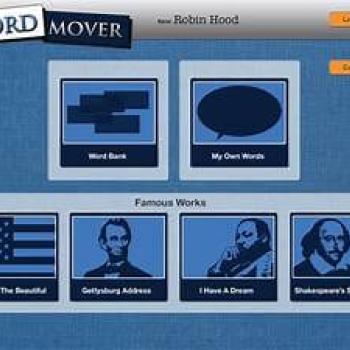
Word Mover

Word Mover allows children and teens to create "found poetry" by choosing from word banks and existing famous works; additionally, users can add new words to create a piece of poetry by moving/manipulating the text.

Explore Resources by Grade

  • KindergartenK
  • 1-2
  • 3-4
  • 5-6
  • 7-8
  • 9-10
  • 11-12

RWT-logo

Powered By NCTE

Footer 1 Menu

  • About
  • Classroom Resources
  • Professional Development
  • Collections
  • Contact Us

Footer 2 Menu

  • National Council of Teachers of English
  • Contribute to RWT
  • FAQs
  • Join NCTE

Footer 3 Menu

  • Legal Notices
  • Privacy Policy
  • Promotional Materials
  • Site Demonstrations

Want to stay in touch with RWT and NCTE? Sign up here!

  • Facebook
  • Twitter
  • Instagram
  • Pinterest
  • YouTube

© NCTE 2026. All rights reserved