This lesson supports third-through-sixth grade students as they communicate story setting to their readers through the use of visual image prompts. Activities include individual and cooperative learning group work, as well as whole class discussion.

Utilizing Visual Images for Creating and Conveying Setting in Written Text
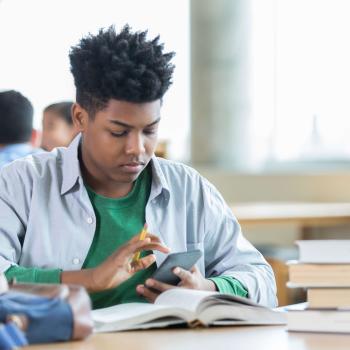
Texting a Response to Lord of the Flies
Students use Lord of the Flies to explore communication styles and techniques by writing text messages from one of the novel's characters to an imagined audience off the island.

Grocery Store Scavenger Hunt: Researching Nutrition to Advertise for Health
After researching nutrition and analyzing food advertisements, students work in cooperative groups to create their own advertisements for food products.

Campaigning for Fair Use: Public Service Announcements on Copyright Awareness
Students explore a range of resources on fair use and copyright then design their own audio public service announcements (PSAs), to be broadcast over the school's public address system.

Plot Structure: A Literary Elements Mini-Lesson
Students learn that the plot structure described by Freytag's Pyramid is actually quite familiar as they diagram the plots of a familiar story, a television show, and a narrative poem.

On a Musical Note: Exploring Reading Strategies by Creating a Soundtrack
Students create a soundtrack for a novel that they have read, as they engage in such traditional reading strategies as predicting, visualizing, and questioning.

You Know the Movie is Coming—Now What?
In this lesson, students read a literary text with the eye of a director, selecting scenes from the text and putting a cinematic spin on them.

Inquiry on the Internet: Evaluating Web Pages for a Class Collection
Students use Internet search engines and Web analysis checklists to evaluate online resources then write annotations that explain how and why the resources will be valuable to the class.
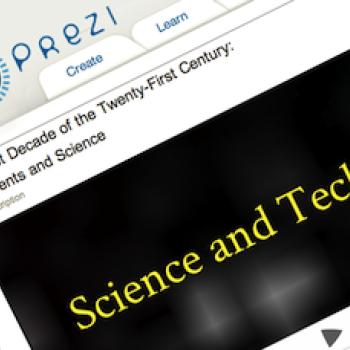
Blending the Past with Today's Technology: Using Prezi to Prepare for Historical Fiction
To prepare for literature circles featuring historical novels, students research the decades of the 1930s to the 1990s and share their information using Prezi, a web application for creating multimedia presentations.

Vote for Me! Making Presidential Commercials Using Avatars
After researching political platforms of past presidents through primary sources and other resources, students create commercials for these presidents using Voki, an online web tool that produces speaking avatars.

Animate that Haiku!
Following the traditional form of the haiku, students publish their own haikus using Animoto, an online web tool to produce slideshows that blend text and music.
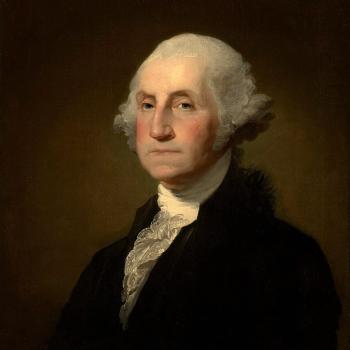
What Did George Post Today? Learning About People of the American Revolution Through Facebook
After researching famous people of the American Revolution, students create Facebook-like PowerPoint presentations to share their knowledge with classmates.

Glogging About Natural Disasters
After researching various natural disasters, students share their findings with each other using glogs, or through poster presentations.
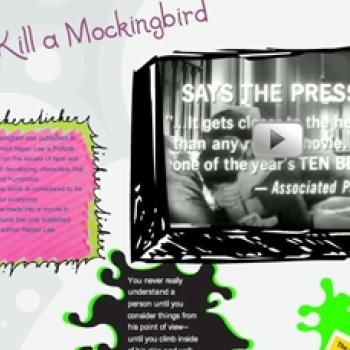
Book Report Alternative: Glog That Book!
In this alternative book report, students identify the elements of fiction in books they have read by creating glogs, interactive multimedia posters, and then share their glogs.
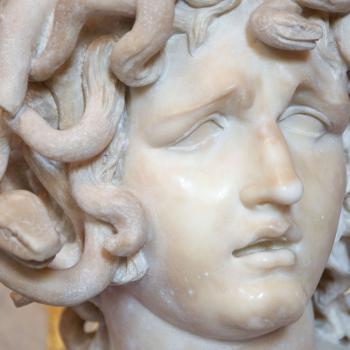
Digitally Telling the Story of Greek Figures
In this lesson students research Greek gods, heroes, and creatures and then share their findings through digital storytelling.

Introducing Basic Media Literacy Education Skills with Greeting Cards
In this lesson, students examine and create holiday/event cards, analyze holiday elements, and create their own. The activities help students focus on the reasons for composing messages as they do.
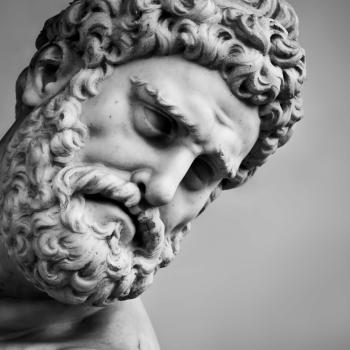
Audience & Purpose: Evaluating Disney's Changes to the Hercules Myth
What drives changes to classic myths and fables? In this lesson students evaluate the changes Disney made to the myth of "Hercules" in order to achieve their audience and purpose.
Sharing Information about Careers with Infographics
Students research careers of their own choosing. Then using Piktochart, students create their own infographics to illustrate their research.

Captioning the Civil Rights Movement: Reading the Images, Writing the Words
Teachers guide students to carefully view images from the Civil Rights Movement and write captions that accurately describe the images and/or their probable purposes.

Highlighting Out-of-School Language Expertise with Pop Culture Dictionaries
Students compose dictionary entries for words and phrases from pop culture texts (e.g., television shows, movies, lyrics, YouTube videos), connecting their definitions to their personal use of the terms.