Engage students in content area reading with the Textmasters strategy, which allows students to collaborate with their peers in different roles that enable better understanding of the content.

Textmasters: Shaking Up Textbook Reading in Science Classrooms

BOOKMATCH: Scaffolding Independent Book Selection
This lesson will be turning heads and pages as students learn how to choose appropriate books for independent reading exercises and later evaluate their choices.

Learning Clubs: Motivating Middle School Readers and Writers
Students participate in learning clubs, select content area topics, and draw on textsincluding websites, printed material, video, and musicto investigate their topics, and share their learning using similar media.

Thoughtful Threads: Sparking Rich Online Discussions
Today's students love chatting online with friends. This lesson combines that love with literature. Students form literature circles and have meaningful online discussions about a literary work.

Exploring Careers Using the Internet
Doctors, astrophysicists, and daycare providers are only some of the careers that will be explored in this lesson in which students research careers and publish occupational summaries about them.

I've Got It Covered! Creating Magazine Covers to Summarize Texts
Start the presses! Catchy titles, eye-popping graphics, and attractive fonts are all on students' agendas in this lesson as they create magazine covers to summarize a topic.
Using Word Webs to Teach Synonyms for Commonly Used Words
Students use word webs to choose synonyms for generic adjectives and to learn to adjust their word usage for different contexts.

Guided Comprehension: Knowing How Words Work Using Semantic Feature Analysis
Based on the Guided Comprehension Model developed by Maureen McLaughlin and Mary Beth Allen, this lesson introduces students to the comprehension strategy of knowing how words work.
Guided Comprehension: Monitoring Using the INSERT Technique
Based on the Guided Comprehension Model developed by Maureen McLaughlin and Mary Beth Allen, this lesson introduces students to the comprehension strategy of monitoring.
Guided Comprehension: Previewing Using an Anticipation Guide
Based on the Guided Comprehension Model developed by Maureen McLaughlin and Mary Beth Allen, this lesson introduces students to the comprehension strategy of previewing.

Reciprocal Revision: Making Peer Feedback Meaningful
Interpreting art is a subjective process. In this lesson, students write written responses analyzing a work of art and use feedback from their peers to revise or confirm their initial responses.

You Can't Spell the Word Prefix Without a Prefix
Students explore the role of prefixes, as well as their origins and meanings, and examine how the understanding of prefixes can improve comprehension, decoding, and spelling.
Timelines and Texts: Motivating Students to Read Nonfiction
In an effort to help motivate students to read nonfiction, students are challenged to use a timeline to help them name the year when certain products were invented.

Internalization of Vocabulary Through the Use of a Word Map
Students practice with words and develop both definitional and contextual knowledge through two agents—purposeful sequencing of steps and collaboration with peers.
Choosing, Chatting, and Collecting: Vocabulary Self-Collection Strategy
Students identify interesting words from Shakespeare's plays and add them to a classroom vocabulary collection.
Creating a Feast for the Senses With Mentor Texts
This lesson teaches intermediate students to "use the experts" to learn how to revise to create sharp, sensory-rich experiences for their readers.

e-Book Reading and Response: Innovative Ways to Engage with Texts
Students in grades 5 through 12 read and respond to electronic books by using e-book tools and features, including digital note-taking capabilities.
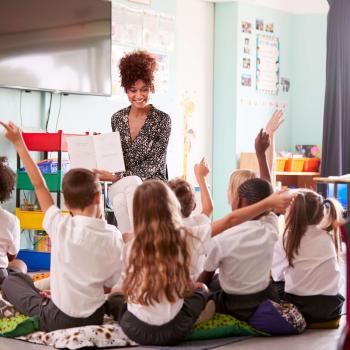
Using Children's Literature to Develop Classroom Community
Conversation and cooperation bring out the best in students when they hold dialogues about their individual strengths, abilities, and talents.
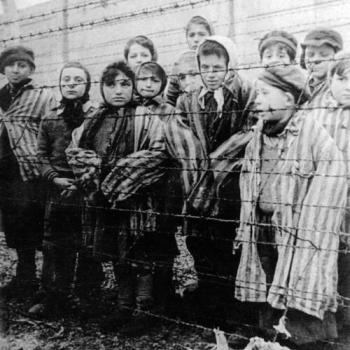
Using Technology to Analyze and Illustrate Symbolism in Night
Images have power—they can trigger memories or symbolize abstract ideas. Students put the power of images to the test as they analyze symbolism in Night and create symbolic photomontages.

Traveling the Road to Freedom Through Research and Historical Fiction
Students learn how to walk a mile in someone else's shoes by reading historical fiction about the Underground Railroad.