In this episode, you'll hear about a variety of books that may deepen our thinking about complex texts, including collections of poems and works of historical fiction, graphic novels and informational texts, and novels built on interwoven storylines. Together they offer reading options for teens with diverse interests, tastes, and sensibilities.

Talking about Text Complexity

A Conversation with Rita Williams-Garcia
It's rare to find historical fiction that weaves rich period detail into the lives of memorable and endearing characters, but Rita Williams-Garcia's middle-grade novels One Crazy Summer and P.S. Be Eleven do just that. Tune in to hear Rita explain how she drew on personal and historical contexts to develop her characters and tell their story. You'll also hear about her great love for her work and her commitment to spending as long as it takes to get the story right.

Exploring the Disability Experience
Books about teens who are living with disability highlight the courage and emotional strength that people with disabilities can summon. They also challenge us to reflect on how we treat disabled people in our own lives. Tune in to hear about young people who are living with birth defects, cerebral palsy, autism, schizophrenia, obsessive compulsive disorder, speech impediments, and traumatic war injuries.

A Conversation with Judy Blume
Tune in to hear Judy Blume talk about how she got her start and learned the craft of writing from her long-time editor, Dick Jackson; what it's like returning to her hometown of Elizabeth, New Jersey, which is the setting for her current novel; and how she's responded to the many parodies and tributes that seal her place in popular culture.

Supporting Student Comprehension in Content Area Reading
In this strategy guide, you'll learn a few simple, yet powerful, techniques to encourage students to use peer talk and writing to enhance their understanding of content area texts.

Preparing Students for Success with Reading in the Content Areas
In this strategy guide, you'll learn how to determine the level and type of support you need to provide students based on careful preparation as a content area expert.

Reading with Purpose in the Content Areas
In this strategy guide, you'll learn how to organize students and instruction to establish a sense of purpose for reading authentic texts in the content areas.

Reading in the Content Areas
In this Strategy Guide Series, you'll get information and ideas about teaching reading in the different content areas.

Developing Evidence-Based Arguments from Texts
This strategy guide clarifies the difference between persuasion and argumentation, stressing the connection between close reading of text to gather evidence and formation of a strong argumentative claim about text.

Guideline on The Students' Right to Read
The current edition of The Students' Right to Read is an adaptation and updating of the original Council statement, including "Citizen's Request for Reconsideration of a Work."
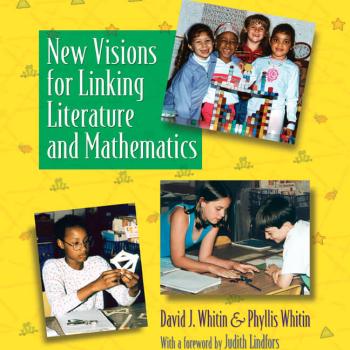
New Visions for Linking Literature and Mathematics
David and Phyllis Whitin offer K–6 teachers a wealth of ideas for integrating literature and mathematics.
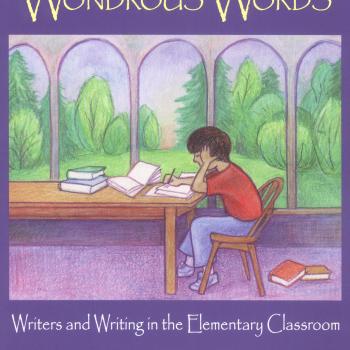
Wondrous Words: Writers and Writing in the Elementary Classroom
Katie Wood Ray explains in practical terms the theoretical underpinnings of how elementary and middle school students learn to write from their reading.

Color of Silence: Sensory Imagery in Pat Mora's Poem "Echoes"
Pat Mora's poem "Echoes" demonstrates that our senses are powerful tools for literary analysis and comprehension as students use their senses to discover new ways to read and write.

Exploring Change through Allegory and Poetry
Students read an example of allegory, review literary concepts, complete literary elements maps and plot diagrams, create a pictorial allegory, and write diamante poems related to the theme of change.

Discovering Memory: Li-Young Lee's Poem "Mnemonic" and the Brain
Students learn about memory by doing a memory-writing exercise, studying the brain to understand how it affects memory, reading Li-Young Lee's poem "Mnemonic," and creating projects to demonstrate their understanding.

BOOKMATCH: Scaffolding Independent Book Selection
This lesson will be turning heads and pages as students learn how to choose appropriate books for independent reading exercises and later evaluate their choices.

Plotting a Plan to Improve Writing: Using Plot Scaffolds
Students really get into character in this lesson as they act out the parts of a script and analyze character motivations and dialogue.

Biography Project: Research and Class Presentation
Classroom biography study offers high-interest reading with a purpose, as students begin with inquiry and research, summarize and organize their information, and prepare oral presentations to share with the class.

Guided Comprehension: Knowing How Words Work Using Semantic Feature Analysis
Based on the Guided Comprehension Model developed by Maureen McLaughlin and Mary Beth Allen, this lesson introduces students to the comprehension strategy of knowing how words work.

Everyone Loves a Mystery: A Genre Study
Students track the elements of mystery stories through Directed Learning-Thinking Activities, story maps, and puzzles. Then they offer clues for other readers as they plan and write original mystery stories.