A Concept Sort is a vocabulary and comprehension strategy used with students to introduce new topics and/or familiarize students with new vocabulary.
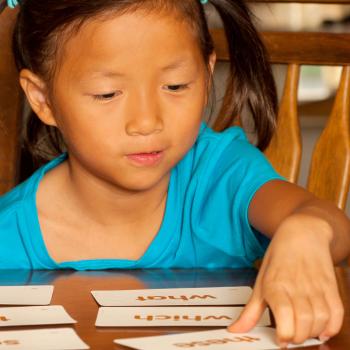
Introducing Ideas and Vocabulary with the Concept Sort

Bringing Lessons to Life with Animoto
Using Animoto, a free Web 2.0 tool, students can develop short digital videos that include music, photos, video clips, and text as well as share their creations electronically.

Speak to Me: Teaching with Voki
Through Voki, a Web 2.0 tool, students create customizable avatars for class presentations for various purposes, such as presenting biographical information, expressing an opinion, or reading a poem.

Cover to Cover: Comparing Books to Movies
Students compare and analyze novels and the movies adapted from them. They design new DVD covers and a related insert for the movies, reflecting their response to the movie version.

Exploring Change through Allegory and Poetry
Students read an example of allegory, review literary concepts, complete literary elements maps and plot diagrams, create a pictorial allegory, and write diamante poems related to the theme of change.

Analyzing and Podcasting About Images of Oscar Wilde
Students analyze images of Oscar Wilde used to publicize his 1882 American lecture tour. They then compare a caricature to another researched image, sharing this analysis in a podcast.

Creating Character Blogs
Students view examples of blogs, learn the basic elements of blog creation, and then create a blog from the perspective of a fictional character.

Thoughtful Threads: Sparking Rich Online Discussions
Today's students love chatting online with friends. This lesson combines that love with literature. Students form literature circles and have meaningful online discussions about a literary work.

Everyone Loves a Mystery: A Genre Study
Students track the elements of mystery stories through Directed Learning-Thinking Activities, story maps, and puzzles. Then they offer clues for other readers as they plan and write original mystery stories.

Thrills! Chills! Using Scary Stories to Motivate Students to Read
Students examine story elements through teacher read-alouds and independent reading and then use reader-response journals and graphic organizers to prepare for the creation of their own scary stories.
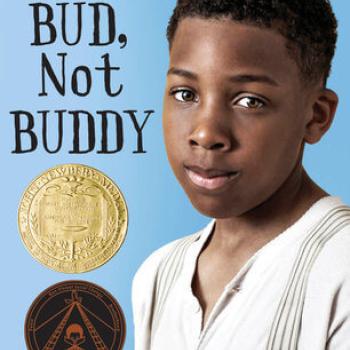
Press Conference for Bud, Not Buddy
Students read Bud, Not Buddy by Christopher Paul Curtis, demonstrate comprehension of the story by involving themselves in discussions, and analyze the characters in preparation for a class "press conference."

Choosing, Chatting, and Collecting: Vocabulary Self-Collection Strategy
Students identify interesting words from Shakespeare's plays and add them to a classroom vocabulary collection.
Beyond History Books: Researching With Twin Texts and Technology
Students in grades 4–8 activate prior knowledge and research information about a historic event through fiction and nonfiction literature and exploration of relevant websites.

Show-Me Sentences
This lesson teaches students how to revise dull "telling" sentences into vivid, descriptive "showing" sentences.
Playlist for Holden: Character Analysis With Music and Lyrics
Students compile a playlist of 10 songs representing a literary character and explain their choices based on the book's dialogue, plot, conflict, and resolution.

e-Book Reading and Response: Innovative Ways to Engage with Texts
Students in grades 5 through 12 read and respond to electronic books by using e-book tools and features, including digital note-taking capabilities.

When I Was Young In...A Literature to Language Experience
Past meets present in this lesson in which students practice verb tense when they write personal short stories that they then publish in a flip book.

A Directed Listening-Thinking Activity for "The Tell-Tale Heart"
What's that sound? Students participate in a Directed ListeningThinking Activity (DLTA) using "The Tell-Tale Heart," make predictions, and respond in the form of an acrostic poem or comic strip.
Solving Word Meanings: Engaging Strategies for Vocabulary Development
Vocabulary gumshoes use context clues and semantics to determine the meaning of unfamiliar words.
Collaborating, Writing, Linking: Using Wikis to Tell Stories Online
Students become online authors in this lesson in which they write and post a short story using wiki technology.