As part of their study of Richard Wright's Black Boy, students research and reflect on the current black-white racial divide in America. By examining the work of literature in the context of contemporary events, students will deepen their understanding of the work and of what it means to be an American today.

Examining the Legacy of the American Civil Rights Era
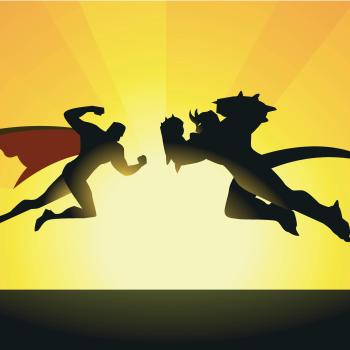
Fantastic Characters: Analyzing and Creating Superheroes and Villains
Students analyze characterization by creating their own superheroes or super-villains,
complete with related gadgets and settings.

Songs of Our Lives: Using Lyrics to Write Stories
Students learn about the life and music of John Lennon, write a short story from their lives integrating lyrics from some of their favorite songs, and create a class book of stories.
Cut up, Cover up, and Come Away with Ideas for Writing!
Students rework their forgotten/abandoned drafts by cutting and covering up selected words. By creatively manipulating text, they explore portal writing, a strategy for envisioning a new story or story direction.

The Mysteries of Harris Burdick: Using Illustrations to Guide Writing
Students use illustrations from The Mysteries of Harris Burdick as a guide to write mysteries
and then present their stories to the class for students to discuss to which illustration each
story corresponds.
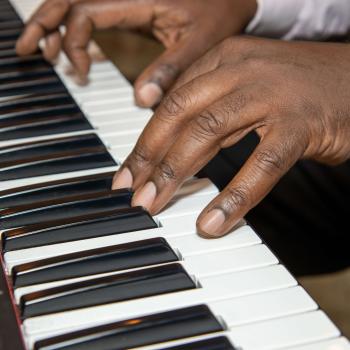
Facilitating Student-Led Seminar Discussions with The Piano Lesson
August Wilson's play The Piano Lesson invites students to ask a number of questions—big
and small. Students learn how to create effective discussion questions and then put them to use in student-led discussions.
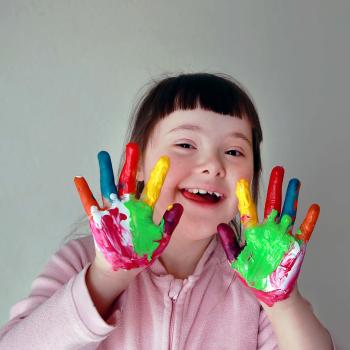
Color My World: Expanding Meaning Potential through Media
Using different writing/drawing materials (e.g., markers, color pencils, pastels, etc.), students learn how to communicate different moods and/or feelings to support their written ideas and how authors do the same through their work.

Comparing Portrayals of Slavery in Nineteenth-Century Photography and Literature
In this lesson, students analyze similarities and differences among depictions of slavery in The Adventures of Huckleberry Finn, Frederick Douglass' Narrative, and nineteenth century photographs of slaves. Students formulate their analysis of the role of art and fiction, as they attempt to reliably reflect social ills, in a final essay.

Analyzing Famous Speeches as Arguments
Students are often asked to perform speeches, but rarely do we require students to analyze speeches as carefully as we study works of literature. In this unit, students are required to identify the rhetorical strategies in a famous speech and the specific purpose for each chosen device. They will write an essay about its effectiveness and why it is still famous after all these years.
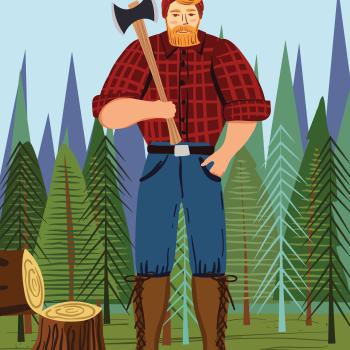
American Folklore: A Jigsaw Character Study
Groups of students read and discuss American folklore stories, each group reading a different story. Using a jigsaw strategy, the groups compare character traits and main plot points of the stories. A diverse selection of American folk tales is used for this lesson, which is adaptable to any text set.
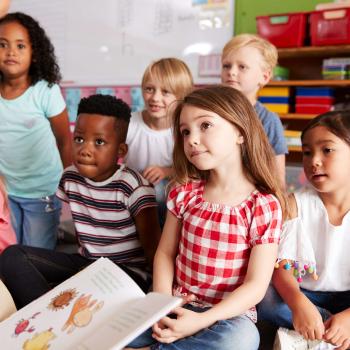
Guided Reading Strategies with Henry and Mudge
In this lesson, students read Henry and Mudge and the Starry Night as a whole group as the teacher models a questioning strategy. In subsequent sessions, students practice the questioning strategy and reread for fluency.

Choose, Select, Opt, or Settle: Exploring Word Choice in Poetry
Students investigate the effects of word choice in Robert Frost's "Choose Something Like a Star" to construct a more sophisticated understanding of speaker, subject, and tone.
Sonic Patterns: Exploring Poetic Techniques Through Close Reading
Students develop close reading skills connecting sound with sense in the poem "Those Winter Sundays," and write an original text that reflects their new learning.
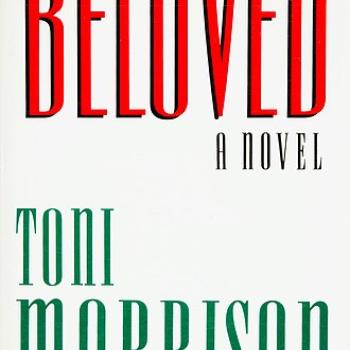
Narrative Structure and Perspectives in Toni Morrison's Beloved
Using Beloved as a model of a work with multiple narrative perspectives, students use a visualizing activity and close reading to consider ways in which subjective values shape contradictory representations.

Joining the Conversation about Young Adult Literature
Students create a persuasive case calling for the adoption of a particular young adult literature title into their school's language arts curriculum by writing letters or speeches.
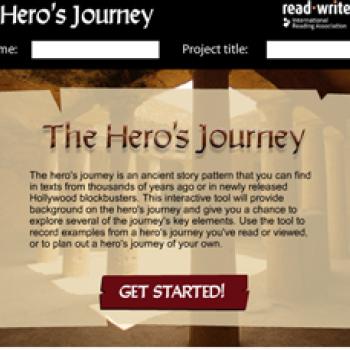
Preparing for the Journey: An Introduction to the Hero Myth
Students read a variety of picture books that contain elements of the hero's journey and use an online interactive tool to analyze the stories.

"America the Beautiful": Using Music and Art to Develop Vocabulary
Students engage in a rich study of vocabulary words from the song "America the Beautiful," using music and art.

Literacy Centers: Getting Started
This lesson gives teachers resources and guidance to create reading, listening, computer, and poetry Literacy Centers in their own classrooms.

Young Adult Literature about the Middle East: A Cultural Response Perspective
Adapted from Sheryl L. Finkle and Tamara J. Lilly's Middle Ground: Exploring Selected Literature from and about the Middle East, this variation on traditional literature circles exposes students to a variety of young adult fiction from and about the Middle East. Students read and share research and responses in collaborative groups. At the end of the lesson, they write a letter to welcome an immigrant student to their school and community.

Teaching Student Annotation: Constructing Meaning Through Connections
Students examine text closely and create annotations to make personal and meaningful connections with the work.