It's important to "hook" readers at a story's beginning, but it's equally important to keep them interested. In this lesson, students learn to write effective conclusions to their own stories.

Once They're Hooked, Reel Them In: Writing Good Endings
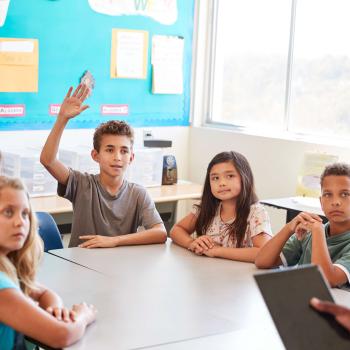
Building a Learning Community: Crafting Rules for the Classroom
Students will learn to mind their ps and qs in this lesson on etiquette and appropriate behavior in the classroom.

Is Superman Really All That Super? Critically Exploring Superheroes
What makes a superhero super? By comparing popular culture superheroes with heroic characters in children's literature, students learn to think critically about character traits, and consider how cultural perspectives influence the kinds of heroes we choose.

Digital Reflections: Expressing Understanding of Content Through Photography
Striking images can leave lasting impressions on viewers. In this lesson, students make textselfworld connections to a nature- or science-related topic as they collaboratively design a multimedia presentation.

Exploring Friendship With Bridge to Terabithia
Students make predictions about Bridge to Terabithia and its characters, complete character studies, and relate the characters' experiences to their own as they identify ways to make and keep friends.

No Teachers Allowed: Student-Led Book Clubs Using QAR
Students are introduced to the Question-Answer Relationship (QAR) strategy through a read-aloud and question sort. Students then use the strategy to develop questions for a peer-led book discussion.

Two Thumbs Up! Get Students Writing and Publishing Book Reviews
Students evaluate book reviews written by other children, discussing their components and effectiveness, and write reviews of favorite books to record on video or post online.

Media Literacy: Examining the World of Television Teens
Pop culture and the classroom collide in this lesson when students go behind the scenes to analyze a television series for characterization to use in an original television show proposal.

Slipping, Sliding, Tumbling: Reinforcing Cause and Effect Through Diamante Poems
Writing, revising, and publishing are just a few of the tasks students will complete in order to take their cause-and-effect diamante poems from an idea to a reality.

Music and Me: Visual Representations of Lyrics to Popular Music
Students will whistle while they work on this lesson, creating a photomontage movie of their interpretation of a favorite song's lyrics that will end everyone's day on a high note.
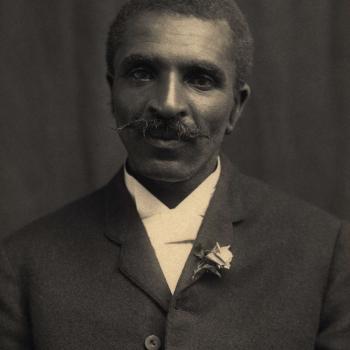
Great American Inventors: Using Nonfiction to Learn About Technology Inventions
Who are the people behind the world's greatest inventions? Students read biographies of a terrific trio of American inventors and create presentations that highlight how their inventions from the past impacted the future.

Bingo! Using Environmental Print to Practice Reading
The game Bingo is transformed in this lesson in which students use symbols and images to make connections to environmental print through the use of personalized Bingo cards.

Reading Informational Texts Using the 3-2-1 Strategy
Students can count on using the 3-2-1 strategy to help them successfully comprehend and write about an informational text.
My Life/Your Life: A Look at Your Parents' Past
Past and present come together when students interview their parents and create a skit that compares their parents' experiences as middle schoolers with the students' own lives.

Blast Off! Vocabulary Instruction Using a Virtual Moon Trip
3, 2, 1... Blast off! Students learn new vocabulary by taking a virtual field trip to the moon, read-alouds, creating a picture dictionary, and completing a final writing activity.

Play Ball! Encouraging Critical Thinking Through Baseball Questions
Cooperation and critical thinking are the name of the game as students use baseball facts they find online to create trivia questions for a class Jeopardy game.
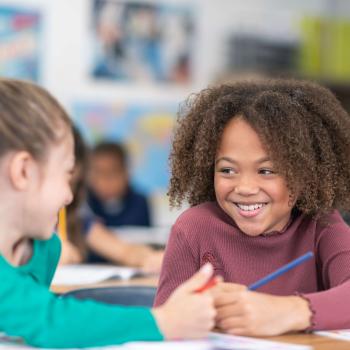
Planning Story Characters Using Interactive Trading Cards
Students use trading cards to examine fictional characters in a story.

Storytelling in the Social Studies Classroom
People make the past come alive as students research and then share stories about famous Americans who promoted democratic ideals.
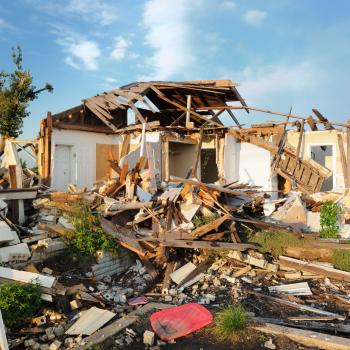
Exploring Cause and Effect Using Expository Texts About Natural Disasters
Students explore the nature and structure of expository texts that focus on cause and effect and apply what they learned using graphic organizers and writing paragraphs to outline cause-and-effect relationships.