This chart asks students to consider their challenges and successes across the span of the research process, from question formulation to the final write-up.
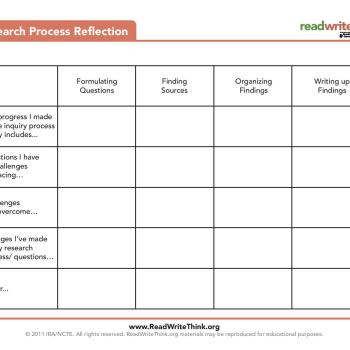
I-Search Process Reflection Chart

Facilitating Participation with Silent Conversations
This guide introduces silent conversations, a collaborative learning technique that has students
thinking, sharing, and reflecting about important questions—but through writing rather than talk.

Reading on the Go
In this Strategy Guide, learn how to prepare yourself and your students for reading and note-taking in mobile environments.

Teaching with Zooming Slideshows through Prezi
Through Prezi, a web application, students create "zooming" presentations for various purposes, such as presenting research, defending an opinion, or sharing a digital story.

Bringing Lessons to Life with Animoto
Using Animoto, a free Web 2.0 tool, students can develop short digital videos that include music, photos, video clips, and text as well as share their creations electronically.

Promoting Student-Directed Inquiry with the I-Search Paper
The sense of curiosity behind research writing gets lost in some school-based assignments. This Strategy Guide provides the foundation for cultivating interest and authority through I-Search writing, including publishing online.

Inquiry Charts (I-Charts)
This guide introduces I-Charts, a strategy that enables students to generate meaningful questions about a topic and organize their writing.
Lesson Plans for Creating Media-Rich Classrooms
This volume offers a collection of media literacy lessons for the secondary English classroom, including a CD of student handouts, teacher resources, and sample media files.
Building Literacy Connections with Graphic Novels: Page by Page, Panel by Panel
This collection of essays by classroom teachers demonstrates how to pair graphic novels with classic literature (including both canonical and YA lit).

Weekly Writer's Blogs: Building a Reflective Community of Support
Students explore the conventions of blog writing while using it to self-reflect on their writing and communicate with classmates about each other's reflections.

Analyzing Grammar Pet Peeves
By analyzing Dear Abby's "rant" about bad grammar usage, students become aware that attitudes about race, social class, moral and ethical character, and "proper" language use are intertwined.
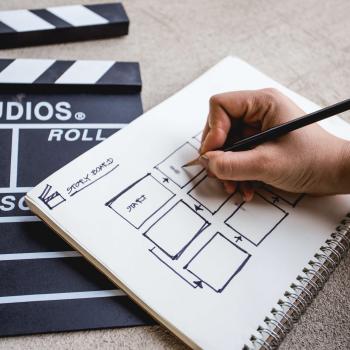
Students as Creators: Exploring Multimedia
Students are introduced to the genre of multimedia presentations through a review and analysis of online presentations. They then apply what they have learned to create their own multimedia presentations.

Students as Creators: Exploring Copyright
This lesson gives students the tools they need to consider the ethical issues surrounding use and ownership of copyrighted materials.

Technology and Copyright Law: A "Futurespective"
Students research and report on instances of how copyright laws have adapted to encompass new technologies. They write articles predicting copyright issues that may arise with new and future technologies.

Copyright Law: From Digital Reprints to Downloads
Students investigate how and why copyright law has changed over time, and apply this information to recent copyright issues, creating persuasive arguments based on the perspective of a particular group.
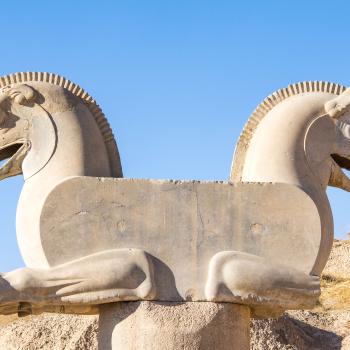
Gaining Background for the Graphic Novel Persepolis: A WebQuest on Iran
To prepare students for reading the graphic novel Persepolis, this lesson uses a WebQuest to focus students' research on finding reliable information about Iran before and during the Islamic Revolution.
Twenty-First Century Informational Literacy: Integrating Research Techniques and Technology
Students develop their reading, writing, research, and technology skills using graphic novels. As a final activity, students create their own graphic novels using comic software.

Analyzing and Podcasting About Images of Oscar Wilde
Students analyze images of Oscar Wilde used to publicize his 1882 American lecture tour. They then compare a caricature to another researched image, sharing this analysis in a podcast.