Students analyze characterization by creating their own superheroes or super-villains,
complete with related gadgets and settings.

Fantastic Characters: Analyzing and Creating Superheroes and Villains

Songs of Our Lives: Using Lyrics to Write Stories
Students learn about the life and music of John Lennon, write a short story from their lives integrating lyrics from some of their favorite songs, and create a class book of stories.

The Mysteries of Harris Burdick: Using Illustrations to Guide Writing
Students use illustrations from The Mysteries of Harris Burdick as a guide to write mysteries
and then present their stories to the class for students to discuss to which illustration each
story corresponds.
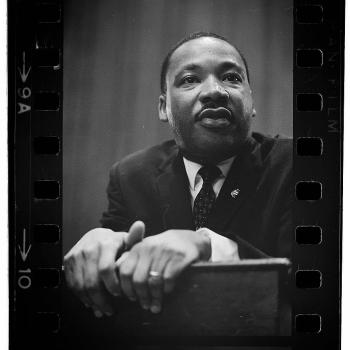
I Have a Dream: Exploring Nonviolence in Young Adult Texts
Students will identify how Martin Luther King Jr.'s dream of nonviolent conflict-resolution is reinterpreted in modern texts. Homework is differentiated to prompt discussion on how nonviolence is portrayed through characterization and conflict. Students will be formally assessed on a thesis essay that addresses the Six Kingian Principles of Nonviolence.

"America the Beautiful": Using Music and Art to Develop Vocabulary
Students engage in a rich study of vocabulary words from the song "America the Beautiful," using music and art.
The Comic Book Show and Tell
Students craft comic scripts using clear, descriptive, and detailed writing that shows (illustrates) and tells (directs). After peers create an artistic interpretation of the script, students revise their original scripts.

You're the Top! Pop Culture Then and Now
Students analyze the lyrics to Cole Porter's "You're the Top!" and then update them to include current "tops" in pop culture.
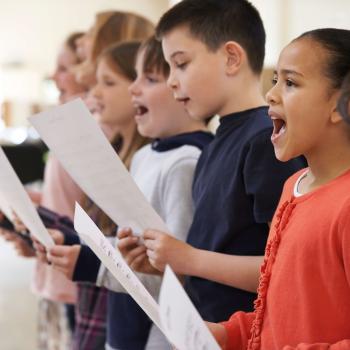
Improving Fluency through Group Literary Performance
Students participate in shared reading, choral reading, and readers theater, using books by Bill Martin, Jr. Repeated readings and literary performances help students with their reading accuracy, expression, and rate.

Blending the Past with Today's Technology: Using Prezi to Prepare for Historical Fiction
To prepare for literature circles featuring historical novels, students research the decades of the 1930s to the 1990s and share their information using Prezi, a web application for creating multimedia presentations.

Writing Acrostic Poems with Thematically Related Texts in the Content Areas
Students read thematically related texts, scaffolded from simple to complex, to help them gather necessary concept vocabulary and background knowledge in a content area. They then write acrostic poems to organize and present their learning in a creative way.

Seasonal Haiku: Writing Poems to Celebrate Any Season
After listening to haiku poetry, students use seasonal descriptive words to write their own haiku, following the traditional format. They then publish their poems by mounting them on illustrated backgrounds.
Read Across America Day: Celebrate a Nation of Diverse Readers
Bring the celebration of reading and literacy into your classroom, library, school, and home all year long.

RAFT Writing Template
Students can utilize this printout to organize their writing as they learn to use the RAFT strategy. This printout enables students to clearly define their role, audience, format, and topic for writing.

Using the RAFT Writing Strategy
This strategy guide introduces the RAFT technique and offers practical ideas for using this technique to teach students to experiment with various perspectives in their writing.

Preparing Students for Success with Reading in the Content Areas
In this strategy guide, you'll learn how to determine the level and type of support you need to provide students based on careful preparation as a content area expert.
Developing Academic Vocabulary
In this Strategy Guide Series, you'll find creative and compatible ways to build, maintain, and extend students' vocabulary across academic disciplines.

Using Word Walls to Develop and Maintain Academic Vocabulary
In this guide, you will learn how to use Word Walls to support vocabulary development and retention.

Using Generative Sentences to Apply Academic Vocabulary
In this guide, you will learn how to use generative sentences to give students opportunities to apply their knowledge of new words in writing.