ReadWriteThink - Powered by NCTE
  • About
  • Classroom Resources
    • Lesson Plans
    • Teaching Comics
    • Teaching With Primary Resources
    • Calendar
    • Printouts
    • Student Interactives
  • Collections
    • Assessment
    • Authors
    • Booklists
    • Media Literacy
    • Poetry
    • Primary Sources
    • Writing
  • Professional Development
    • Strategy Guides
    • Professional Library
    • Meetings & Events
  • Join NCTE
  • Contact Us
  • About
  • Classroom Resources
    • Lesson Plans
    • Teaching Comics
    • Teaching With Primary Resources
    • Calendar
    • Printouts
    • Student Interactives
  • Collections
    • Assessment
    • Authors
    • Booklists
    • Media Literacy
    • Poetry
    • Primary Sources
    • Writing
  • Professional Development
    • Strategy Guides
    • Professional Library
    • Meetings & Events
  • Join NCTE
  • Contact Us
  • Facebook
  • Twitter
  • Instagram
  • Pinterest
  • YouTube

Breadcrumb

  1. Home

Type

  • Classroom Resources
  • Professional Development

Grades

  • 1 (91)
  • 2 (95)
  • 3 (129)
  • 4 (134)
  • 5 (148)
  • 6 (219)
  • 7 (217)
  • 8 (217)
  • 9 (208)
  • 10 (208)
  • 11 (204)
  • 12 (204)
  • K (86)

Learning Objectives

  • (-) reading genres (290)
  • (-) Vocabulary (191)
  • collaboration (458)
  • Comprehension (508)
  • critical thinking (649)
  • digital literacy (154)
  • Grammar (57)
  • inquiry / research (350)
  • listening (182)
  • literary analysis (367)
  • Media literacy (205)
  • metacognition (302)
  • multicultural awareness (113)
  • multimodal literacy (260)
  • oral communication (224)
  • phonological awareness (61)
  • print awareness (89)
  • reading fluency (67)
  • Spelling (51)
  • text structure / story structure (242)
  • writing genres (382)
  • writing process (421)

Topics

  • arts
  • careers
  • community
  • drama
  • ELL
  • Family
  • fiction
  • Mathematics
  • Mobile Learning
  • nonfiction
  • poetry
  • science
  • seasons / holidays
  • social action
  • social studies / history
  • Sports
  • STEM
children coloring
Grades
3 - 5
|
Lesson Plan
|
Standard Lesson
Artistic Elements: Exploring Art Through Descriptive Writing

Paint a vivid picture in your reader's mind with good descriptive writing! Artwork provides the perfect starting point for practicing descriptive writing that conveys color, shape, line, and mood.

Predicting and Gathering Information With Nonfiction Texts
Grades
K - 2
|
Lesson Plan
|
Unit
Predicting and Gathering Information With Nonfiction Texts
Students take a walk on the wild side when they develop an understanding of nonfiction texts with hands-on experiences and intense analysis.

Internalization of Vocabulary Through the Use of a Word Map
Grades
6 - 8
|
Lesson Plan
|
Standard Lesson
Internalization of Vocabulary Through the Use of a Word Map
Students practice with words and develop both definitional and contextual knowledge through two agents—purposeful sequencing of steps and collaboration with peers.

Learning Vocabulary Down By the Bay
Grades
K - 1
|
Lesson Plan
|
Standard Lesson
Learning Vocabulary Down By the Bay
Students sing a popular children's song, follow along with a picture book that contains the lyrics and illustrations, and then participate in activities to reinforce learning of the vocabulary words.

Grades
6 - 8
|
Lesson Plan
|
Recurring Lesson
Choosing, Chatting, and Collecting: Vocabulary Self-Collection Strategy
Students identify interesting words from Shakespeare's plays and add them to a classroom vocabulary collection.

Grades
3 - 5
|
Lesson Plan
|
Standard Lesson
Developing a Living Definition of Reading in the Elementary Classroom
Using the guiding question, "What is reading?" students interact with a variety of texts as they uncover the skills necessary to interact with texts and develop a definition of reading.

Show What You Know: Read, Write and Solve Math Problems
Grades
2 - 3
|
Lesson Plan
|
Minilesson
Show What You Know: Read, Write and Solve Math Problems
Informational texts, iPads, and interactive games, oh, my! Help students journey through multimodal texts to identify and solve real-world mathematics problems using writing and apps.

Bringing Economic Vocabulary to Life Through Video Posters
Grades
2 - 5
|
Lesson Plan
|
Minilesson
Bringing Economic Vocabulary to Life Through Video Posters
Imagine if vocabulary could come alive with the click of a button! Students create video posters to demonstrate knowledge of new economics vocabulary.

Tell Me Your Story: Video-Inspired Vocabulary Writing
Grades
9 - 12
|
Lesson Plan
|
Recurring Lesson
Tell Me Your Story: Video-Inspired Vocabulary Writing
Students watch a sample of artistic video clips online and respond through creative writing while using the vocabulary words they are currently studying.
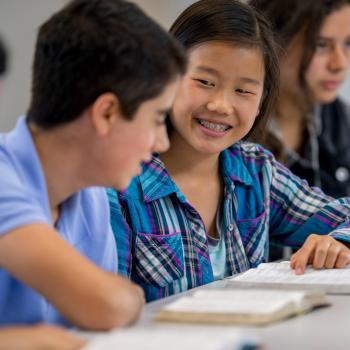
Beyond History Books: Researching With Twin Texts and Technology
Grades
4 - 8
|
Lesson Plan
Beyond History Books: Researching With Twin Texts and Technology
Students in grades 4–8 activate prior knowledge and research information about a historic event through fiction and nonfiction literature and exploration of relevant websites.

Using Story Innovation to Teach Fluency, Vocabulary, and Structure
Grades
3 - 6
|
Lesson Plan
|
Recurring Lesson
Using Story Innovation to Teach Fluency, Vocabulary, and Structure
An instructional strategy called story innovation teaches students fluency, comprehension, vocabulary, and story structure. This unique strategy can be adapted for many purposes.

Digital Word Detectives: Building Vocabulary With e-Book Readers
Grades
2 - 6
|
Lesson Plan
|
Minilesson
Digital Word Detectives: Building Vocabulary With e-Book Readers
Students in grades 2-6 use digital dictionaries and other e-book tools to learn new vocabulary as they read e-books on digital reading devices.

Seeking Social Justice Through Satire: Jonathan Swift's "A Modest Proposal"
Grades
10 - 12
|
Lesson Plan
|
Unit
Seeking Social Justice Through Satire: Jonathan Swift's "A Modest Proposal"
This lesson assists advanced students in grades 10–12 in comprehending Jonathan Swift's "A Modest Proposal" and developing a presentation to satirize a contemporary social issue.

Loaded Words: Vocabulary That Packs a Punch in Persuasive Writing
Grades
4 - 8
|
Lesson Plan
|
Minilesson
Loaded Words: Vocabulary That Packs a Punch in Persuasive Writing
In this minilesson, students practice identifying and purposefully using vocabulary in persuasive writing that is intended to have an emotional impact on the reader.

A Portrait of Our World: Making Connections and Developing Comprehension
Grades
6 - 8
|
Lesson Plan
|
Unit
A Portrait of Our World: Making Connections and Developing Comprehension

Students engage in carousel walks, character analyses, global explorations, and genre studies while using valuable language arts strategies to build higher-level comprehension skills.

Engineering the Perfect Poem by Using the Vocabulary of STEM
Grades
7 - 10
|
Lesson Plan
|
Standard Lesson
Engineering the Perfect Poem by Using the Vocabulary of STEM

Students research engineering careers and create poetry to understand the vocabulary of STEM (science, technology, engineering, and mathematics).

What is Poetry? Contrasting Poetry and Prose
Grades
6 - 8
|
Lesson Plan
|
Standard Lesson
What is Poetry? Contrasting Poetry and Prose

Students often find poetry frustrating and meaningless. By helping students think critically about the differences between poetry and prose, this introduction sets the stage for different strategies for comprehending poetic texts.

A Prereading Strategy: Using the Vocabulary, Language, Prediction (VLP) Approach
Grades
6 - 8
|
Lesson Plan
|
Standard Lesson
A Prereading Strategy: Using the Vocabulary, Language, Prediction (VLP) Approach
Students learn content area vocabulary and increase reading comprehension using the Vocabulary, Language, Prediction (VLP) approach.

Reading Through Different Lenses: Making Text Connections Across the Curriculum
Grades
6 - 8
|
Lesson Plan
Reading Through Different Lenses: Making Text Connections Across the Curriculum
Students learn to comprehend the linguistic text styles of different content areas and use the interactive ReadWriteThink Notetaker tool as the teacher models the exercise.

3-2-1 Vocabulary: Learning Filmmaking Vocabulary by Making Films
Grades
6 - 8
|
Lesson Plan
|
Unit
3-2-1 Vocabulary: Learning Filmmaking Vocabulary by Making Films
Bring the vocabulary of film to life through the processes of filmmaking. Students learn terminology and techniques simultaneously as they plan, film, and edit a short video.

Pagination

  • First page « First
  • Previous page ‹‹
  • …
  • Page 12
  • Page 13
  • Page 14
  • Page 15
  • Page 16
  • Page 17
  • Page 18
  • Page 19
  • Page 20
  • …
  • Next page ››
  • Last page Last »

Explore Resources by Grade

  • KindergartenK
  • 1-2
  • 3-4
  • 5-6
  • 7-8
  • 9-10
  • 11-12

RWT-logo

Powered By NCTE

Footer 1 Menu

  • About
  • Classroom Resources
  • Professional Development
  • Collections
  • Contact Us

Footer 2 Menu

  • National Council of Teachers of English
  • Contribute to RWT
  • FAQs
  • Join NCTE

Footer 3 Menu

  • Legal Notices
  • Privacy Policy
  • Promotional Materials
  • Site Demonstrations

Want to stay in touch with RWT and NCTE? Sign up here!

  • Facebook
  • Twitter
  • Instagram
  • Pinterest
  • YouTube

© NCTE 2026. All rights reserved