Students are encouraged to understand a book that the teacher reads aloud to create a new ending for it using the writing process.

The Houdini Box: What Did Houdini Hide? Writing Creative Endings
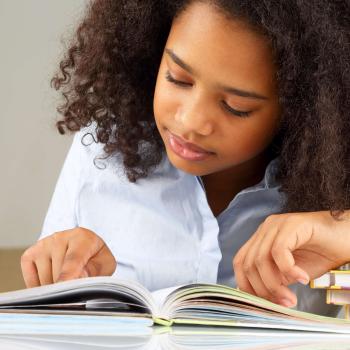
Creating a Feast for the Senses With Mentor Texts
This lesson teaches intermediate students to "use the experts" to learn how to revise to create sharp, sensory-rich experiences for their readers.

Show-Me Sentences
This lesson teaches students how to revise dull "telling" sentences into vivid, descriptive "showing" sentences.
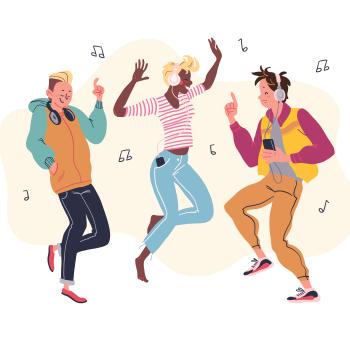
Playlist for Holden: Character Analysis With Music and Lyrics
Students compile a playlist of 10 songs representing a literary character and explain their choices based on the book's dialogue, plot, conflict, and resolution.

When I Was Young In...A Literature to Language Experience
Past meets present in this lesson in which students practice verb tense when they write personal short stories that they then publish in a flip book.
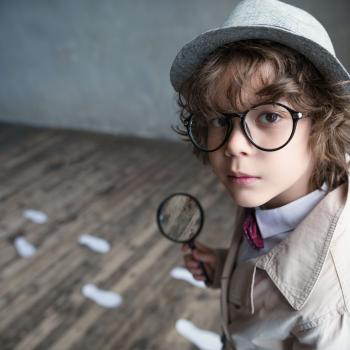
What's in a Mystery? Exploring and Identifying Mystery Elements
Students identify the characteristics of mystery writing, outline a mystery story using a graphic organizer, write and revise their own mystery story, edit each other's work, and share their mysteries.

A Directed Listening-Thinking Activity for "The Tell-Tale Heart"
What's that sound? Students participate in a Directed ListeningThinking Activity (DLTA) using "The Tell-Tale Heart," make predictions, and respond in the form of an acrostic poem or comic strip.

Family Ties: Making Connections to Improve Reading Comprehension
Families are all about connections between people. In this lesson, students read three books about different families and make text-to-self, text-to-text, and text-to-world connections to those texts.

Developing Story Structure With Paper-Bag Skits
Lights, camera, action, and a bit of mystery! In this lesson, students use mystery props in a skit bag to create and perform in short, impromptu skits.
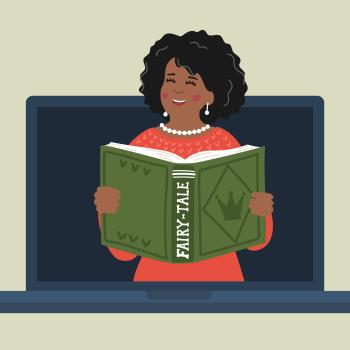
This is My Story: Encouraging Students to Use a Unique Voice
What did the wolf think of Red Riding Hood? Once Upon a Fairy Tale offers his side of the story and more, providing vivid examples of how voice enlivens narrative. After comparing versions of the story, students apply the concept of voice to Fractured Fairy Tales and other writing activities.

Learning Centers: From Shared to Independent Practice
Seven blind mice—see how they spend each day of the week in this lesson that uses the book Seven Blind Mice to guide students through shared reading, writing, and listening activities.
Using a Predictable Text to Teach High-Frequency Words
After reading an engaging yet predictable text about a child looking for his cat, students use a similar format and high-frequency words to craft tales about their own lost pets.
Gingerbread Phonics
"Run, run, as fast as you can." Students use this refrain from The Gingerbread Man to learn letter-sound correspondence. Students use their new skills to write an online story.

Once They're Hooked, Reel Them In: Writing Good Endings
It's important to "hook" readers at a story's beginning, but it's equally important to keep them interested. In this lesson, students learn to write effective conclusions to their own stories.
Fishing for Readers: Identifying and Writing Effective Opening "Hooks"
Good writers "hook" their readers in the very first sentences. In this lesson, students learn how to cast an attention-grabbing hook in their writing to effectively draw in readers' attention.
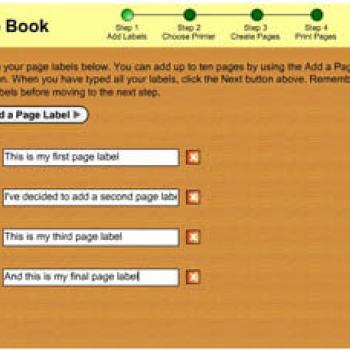
Flip Book
The Flip Book is designed to allow users to type and illustrate tabbed flip books up to ten pages long. Students and teachers can use the flip book for taking notes while reading, making picture books, collecting facts, or creating question and answer booklets.
The Charlotte Huck Award for Outstanding Fiction for Children is announced today.
Students read and discuss an award-winning book before writing their own story that demonstrates compassion.

Author Matt de la Peña was born today.
Students use an essay by de la Peña as a model for writing their own literacy autobiography.

Author E.B. White was born on this day in 1899.
Author E.B. White, most well-known for his famous children's book, Charlotte's Web, received high acclaim and awards for many of his works of fiction.

Author Amy Tan was born today in 1952
Students watch an excerpt of an interview with Tan and apply some of her principles to writing a story of their own.