Students practice writing detailed, sensory-rich descriptions by framing a small piece of nature and freewriting about it. From this minilesson, students can develop a variety of types of writing.

Creative Writing in the Natural World: A Framing

The ABCs of Poetry
Students examine a letter of the alphabet from all angles, creating image pools of original metaphors that they then turn into poems.

Finding Common Ground: Using Logical, Audience-Specific Arguments
Using a hypothetical situation, students generate arguments from opposing points of view, discover areas of commonality using Venn diagrams, and construct logical, audience-specific arguments to persuade their opponents.

Draft Letters: Improving Student Writing through Critical Thinking
Draft letters ask students to think critically about their writing on a specific assignment before submitting their work to a reader. This lesson explains and provides models for the strategy.
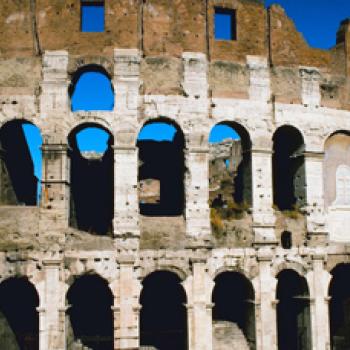
You're the Top! Pop Culture Then and Now
Students analyze the lyrics to Cole Porter's "You're the Top!" and then update them to include current "tops" in pop culture.
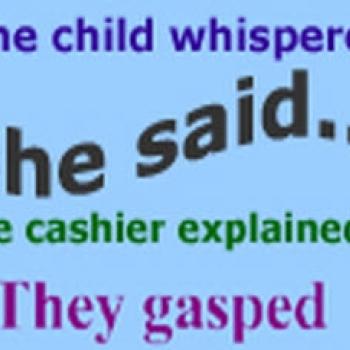
Choosing Clear and Varied Dialogue Tags: A Minilesson
In this minilesson, students explore the use of dialogue tags such as "he said" or "she answered" in picture books and novels, discussing their purpose, form, and style.

Choosing the Best Verb: An Active and Passive Voice Minilesson
Students explore how active and passive voices are appropriate to different audiences. They examine online resources, and then draw conclusions about verb use, which they apply to their own writing.

Is a Sentence a Poem?
Students use their own poetry to analyze syntax, imagery, and meaning in a one-sentence poem by a canonical author to decide what makes it a poem.

Collaborative Stories 2: Revising
Using a collaborative story written by students, the teacher leads a shared-revising activity to help students consider content when revising, with students participating in the marking of text revisions.

Prove It!: A Citation Scavenger Hunt
Students are challenged to find citations that support details about the characters, plot, or themes from a text.
Research Building Blocks: "Organize This!"
In this minilesson, students organize information they compile while doing research for a written report on a selected topic.

Audience, Purpose, and Language Use in Electronic Messages
Students explore using electronic messaging and Internet abbreviations for specific purposes and examine the importance of using a more formal style of writing based on their audience.

Research Building Blocks: Notes, Quotes, and Fact Fragments
Students are guided through the process of taking notes while reading factual information, then turning those notes into new sentences and paragraphs written in their own words.

Peer Review: Narrative
This minilesson guides student in using the PQP techniquePraise–Question–Polishto offer concrete and useful peer review feedback.
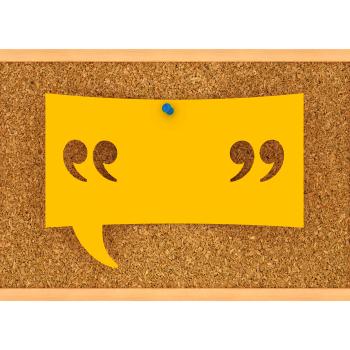
Inside or Outside? A Minilesson on Quotation Marks and More
Students often question whether a punctuation mark goes inside or outside the quotation marks, especially when writing dialogue. This lesson helps students identify the conventions and apply them to their text.

Character Clash: A Minilesson on Paragraphing and Dialogue
Students learn about paragraphing conventions in dialogue by revising their own writing.
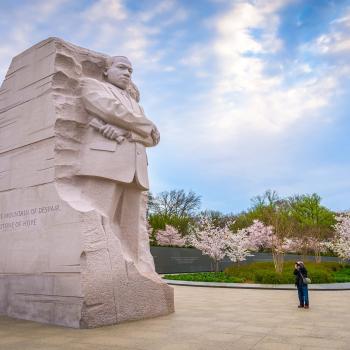
How Big Are Martin's Big Words? Thinking Big about the Future
Inspired by the book Martin's Big Words, students explore information on Dr. King to think about his "big" words, then they write about their own "big" words and dreams.

Alliteration in Headline Poems
Students will be introduced to the term alliteration and create a headline poem consisting of 25 words that contain at least three examples of alliteration.

She Did What? Revising for Connotation
Did she walk, skip, amble, dance? In this minilesson, students explore connotation by acting out and revising the simple sentence "She walked into the room."

Using Repetition and Picture Cues to Foster Independent Young Readers
Kindergartners share their knowledge of letters and sounds in a large group setting, giving teachers an assessment opportunity. Each student contributes a page to make a repetitive classroom book.