Students practice with words and develop both definitional and contextual knowledge through two agents—purposeful sequencing of steps and collaboration with peers.

Internalization of Vocabulary Through the Use of a Word Map

Learning Vocabulary Down By the Bay
Students sing a popular children's song, follow along with a picture book that contains the lyrics and illustrations, and then participate in activities to reinforce learning of the vocabulary words.

Choosing, Chatting, and Collecting: Vocabulary Self-Collection Strategy
Students identify interesting words from Shakespeare's plays and add them to a classroom vocabulary collection.

Developing a Living Definition of Reading in the Elementary Classroom
Using the guiding question, "What is reading?" students interact with a variety of texts as they uncover the skills necessary to interact with texts and develop a definition of reading.

Poetry Plus! Creating 21st Century Poems with Web Tools
This lesson encourages students to immerse themselves in poetry as they share their original poems orally and digitally with published poets and peers nationwide.

Bringing Economic Vocabulary to Life Through Video Posters
Imagine if vocabulary could come alive with the click of a button! Students create video posters to demonstrate knowledge of new economics vocabulary.

Resumes and Cover Letters for High School Students
High school students are taught how to use resumes and cover letters to highlight their skills and make them stand out, whether applying to college or for a job.
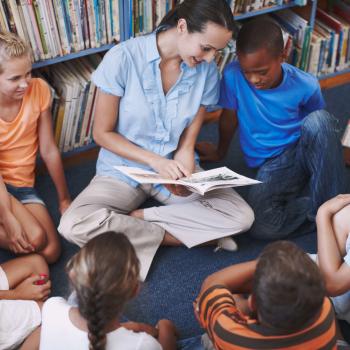
Using Story Innovation to Teach Fluency, Vocabulary, and Structure
An instructional strategy called story innovation teaches students fluency, comprehension, vocabulary, and story structure. This unique strategy can be adapted for many purposes.

Creating a Feast for the Senses With Mentor Texts
This lesson teaches intermediate students to "use the experts" to learn how to revise to create sharp, sensory-rich experiences for their readers.

What's Under the Slide? Making Inferences Using Microscopes
Students hone their critical thinking skills by learning how to make inferences from textual clues.

3-2-1 Vocabulary: Learning Filmmaking Vocabulary by Making Films
Bring the vocabulary of film to life through the processes of filmmaking. Students learn terminology and techniques simultaneously as they plan, film, and edit a short video.

Creating an Online Community Through Electronic Portfolios
Students publish their work in an electronic portfolio, which enables them to respond to each other's content online.

e-Book Reading and Response: Innovative Ways to Engage with Texts
Students in grades 5 through 12 read and respond to electronic books by using e-book tools and features, including digital note-taking capabilities.

Going Digital: Using e-Book Readers to Enhance the Reading Experience
Students use various tools and features of digital readers to develop vocabulary, support comprehension, respond to text, improve fluency, and enhance the reading experience.

Reading Idol! Bringing Readers Theatre Center Stage in Your Classroom
Students produce a Readers Theatre performance to compete to be named the Reading Idol. Students vote on the final performances and record them as podcasts.

Talking About Books to Improve Comprehension
This lesson is a conversation-starter! In this lesson, students learn about striking up deep-thought conversations and staying on topic in the form of a book talk.

Rain, Ice, Steam: Using Reading to Support Inquiry About the Water Cycle
Water is always moving in a continuous cycle from liquid to solid to gas and back again. Students study this never-ending cycle through shared readings, center activities, and experiments.

Using Children's Literature to Develop Classroom Community
Conversation and cooperation bring out the best in students when they hold dialogues about their individual strengths, abilities, and talents.
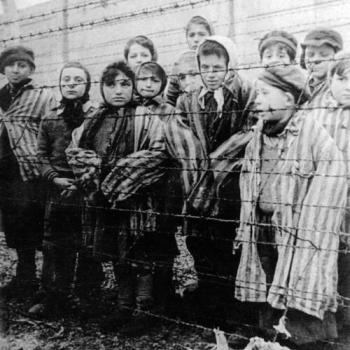
Using Technology to Analyze and Illustrate Symbolism in Night
Images have power—they can trigger memories or symbolize abstract ideas. Students put the power of images to the test as they analyze symbolism in Night and create symbolic photomontages.

Integrating Literacy Into the Study of the Earth's Surface
Water covers 71% of the earth's surface—does it get the instructional time it deserves in your busy curriculum? Students wade right in to the study of bodies of water as they read and discuss science trade books and work together to develop Readers Theater scripts based on selected titles.