Everyone knows that Star Wars character Darth Vader is a villain. This lesson asks students to explore how they know such things about heroes and villains they encounter in texts.
Tracking the Ways Writers Develop Heroes and Villains
Constructing New Understanding Through Choral Readings of Shakespeare
After reading The Tempest or any other play by William Shakespeare, students work in small groups to plan, compose, and perform a choral reading based on a character or theme.
All's Well that Sells Well: A Creative Introduction to Shakespeare
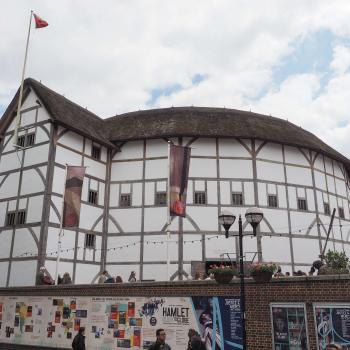
Students compare attending a performance at The Globe Theater with attending a modern theater production or movie. They then create a commercial for an Elizabethan audience promoting a modern product.

The Ten-Minute Play: Encouraging Original Response to Challenging Texts
Students use both analytical and creative skills to adapt passages from a novel with significant internal dialogue and conflict, such as Toni Morrison's Beloved, into a ten-minute play.

Persuading Readers with Endorsement Letters
Students explore the genre of commercial endorsements, establishing characteristics and requirements for the genre. Each student then composes an endorsement of a product, service, company, or industry.
Writing Technical Instructions
Students walk through the process of creating technical instructions by analyzing existing instructions, choosing an audience, writing their own instructions, receiving user feedback, and then revising and publishing their instructions.
Cover to Cover: Comparing Books to Movies
Students compare and analyze novels and the movies adapted from them. They design new DVD covers and a related insert for the movies, reflecting their response to the movie version.
Students as Creators: Exploring Multimedia
Students are introduced to the genre of multimedia presentations through a review and analysis of online presentations. They then apply what they have learned to create their own multimedia presentations.

Students as Creators: Exploring Copyright
This lesson gives students the tools they need to consider the ethical issues surrounding use and ownership of copyrighted materials.

Designing Effective Poster Presentations
Students explore the genre of posters, review informational writing and visual design, and then design poster presentations to share in class or at a school-wide fair.

Technology and Copyright Law: A "Futurespective"
Students research and report on instances of how copyright laws have adapted to encompass new technologies. They write articles predicting copyright issues that may arise with new and future technologies.

Copyright Law: From Digital Reprints to Downloads
Students investigate how and why copyright law has changed over time, and apply this information to recent copyright issues, creating persuasive arguments based on the perspective of a particular group.
Gaining Background for the Graphic Novel Persepolis: A WebQuest on Iran
To prepare students for reading the graphic novel Persepolis, this lesson uses a WebQuest to focus students' research on finding reliable information about Iran before and during the Islamic Revolution.

Exploring Plagiarism, Copyright, and Paraphrasing
Students investigate issues of plagiarism, fair use, and paraphrasing using KWL charts, discussion, and practice.

Worth Its Weight: Letter Writing with "The Things They Carried"
This lesson uses a letter-writing activity based on Tim O'Brien's story "The Things They Carried" to build empathy as students examine the weight they symbolically carry in their own lives.

Exchanging Ideas by Sharing Journals: Interactive Response in the Classroom
Pairs of students respond to literature alternately in shared journals. Mini-lessons are presented on responding to prompts, creating dialogue, adding drawings, and asking and answering questions.

Discovering Memory: Li-Young Lee's Poem "Mnemonic" and the Brain
Students learn about memory by doing a memory-writing exercise, studying the brain to understand how it affects memory, reading Li-Young Lee's poem "Mnemonic," and creating projects to demonstrate their understanding.

Many Years Later: Responding to Gwendolyn Brooks' "We Real Cool"
Students analyze the Gwendolyn Brooks' poem "We Real Cool" and then write about how the character's pool hall days might influence who the character becomes fifty years in the future.
The Children's Picture Book Project
In this lesson students evaluate published children's picture storybooks. Students then plan, write, illustrate, and publish their own children's picture books.
More than One Way to Create Vivid Verbs
This lesson teaches students how to use old verbs in a new way, thus creating new and fresh descriptive phrases.