Students explore the different facets of complexity in the compelling first-person narrator in Sharon Draper's Out of My Mind.

Analyzing First-Person Narration in Sharon Draper's Out of My Mind
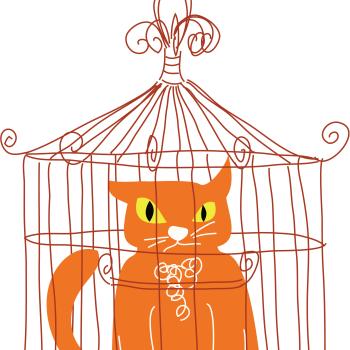
Understanding Irony
This lesson enables students to define the three types of irony, identify and differentiate among examples of the types of irony, and demonstrate their understanding of each type.

Exploring Perspectives on Desegregation Using Brown Girl Dreaming
Students read and discuss a selection of poems from Jacqueline Woodson's Brown Girl Dreaming to explore varying views on the process of desegregation in America.

Examining History with Maya Angelou's Poetry
To understand the historical background that influenced Maya Angelou's poems, students research events to produce trading cards using the ReadWriteThink Trading Card Student Interactive. Through the sharing of these trading cards, students understand the historical background as they analyze Angelou's poetry.

"Blind Date with a Book": Creating Lifelong Readers
This multi-lesson learning project encourages students to read engaging texts at their grade level and also works to promote habitual, independent reading in all students.
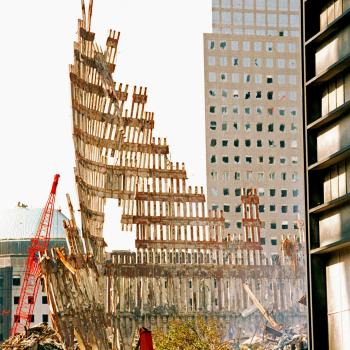
Huge Mistakes that Led to Catastrophe: Learning about Human-made Disasters throughout History
After researching various human-made disasters such as the BP oil spill, the sinking of the Titanic, and the Great Chicago Fire, students share their research in oral presentations. Then students pair up to compare and contrast their disasters using the Venn Diagram Student Interactive or the Venn diagram Mobile App.

Developing Aesthetic Criteria: Using Music to Move Beyond Like/Dislike with Poetry
In this lesson, students develop the cognitive tool of criteria development for discussing the aesthetics of poetry and music.

Using Mobile Devices to Illustrate Literary Devices
Using mobile devices, students capture images to represent literary devices. Students then reflect on why their images depict the literary devices.
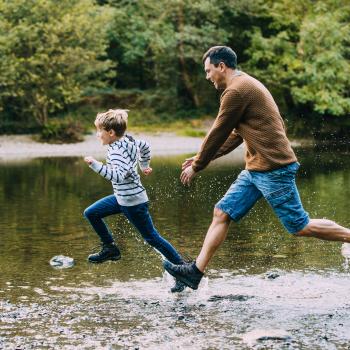
Action Is Character: Exploring Character Traits with Adjectives
Students must "become" a character in a novel in order to describe themselves and other characters using powerful adjectives.

Become a Character: Adjectives, Character Traits, and Perspective
Students "become" one of the major characters in a book and describe themselves and other characters, using lists of accurate, powerful adjectives.
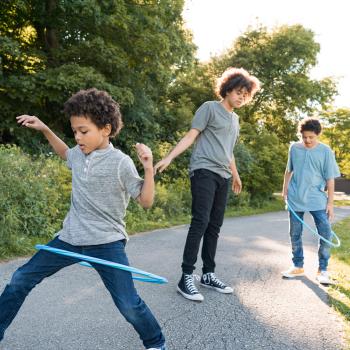
Teaching Voice with Anthony Browne's Voices in the Park
Students analyze Voices in the Park by Anthony Browne to determine how an author keeps an audience interested by creating voice and to applying that knowledge to their own writing.

Book Report Alternative: Character and Author Business Cards
Students respond to a book they have read by thinking symbolically to create a business card for one of the characters.

Book Report Alternative: The Elements of Fiction
Students identify the elements of fiction in a book they have read and share summaries of them by writing and illustrating their own mini-book.

Book Reviews, Annotation, and Web Technology
Students work in groups to create annotated book reviews with links to topics of interest related to their book.

Book Report Alternative: Summary, Symbol, and Analysis in Bookmarks
Students make bookmarks on computers and share their ideas with other readers at their school, while practicing summarizing, recognizing symbols, and writing reviews—all for an authentic audience.

Choose Your Own Adventure: A Hypertext Writing Experience
Students analyze "choose your own adventure" stories and brainstorm to develop setting, characters, and plots for their own adventures stories and related Websites.

Guess What's in the Bag: A Language-based Activity
Students play a guessing game to practice using descriptive language.
Peer Review: Narrative
This minilesson guides student in using the PQP techniquePraise–Question–Polishto offer concrete and useful peer review feedback.
Using Picture Books to Teach Setting Development in Writing Workshop
Students use a graphic organizer to analyze setting development in picture books. They then apply what they have learned to their own writing.

Using Picture Books to Teach Characterization in Writing Workshop
Students explore character development through experiences with picture books. They learn about the connections between reading and writing and apply the information they learn to revisions of their own writing.