Students explore their towns' landmarks, symbols, and people; look at brochures and other informational tools; practice writing for a specific audience and revising; and work collaboratively to create a brochure.
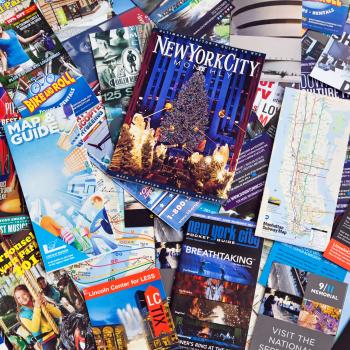
All About Our Town: Using Brochures to Teach Informational Writing

Poetry: Sound and Sense
Students' groans about studying poetry may disappear with this lesson in which students read poetry from various writers and use these poems to examine the sounds and sense of language.

The Pros and Cons of Discussion
Students use a Discussion Web to engage in meaningful discussion of the question, "Are people equal?"
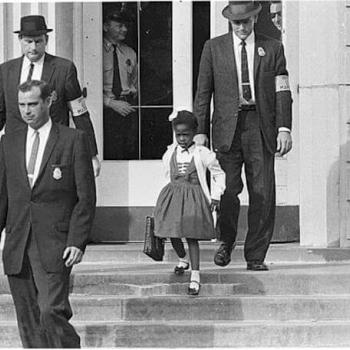
Seeing Integration From Different Viewpoints
What does the world look like through someone else's eyes? Guide students in using colorful paper glasses to examine a story of school desegregation from multiple perspectives.

The Connection Between Poetry and Music
Students won't miss a beat in this reading fluency lesson that combines music and poetry.

Word Study with Henry and Mudge
Henry and Mudge is used in this lesson to build students' word recognition through rereading, high-frequency word banks, word studies, and writing.

Exploring and Sharing Family Stories
Writing gets personal when students interview family members in order to write a personal narrative about that person.

Review Redux: Introducing Literary Criticism Through Reception Moments
Literature takes on a life of its own as students take a hands-on approach to exploring A Raisin in the Sun for cultural and historical context.

Teaching Shapes Using Read-Alouds, Visualization, and Sketch to Stretch
Visual clues in winter-themed books used in this lesson encourage students to make real-world math connections.
Collaborating, Writing, Linking: Using Wikis to Tell Stories Online
Students become online authors in this lesson in which they write and post a short story using wiki technology.

And the Question Is... Writing Good Survey Questions
There's no question that students will be able to compose good survey questions by the end of this lesson.
And the Question Is... Evaluating the Validity of a Survey
In this lesson, students learn to ask the right questions about the validity of surveys.
Skimming and Scanning: Using Riddles to Practice Fact Finding Online
Students will learn to skim and scan to make sure they don't flounder when they're surfing the Internet for facts to help them complete riddles about the United States.
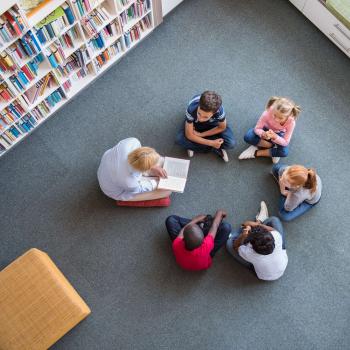
Give Them a Hand: Promoting Positive Interaction in Literature Circles
Students circle their desks as they analyze their own participation within a small group discussion.

Combining Read-Alouds With Economics in the Primary Grades
Students learn that what you read in books can really add up when they analyze literary texts for economic concepts.

Story Elements Alive!
What's in a narrative? Students find out in this lesson in which they explore four narrative elements—setting, characters, problem/solution, and plot, through purpose-driven read-alouds and independent reading.
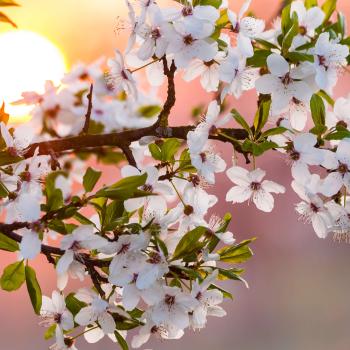
Reading, Writing, Haiku Hiking! A Class Book of Picturesque Poems
Students learn haiku
write descriptive poems
and share with the class.

Family Ties: Making Connections to Improve Reading Comprehension
Families are all about connections between people. In this lesson, students read three books about different families and make text-to-self, text-to-text, and text-to-world connections to those texts.

MyTube: Changing the World With Video Public Service Announcements
This assignment will go viral with students as they think about the meanings of words and images in public service announcements from YouTube before creating a PSA of their own.
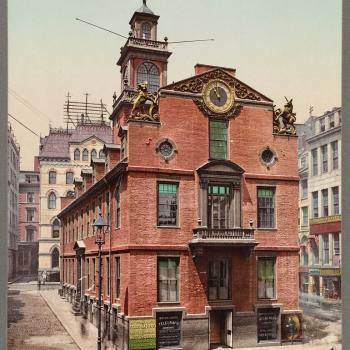
Using Pictures to Build Schema for Social Studies Content
How do you read an image? Students find out in this lesson in which they "read" several images of the Boston Massacre to better understand the event and recognize effects of propaganda.