Students will enjoy this blast from the past as they read the works of Dr. Seuss and Shel Silverstein to analyze the way social issues are addressed in selected works.

Seuss and Silverstein: Posing Questions, Presenting Points

Using Word Webs to Teach Synonyms for Commonly Used Words
Students use word webs to choose synonyms for generic adjectives and to learn to adjust their word usage for different contexts.

The Peace Journey: Using Process Drama in the Classroom
What does peace mean to you? In this lesson, students attempt to answer this question as they write and perform a short skit that reflects their ideas of peace.
Charting Characters for a More Complete Understanding of the Story
Character Perspective Charting allows students to compare multiple characters and their points of view to better understand a story.

I've Got the Literacy Blues
Students will be singing the blues in this lesson in which they identify themes from "The Gift of the Magi" and write and present blues poetry based on those themes.
Using the Four-Square Strategy to Define and Identify Poetic Terms
How do poets play with language? Students will explore some answers to this question as they search through poems for examples of alliteration, assonance, simile, and rhyme.
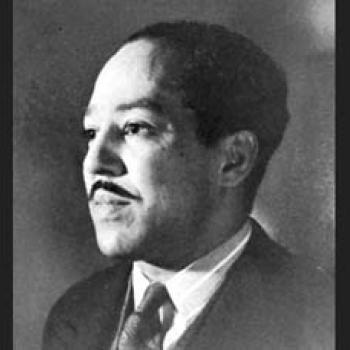
Discovering a Passion for Poetry With Langston Hughes
Through a study of Langston Hughes' poetry, students connect his writing to his place in history.
Guided Comprehension: Evaluating Using the Meeting of the Minds Technique
Based on the Guided Comprehension Model developed by Maureen McLaughlin and Mary Beth Allen, this lesson introduces students to the strategy of evaluating, using the Meeting of the Minds technique.

Guided Comprehension: Knowing How Words Work Using Semantic Feature Analysis
Based on the Guided Comprehension Model developed by Maureen McLaughlin and Mary Beth Allen, this lesson introduces students to the comprehension strategy of knowing how words work.

Spelling Cheerleading: Integrating Movement and Spelling Generalizations
"2-4-6-8, students will be spelling great" in this lesson that teaches the y rule for adding suffixes through cheering the spelling of words aloud, word sorts, and writing stories.

Using QARs to Develop Comprehension and Reflective Reading Habits
Students are introduced to question-answer relationships (QARs). Using the QAR strategy, students identify different types of questions and learn how to determine the appropriate response for each question type.

Guided Comprehension: Summarizing Using the QuIP Strategy
Students learn to use the QuIP (questions into paragraphs) comprehension strategy to organize information and then synthesize it in writing.
Guided Comprehension: Monitoring Using the INSERT Technique
Based on the Guided Comprehension Model developed by Maureen McLaughlin and Mary Beth Allen, this lesson introduces students to the comprehension strategy of monitoring.

Guided Comprehension: Visualizing Using the Sketch-to-Stretch Strategy
Guided comprehension moves your middle-grade students beyond decoding to become successful, independent readers. The sketch-to-stretch strategy encourages students to use "brain TV" to help them understand a text through visualization.

Guided Comprehension: Self-Questioning Using Question-Answer Relationships
Guided comprehension moves your students beyond decoding to become independent readers. Generating questions to guide reading helps readers make connections with the text and supports independent comprehension of new texts.

Guided Comprehension: Previewing Using an Anticipation Guide
Based on the Guided Comprehension Model developed by Maureen McLaughlin and Mary Beth Allen, this lesson introduces students to the comprehension strategy of previewing.

Using Writing and Role-Play to Engage the Reluctant Writer
What does the world look like through a javelina's eyes? Students become javelinas in this lesson when they analyze a character and write from his or her perspective.
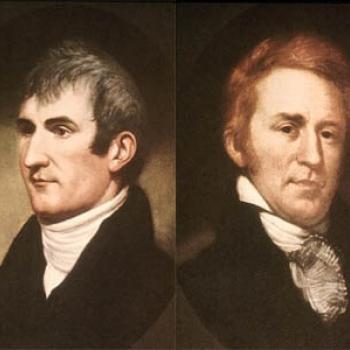
Exploring Cross-Age Tutoring Activities With Lewis and Clark
Interaction and adventure draws high school and elementary school students together as they analyze stories about the Lewis and Clark expedition.

Critical Reading: Two Stories, Two Authors, Same Plot?
Students make predictions about the stories and analyze story elements, compare and contrast the different stories, distinguish between fact and opinion, and draw conclusions supported by evidence from their readings.

What Did They Say? Dialect in The Color Purple
Y'all set down a spell and learn ‘bout dialects!" In other words, your students will use The Color Purple to explore dialect and how it reveals information about the characters.