ReadWriteThink - Powered by NCTE
  • About
  • Classroom Resources
    • Lesson Plans
    • Teaching Comics
    • Teaching With Primary Resources
    • Calendar
    • Printouts
    • Student Interactives
  • Collections
    • Assessment
    • Authors
    • Booklists
    • Media Literacy
    • Poetry
    • Primary Sources
    • Writing
  • Professional Development
    • Strategy Guides
    • Professional Library
    • Meetings & Events
  • Join NCTE
  • Contact Us
  • About
  • Classroom Resources
    • Lesson Plans
    • Teaching Comics
    • Teaching With Primary Resources
    • Calendar
    • Printouts
    • Student Interactives
  • Collections
    • Assessment
    • Authors
    • Booklists
    • Media Literacy
    • Poetry
    • Primary Sources
    • Writing
  • Professional Development
    • Strategy Guides
    • Professional Library
    • Meetings & Events
  • Join NCTE
  • Contact Us
  • Facebook
  • Twitter
  • Instagram
  • Pinterest
  • YouTube

Breadcrumb

  1. Home

Type

  • Classroom Resources
  • Professional Development

Grades

  • 1 (106)
  • 2 (112)
  • 3 (261)
  • 4 (265)
  • 5 (316)
  • 6 (370)
  • 7 (385)
  • 8 (397)
  • 9 (424)
  • 10 (418)
  • 11 (409)
  • 12 (408)
  • K (86)

Learning Objectives

  • (-) critical thinking (649)
  • (-) text structure / story structure (242)
  • collaboration (458)
  • Comprehension (508)
  • digital literacy (154)
  • Grammar (57)
  • inquiry / research (350)
  • listening (182)
  • literary analysis (367)
  • Media literacy (205)
  • metacognition (302)
  • multicultural awareness (113)
  • multimodal literacy (260)
  • oral communication (224)
  • phonological awareness (61)
  • print awareness (89)
  • reading fluency (67)
  • reading genres (290)
  • Spelling (51)
  • Vocabulary (191)
  • writing genres (382)
  • writing process (421)

Topics

  • arts
  • careers
  • community
  • drama
  • ELL
  • Family
  • fiction
  • Mathematics
  • Mobile Learning
  • nonfiction
  • poetry
  • science
  • seasons / holidays
  • social action
  • social studies / history
  • Sports
  • STEM
Research Building Blocks: Skim, Scan, and Scroll
Grades
3 - 5
|
Lesson Plan
|
Standard Lesson
Research Building Blocks: Skim, Scan, and Scroll
In this lesson from a research skills unit, students read informational text, looking for supporting details. They practice skimming and scanning print resources, and scrolling through electronic resources.
Myth and Truth: Independence Day
Grades
3 - 5
|
Lesson Plan
|
Standard Lesson
Myth and Truth: Independence Day
By exploring myths and truths surrounding Independence Day, students think critically about commonly believed stories regarding the beginning of the Revolutionary War and the Independence Day holiday.
Research Building Blocks: Examining Electronic Sources
Grades
3 - 5
|
Lesson Plan
|
Minilesson
Research Building Blocks: Examining Electronic Sources
In this lesson, students evaluate and rate the relevance of electronic resources as they research information about their state.
Research Building Blocks: Hints about Print
Grades
3 - 5
|
Lesson Plan
|
Minilesson
Research Building Blocks: Hints about Print
In this lesson from a research skills unit, students examine abstracts on selected books to determine their relevance and helpfulness.
Book Sorting: Using Observation and Comprehension to Categorize Books
Grades
K - 2
|
Lesson Plan
|
Standard Lesson
Book Sorting: Using Observation and Comprehension to Categorize Books
Students utilize their reading and writing skills as they think critically in order to sort books in multiple ways.
Book Report Alternative: The Elements of Fiction
Grades
3 - 5
|
Lesson Plan
|
Standard Lesson
Book Report Alternative: The Elements of Fiction
Students identify the elements of fiction in a book they have read and share summaries of them by writing and illustrating their own mini-book.
Choose Your Own Adventure: A Hypertext Writing Experience
Grades
6 - 8
|
Lesson Plan
|
Unit
Choose Your Own Adventure: A Hypertext Writing Experience
Students analyze "choose your own adventure" stories and brainstorm to develop setting, characters, and plots for their own adventures stories and related Websites.
A Picture's Worth a Thousand Words: From Image to Detailed Narrative
Grades
6 - 8
|
Lesson Plan
|
Standard Lesson
A Picture's Worth a Thousand Words: From Image to Detailed Narrative

The old cliche, "A picture is worth a thousand words" is put to the test when students write their own narrative interpretations of events shown in an image.
Using Picture Books to Teach Setting Development in Writing Workshop
Grades
3 - 5
|
Lesson Plan
|
Standard Lesson
Using Picture Books to Teach Setting Development in Writing Workshop
Students use a graphic organizer to analyze setting development in picture books. They then apply what they have learned to their own writing.

Writing a Flashback and Flash-Forward Story Using Movies and Texts as Models
Grades
6 - 8
|
Lesson Plan
|
Standard Lesson
Writing a Flashback and Flash-Forward Story Using Movies and Texts as Models
Using the film The Sandlot, students are introduced to the literary devices of flashbacks and flash-forwards. They then write their own stories using those devices.

Breaking Barriers, Building Bridges: Critical Discussion of Social Issues
Grades
6 - 8
|
Lesson Plan
|
Standard Lesson
Breaking Barriers, Building Bridges: Critical Discussion of Social Issues
Through a series of picture book read-alouds, students engage in critical discussion of complex issues of race, class, and gender.

Alliteration in Headline Poems
Grades
6 - 8
|
Lesson Plan
|
Minilesson
Alliteration in Headline Poems
Students will be introduced to the term alliteration and create a headline poem consisting of 25 words that contain at least three examples of alliteration.
Avalanche, Aztek, or Bravada? A Connotation Minilesson
Grades
6 - 8
|
Lesson Plan
|
Minilesson
Avalanche, Aztek, or Bravada? A Connotation Minilesson
Students examine familiar car names for underlying connotations then proceed through a series of steps, increasing their control over language, until they select words with powerful connotations in their own writing.
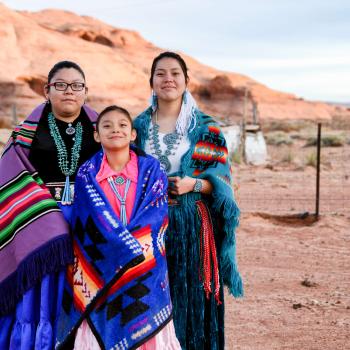
Native Americans Today
Grades
3 - 5
|
Lesson Plan
|
Standard Lesson
Native Americans Today
This lesson challenges students' views of Native Americans as a vanished people by asking them to compare their prior knowledge with information they gather while reading about contemporary Native Americans.

Get the Reel Scoop: Comparing Books to Movies
Grades
3 - 5
|
Lesson Plan
Get the Reel Scoop: Comparing Books to Movies
Students compare a book to its film adaptation, and then perform readers theater of a scene from the book that they feel was not well represented in the movie version.

Expository Escapade—Detective's Handbook
Grades
6 - 8
|
Lesson Plan
|
Unit
Expository Escapade—Detective's Handbook
Students create a Detective's Handbook based on a detective mystery they have read. The handbooks include expository and descriptive writing, as well as a letter.
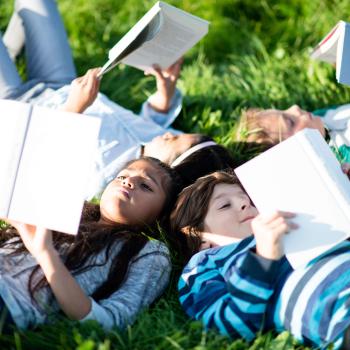
Literature Circles: Getting Started
Grades
3 - 5
|
Lesson Plan
|
Recurring Lesson
Literature Circles: Getting Started
Students practice different ways of collaborating to read a work of literature. They work in different roles as they compose and answer questions, discover new vocabulary, and examine literary elements.

Listen, Look, and Learn: An Information-Gathering Process
Grades
K - 2
|
Lesson Plan
|
Minilesson
Listen, Look, and Learn: An Information-Gathering Process

After listening to and discussing the story Score One for the Sloths, primary students research the sloth. Students use a variety of resources, including an information wheel graphic organizer.
QRG
Grades
3 - 12
|
Printout
|
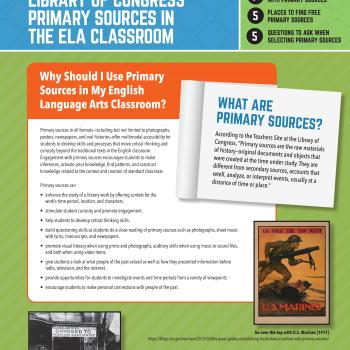
Engaging Students with Library of Congress Primary Sources in the ELA Classroom Quick-Reference Guide (QRG)

Quick-Reference Guide (QRG) focused on "Engaging Students with Library of Congress Primary Sources in the ELA Classroom."
Quantitative Civic Reasoning
Grades
4 - 12
|
Professional Library
|
Professional Library
Quantitative Civic Reasoning: A Guide for Centering Civic Innovation in Math and English Language Arts Classrooms

This guide explores quantitative civic reasoning in English and math classrooms.

Pagination

  • First page « First
  • Previous page ‹‹
  • …
  • Page 5
  • Page 6
  • Page 7
  • Page 8
  • Page 9
  • Page 10
  • Page 11
  • Page 12
  • Page 13
  • …
  • Next page ››
  • Last page Last »

Explore Resources by Grade

  • KindergartenK
  • 1-2
  • 3-4
  • 5-6
  • 7-8
  • 9-10
  • 11-12

RWT-logo

Powered By NCTE

Footer 1 Menu

  • About
  • Classroom Resources
  • Professional Development
  • Collections
  • Contact Us

Footer 2 Menu

  • National Council of Teachers of English
  • Contribute to RWT
  • FAQs
  • Join NCTE

Footer 3 Menu

  • Legal Notices
  • Privacy Policy
  • Promotional Materials
  • Site Demonstrations

Want to stay in touch with RWT and NCTE? Sign up here!

  • Facebook
  • Twitter
  • Instagram
  • Pinterest
  • YouTube

© NCTE 2026. All rights reserved