ReadWriteThink - Powered by NCTE
  • About
  • Classroom Resources
    • Lesson Plans
    • Teaching Comics
    • Teaching With Primary Resources
    • Calendar
    • Printouts
    • Student Interactives
  • Collections
    • Assessment
    • Authors
    • Booklists
    • Media Literacy
    • Poetry
    • Primary Sources
    • Writing
  • Professional Development
    • Strategy Guides
    • Professional Library
    • Meetings & Events
  • Join NCTE
  • Contact Us
  • About
  • Classroom Resources
    • Lesson Plans
    • Teaching Comics
    • Teaching With Primary Resources
    • Calendar
    • Printouts
    • Student Interactives
  • Collections
    • Assessment
    • Authors
    • Booklists
    • Media Literacy
    • Poetry
    • Primary Sources
    • Writing
  • Professional Development
    • Strategy Guides
    • Professional Library
    • Meetings & Events
  • Join NCTE
  • Contact Us
  • Facebook
  • Twitter
  • Instagram
  • Pinterest
  • YouTube

Breadcrumb

  1. Home

Type

  • Classroom Resources
  • Professional Development

Grades

  • 1 (52)
  • 2 (51)
  • 3 (103)
  • 4 (99)
  • 5 (104)
  • 6 (104)
  • 7 (102)
  • 8 (109)
  • 9 (110)
  • 10 (108)
  • 11 (107)
  • 12 (107)
  • K (44)

Learning Objectives

  • (-) text structure / story structure (242)
  • collaboration (458)
  • Comprehension (508)
  • critical thinking (649)
  • digital literacy (154)
  • Grammar (57)
  • inquiry / research (350)
  • listening (182)
  • literary analysis (367)
  • Media literacy (205)
  • metacognition (302)
  • multicultural awareness (113)
  • multimodal literacy (260)
  • oral communication (224)
  • phonological awareness (61)
  • print awareness (89)
  • reading fluency (67)
  • reading genres (290)
  • Spelling (51)
  • Vocabulary (191)
  • writing genres (382)
  • writing process (421)

Topics

  • arts
  • careers
  • community
  • drama
  • ELL
  • Family
  • fiction
  • Mathematics
  • Mobile Learning
  • nonfiction
  • poetry
  • science
  • seasons / holidays
  • social action
  • social studies / history
  • Sports
  • STEM
Storyboarding the Transformation from Dr. Jekyll into Mr. Hyde
Grades
9 - 12
|
Lesson Plan
|
Standard Lesson
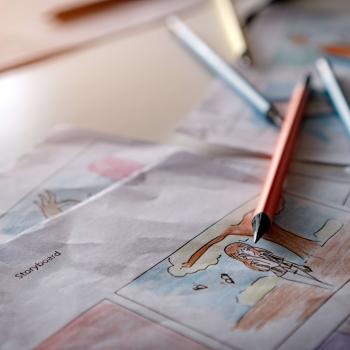
Storyboarding the Transformation from Dr. Jekyll into Mr. Hyde
Students imagine and storyboard their own vision of the transformation of Dr. Jekyll into Mr. Hyde and then evaluate movie portrayals.
What's the Purpose?: Examining a Cold Manipulation of Language
Grades
11 - 12
|
Lesson Plan
|
Standard Lesson
What's the Purpose?: Examining a Cold Manipulation of Language
With a crafty pen, Truman Capote wrote In Cold Blood to create a new genre and shock his audience. This lesson will help students examine Capote's manipulation of language as he forces his audience to take a different look at murderers and consider a different definition of nonfiction. His unique purpose leaves students an interesting text to consider.
Designing Elements of Story in <i>Little Blue and Little Yellow</i>
Grades
K - 5
|
Lesson Plan
|
Standard Lesson
Designing Elements of Story in Little Blue and Little Yellow
In this series of four lessons, students will explore key elements of design in Little Blue and Little Yellow to learn about setting, character relationships, and plot.
Literature Response in Primary Classrooms
Grades
K - 2
|
Lesson Plan
|
Recurring Lesson
Literature Response in Primary Classrooms

This step-by-step literature response template for use with read-alouds asks students to use drawing and writing to respond to increasingly-complex prompts which address literary elements as well as personal connections.
Audience & Purpose: Evaluating Disney's Changes to the Hercules Myth
Grades
5 - 8
|
Lesson Plan
|
Standard Lesson
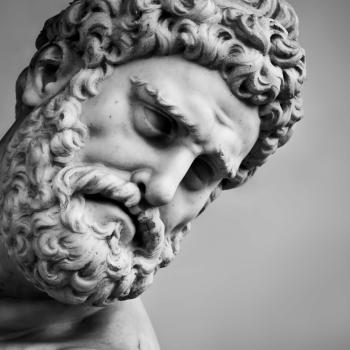
Audience & Purpose: Evaluating Disney's Changes to the Hercules Myth
What drives changes to classic myths and fables? In this lesson students evaluate the changes Disney made to the myth of "Hercules" in order to achieve their audience and purpose.
Developing Citizenship Through Rhetorical Analysis
Grades
6 - 8
|
Lesson Plan
|
Standard Lesson
Developing Citizenship Through Rhetorical Analysis

Students analyze rhetorical strategies in online editorials, building knowledge of strategies and awareness of local and national issues. This lesson teaches students connections between subject, writer, and audience and how rhetorical strategies are used in everyday writing.

Vocabulary Solutions: A Mixture of Science, Conversation, and Writing
Grades
3 - 5
|
Lesson Plan
|
Standard Lesson
Vocabulary Solutions: A Mixture of Science, Conversation, and Writing
In this lesson, students conduct a science experiment and later discuss the events of the lab during shared writing. Students explain the procedure in their own words and then revise to include content specific vocabulary. Finally, students reflect on new words added to their writing using the Trading Card Creator interactive.
Research Building Blocks: Skim, Scan, and Scroll
Grades
3 - 5
|
Lesson Plan
|
Standard Lesson
Research Building Blocks: Skim, Scan, and Scroll
In this lesson from a research skills unit, students read informational text, looking for supporting details. They practice skimming and scanning print resources, and scrolling through electronic resources.
Book Report Alternative: The Elements of Fiction
Grades
3 - 5
|
Lesson Plan
|
Standard Lesson
Book Report Alternative: The Elements of Fiction
Students identify the elements of fiction in a book they have read and share summaries of them by writing and illustrating their own mini-book.
Choose Your Own Adventure: A Hypertext Writing Experience
Grades
6 - 8
|
Lesson Plan
|
Unit
Choose Your Own Adventure: A Hypertext Writing Experience
Students analyze "choose your own adventure" stories and brainstorm to develop setting, characters, and plots for their own adventures stories and related Websites.

Using Picture Books to Teach Setting Development in Writing Workshop
Grades
3 - 5
|
Lesson Plan
|
Standard Lesson
Using Picture Books to Teach Setting Development in Writing Workshop
Students use a graphic organizer to analyze setting development in picture books. They then apply what they have learned to their own writing.

Writing a Flashback and Flash-Forward Story Using Movies and Texts as Models
Grades
6 - 8
|
Lesson Plan
|
Standard Lesson
Writing a Flashback and Flash-Forward Story Using Movies and Texts as Models
Using the film The Sandlot, students are introduced to the literary devices of flashbacks and flash-forwards. They then write their own stories using those devices.

Alliteration in Headline Poems
Grades
6 - 8
|
Lesson Plan
|
Minilesson
Alliteration in Headline Poems
Students will be introduced to the term alliteration and create a headline poem consisting of 25 words that contain at least three examples of alliteration.

Expository Escapade&#151;Detective's Handbook
Grades
6 - 8
|
Lesson Plan
|
Unit
Expository Escapade—Detective's Handbook
Students create a Detective's Handbook based on a detective mystery they have read. The handbooks include expository and descriptive writing, as well as a letter.
ReadAcrossAmerica
Grades
K - 12
|
Calendar Activity
|
Literacy-Related Event
Read Across America Day: Celebrate a Nation of Diverse Readers

Bring the celebration of reading and literacy into your classroom, library, school, and home all year long.
Stapleless Book
Grades
K - 12
|
Student Interactive
|
Writing & Publishing Prose
Stapleless Book

The Stapleless Book can be used for taking notes while reading, making picture books, collecting facts, or creating vocabulary booklets . . . the possibilities are endless!
Compare & Contrast Map
Grades
3 - 12
|
Student Interactive
|
Organizing & Summarizing
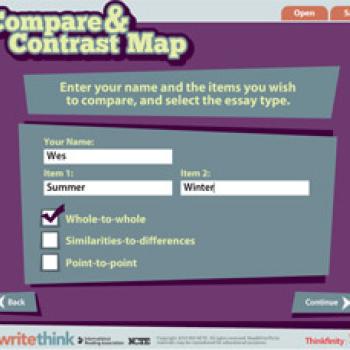
Compare & Contrast Map
The Compare & Contrast Map is an interactive graphic organizer that enables students to organize and outline their ideas for different kinds of comparison essays.
Essay Map
Grades
3 - 12
|
Student Interactive
|
Organizing & Summarizing
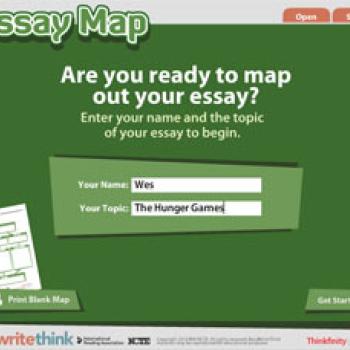
Essay Map

The Essay Map is an interactive graphic organizer that enables students to organize and outline their ideas for an informational, definitional, or descriptive essay.
Fractured Fairy Tales
Grades
3 - 12
|
Student Interactive
|
Writing & Publishing Prose
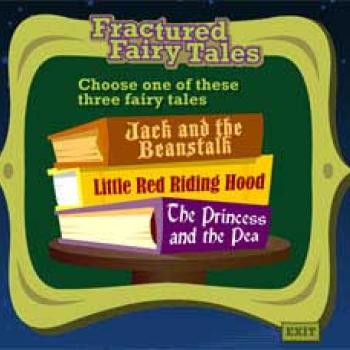
Fractured Fairy Tales

The Fractured Fairy Tale tool encourages students to create their own fractured fairy tales.
Mystery Cube
Grades
6 - 12
|
Student Interactive
|
Writing & Publishing Prose
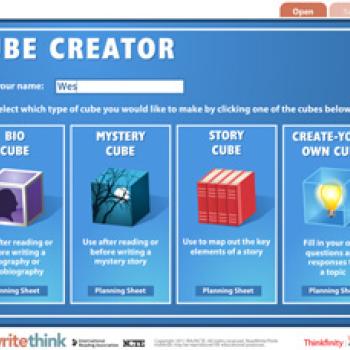
Mystery Cube

The Mystery Cube helps students identify and summarize story elements in this popular genre. It can be used as a postreading or prewriting activity.

Pagination

  • First page « First
  • Previous page ‹‹
  • Page 1
  • Page 2
  • Page 3
  • Page 4
  • Page 5
  • Page 6
  • Page 7
  • Page 8
  • Page 9
  • …
  • Next page ››
  • Last page Last »

Explore Resources by Grade

  • KindergartenK
  • 1-2
  • 3-4
  • 5-6
  • 7-8
  • 9-10
  • 11-12

RWT-logo

Powered By NCTE

Footer 1 Menu

  • About
  • Classroom Resources
  • Professional Development
  • Collections
  • Contact Us

Footer 2 Menu

  • National Council of Teachers of English
  • Contribute to RWT
  • FAQs
  • Join NCTE

Footer 3 Menu

  • Legal Notices
  • Privacy Policy
  • Promotional Materials
  • Site Demonstrations

Want to stay in touch with RWT and NCTE? Sign up here!

  • Facebook
  • Twitter
  • Instagram
  • Pinterest
  • YouTube

© NCTE 2026. All rights reserved