Students will find that learning onset and rime is a handy skill when they read the Jack and Jill rhyme.

Whole-to-Parts Phonics Instruction: Teaching Letter-Sound Correspondences
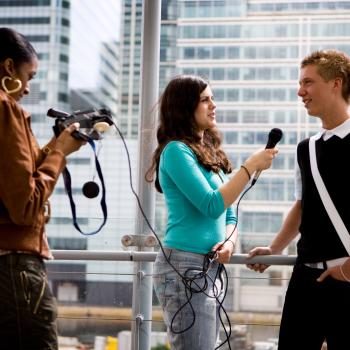
Lights, Camera, Action: Interviewing a Book Character
Students get the inside scoop on a story when they create interview questions and answers for characters in the books they read.
Using a Predictable Text to Teach High-Frequency Words
After reading an engaging yet predictable text about a child looking for his cat, students use a similar format and high-frequency words to craft tales about their own lost pets.

Creative Writing Through Wordless Picture Books
Students are exposed to wordless picture books and begin developing story lines, both orally and in writing, using an online, interactive story map.

Alaska Native Stories: Using Narrative to Introduce Expository Text
Tradition and technology come together in this lesson in which students learn about Alaskan animals through Native American tales and their own online research.
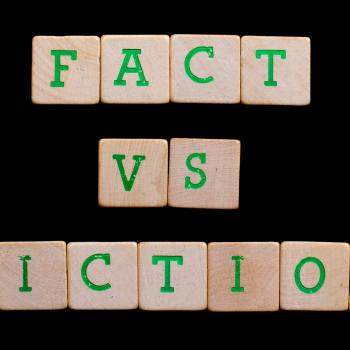
Multimedia Responses to Content Area Topics Using Fact-"Faction"-Fiction
Students climb into the mind of a spider in this lesson that asks them to compose a spider diary using spider facts, fiction, and "faction"fiction that sounds like fact.
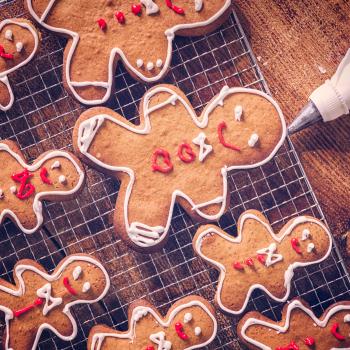
Gingerbread Phonics
"Run, run, as fast as you can." Students use this refrain from The Gingerbread Man to learn letter-sound correspondence. Students use their new skills to write an online story.
From Fact to Fiction: Drawing and Writing Stories
Students gather factual information about frogs and toads to create nonfiction and fiction stories. Drawing is used for prewriting.

The Big, Bad Wolf...Is This a Fact?
Reading is revamped in this lesson in which students use a multimedia approach to study the books by Seymour Simon.

Getting the ig in Pig: Helping Children Discover Onset and Rime
Students will need their language-building hard hats as they construct words using onset and rime, building vocabulary and phonics comprehension.
Peace Poems and Picasso Doves: Literature, Art, Technology, and Poetry
Students apply think-aloud strategies to reading and to composition of artwork and poetry. They research symbols of peace as they prewrite, compose, and publish their poetry.

Exploring World Cultures Through Folk Tales
Journey around the world with students as they read a Japanese, African, or Welsh folk tale, create a visual depiction of the tale, research the tale's culture, and present findings.
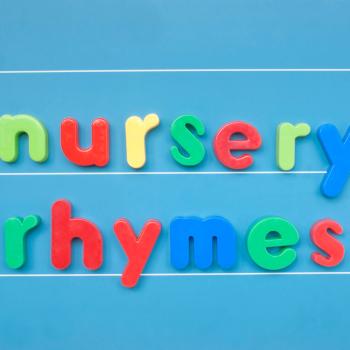
The Two Voices of the ow Spelling Pattern
Variable vowels are the focus of this lesson; students use nursery rhymes and ow to study how vowels can change their sounds according to different spelling patterns.

In the Poet's Shoes: Performing Poetry and Building Meaning
Students take poetic license when they interpret William Carlos William's poem "The Red Wheelbarrow" to help create a poem of their own.
Pairing Fiction With Poetry and Performance
Make connections across genres and across cultures to engage students in the study of literary voice and themes. Comprehension skills and vocabulary also come into play, especially for English language learners, as students read a novel and related poems, then write and perform original poems related to the novel.

Once They're Hooked, Reel Them In: Writing Good Endings
It's important to "hook" readers at a story's beginning, but it's equally important to keep them interested. In this lesson, students learn to write effective conclusions to their own stories.
Is Superman Really All That Super? Critically Exploring Superheroes
What makes a superhero super? By comparing popular culture superheroes with heroic characters in children's literature, students learn to think critically about character traits, and consider how cultural perspectives influence the kinds of heroes we choose.

Exploring Friendship With Bridge to Terabithia
Students make predictions about Bridge to Terabithia and its characters, complete character studies, and relate the characters' experiences to their own as they identify ways to make and keep friends.
Fishing for Readers: Identifying and Writing Effective Opening "Hooks"
Good writers "hook" their readers in the very first sentences. In this lesson, students learn how to cast an attention-grabbing hook in their writing to effectively draw in readers' attention.

Music and Me: Visual Representations of Lyrics to Popular Music
Students will whistle while they work on this lesson, creating a photomontage movie of their interpretation of a favorite song's lyrics that will end everyone's day on a high note.