Students stage a mock trial for a literary character, with groups of students acting as the prosecution, defense, and jury.

Literary Characters on Trial: Combining Persuasion and Literary Analysis

Literary Scrapbooks Online: An Electronic Reader-Response Project
Students capture scraps of information from a variety of Web resources and use them to create an electronic scrapbook. Emphasis is placed on evaluating and citing resources.
Heroes Are Made of This: Studying the Character of Heroes
Designed to explore the hero and the heroic in literature, this unit asks students to discuss their ideas of heroism and analyze heroes in literature.

Short Story Fair: Responding to Short Stories in Multiple Media and Genres
In this activity, students read short stories and create presentations in multiple media to share in a Short Story Fair. At the fair, students explore and respond to the displays.

Investigating the Holocaust: A Collaborative Inquiry Project
Students explore a variety of resources as they learn about the Holocaust. Working collaboratively, they investigate the materials, prepare oral responses, and produce a topic-based newspaper to complete their research.
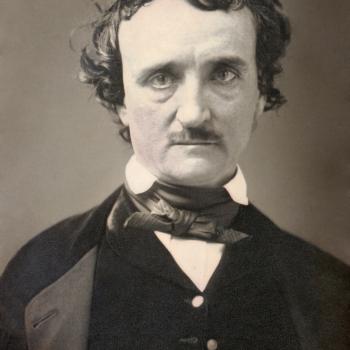
Modeling Reading and Analysis Processes with the Works of Edgar Allan Poe
Explore reading strategies using Edgar Allan Poe's "The Raven" and other works. Students read Poe's works in both large- and small-group readings then conclude with a variety of projects.

Voting! What's It All About?
Students explore a variety of sources for information about voting. They evaluate the information to determine if it is fact or opinion, and then create a graffiti wall about voting.

Creating Classroom Community by Crafting Themed Poetry Collections
Students create poetry collections with the theme of "getting to know each other." They study and then write a variety of forms of poetry to include in their collections.
Compiling Poetry Collections and a Working Definition of Poetry
This unit introduces students to a variety of poetic forms and elements, as they compile their own collections of poetry.

Examining Transcendentalism through Popular Culture
Using excerpts from the works of Ralph Waldo Emerson and Henry David Thoreau, comics, and songs from different musical genres, students examine the characteristics of transcendentalism.
Weaving the Multigenre Web
Students analyze the elements of a novel in many different genres and then hyperlink these pieces together on student-constructed Websites.

Beyond the Story: A Dickens of a Party
Students attend a 19th Century Victorian party to celebrate Scrooge's new outlook on life. They research characters from Charles Dickens' A Christmas Carol and assume those personas for the party.

Experiencing Haiku Through Mindfulness, Movement & Music
By being present and mindful on nature walks, students write haiku using vivid sensory language; and explore body movement, music and art as visual and kinesthetic representations of their poetry.

The Passion of Punctuation
Using published writers' texts and students' own writing, this unit explores emotions that are associated with the artful and deliberate use of commas, semicolons, colons, and exclamation points (end-stop marks of punctuation).
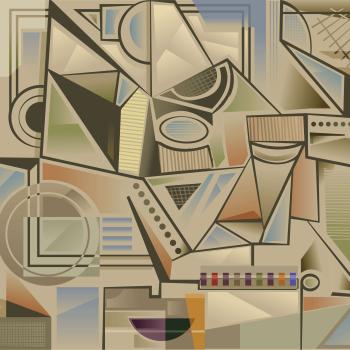
Comparing William Carlos Williams's Poetry with Cubist Paintings
Through discussion, drawing, and writing, students compare how William Carlos Williams's poetry and Cubist and Precisionist painting employ similar artistic strategies, enhancing their understanding of both kinds of text.

Reading Shakespeare's The Tempest through a Postcolonial Lens
Students take a postcolonial perspective on the portrayal of Caliban from Shakespeare's The Tempest by comparing it to a modern adaptation of the play.
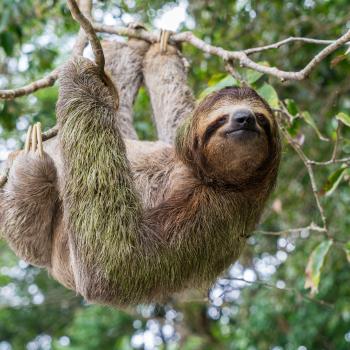
Investigating Animals: Using Nonfiction for Inquiry-based Research
Inspired by their curiosity about animals, students work together to research an animal of their choice and present the information they gather to an authentic audience.

Book Reviews, Annotation, and Web Technology
Students work in groups to create annotated book reviews with links to topics of interest related to their book.

Choose Your Own Adventure: A Hypertext Writing Experience
Students analyze "choose your own adventure" stories and brainstorm to develop setting, characters, and plots for their own adventures stories and related Websites.
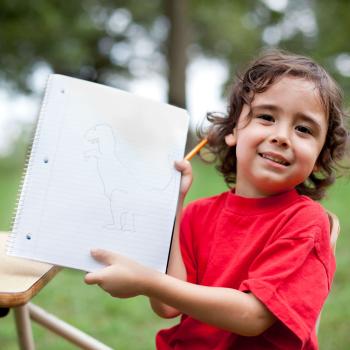
Writing Reports in Kindergarten? Yes!
This lesson encourages young students to see themselves as writers with a message to convey. Three types of reports are provided to show what kindergartners and emergent writers can do.