This lesson supports third-through-sixth grade students as they communicate story setting to their readers through the use of visual image prompts. Activities include individual and cooperative learning group work, as well as whole class discussion.

Utilizing Visual Images for Creating and Conveying Setting in Written Text

Literacy Centers: Getting Started
This lesson gives teachers resources and guidance to create reading, listening, computer, and poetry Literacy Centers in their own classrooms.

Involving Students and Families in Ongoing Reflection and Assessment
Students begin by writing a sentence or two each week and progress to daily reflections and records of their school activity. Families respond to these student reflections, which become the basis for discussion among family, teacher, and students.

Note Writing in the Primary Classroom
This lesson provides a wealth of ideas for using notes in the classroom to promote authentic writing among children.

Genre Study: A Collaborative Approach
Students explore multiple genres through genre studies. They record evidence of genre characteristics on bookmarks as they read, and finish by giving a book review for their classmates.
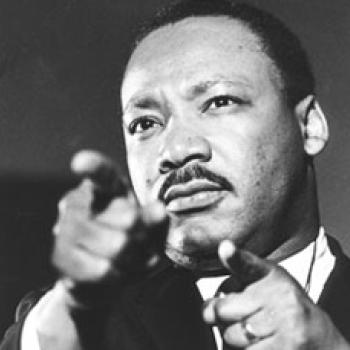
Living the Dream: 100 Acts of Kindness
This lesson provides the "action piece" for any study of Dr. Martin Luther King, Jr. In this project, students participate in Dr. King's dream by doing 100 acts of kindness.

Webcams in the Classroom: Animal Inquiry and Observation
Students observe animals using one of the many webcams broadcasting from zoos and aquariums around the United States and the world, with a focus on observation, discussion, questioning, and research.

Literature Response in Primary Classrooms
This step-by-step literature response template for use with read-alouds asks students to use drawing and writing to respond to increasingly-complex prompts which address literary elements as well as personal connections.
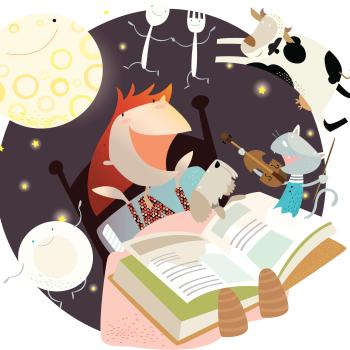
Growing Readers and Writers with Help from Mother Goose
Watch Mother Goose work her magic! This lesson uses nursery rhymes to help emergent readers remember the letters and their sounds and identify word chunks.

Book Clubs: Reading for Fun
This lesson describes how small groups of students can plan meetings to discuss what they've read in a "just for fun" book club they've organizedand that they control.

Daily Book Boosts
Book Boostsone-minute raves at the end of independent reading timeare easy ways to suggest new titles to students, and they act as a way for students to have something to think about as they read.

Literature Circles with Primary Students Using Self-Selected Reading
Students respond to self-selected books in journals, and talk about their books daily in small groups. The teacher guides students by offering suggestions and writing with them in dialogue journals.

Have Journal...Will Travel: Promoting Family Involvement in Literacy
Students build positive memories of literacy activities when they take turns taking home a book bag stuffed with items to encourage literacy interactions with their families.

What's in a Name? Teaching Concepts of Letter and Word
In this recurring activity, the process of choosing a helper for the day becomes a literacy activity, with the helper's name as a starting place for reading and writing.

Literature Circles: Getting Started
Students practice different ways of collaborating to read a work of literature. They work in different roles as they compose and answer questions, discover new vocabulary, and examine literary elements.

Spelling in Parts: Learning to Spell, Write, and Read Polysyllabic Words
How do you spell polysyllabic? While this word may be a bit too advanced for students, they will definitely be spelling polysyllabic words using a strategy called Spelling in Parts.
Write-Talks: Students Discovering Real Writers, Real Audiences, Real Purposes
There's a world of writers out there, and in this lesson students discover them as they listen to presentations from local writers and learn about what, why, and how they write in their day-to-day lives.

Sort, Hunt, Write: A Weekly Spelling Program
It's easy to make spelling fun. Using a variety of activities from sorting to using words in context will help deepen students' understanding of word patterns.
Charting Characters for a More Complete Understanding of the Story
Character Perspective Charting allows students to compare multiple characters and their points of view to better understand a story.
Guided Comprehension: Evaluating Using the Meeting of the Minds Technique
Based on the Guided Comprehension Model developed by Maureen McLaughlin and Mary Beth Allen, this lesson introduces students to the strategy of evaluating, using the Meeting of the Minds technique.