The Venn Diagram Rubric can be used to provide students feedback on students' use of a graphic organizer to compare and contrast two things.

Venn Diagram Rubric
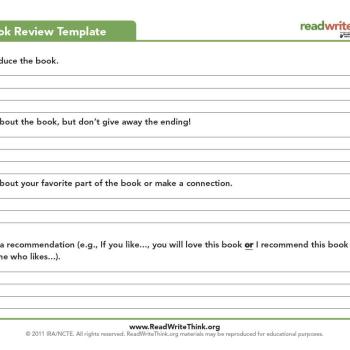
Book Review Template
Students can use this template as a means of communicating about a book that they have read.

Character Map
Who are the characters in this story? Students will examine what a character looks like, what a character does, and how other characters react to him or her.
Venn Diagram, 2 Circles
Students use this graphic organizer to describe similarities and differences between two objects.
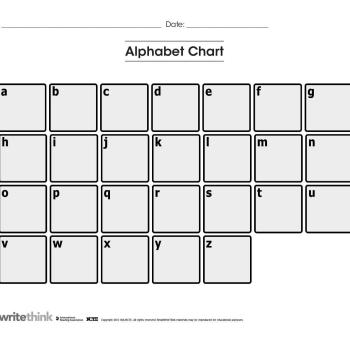
Alphabet Chart
This alphabet chart has many possibilities for helping your students learn and review their letters, sounds, phonemes, and word formations.

Choral Reading
During choral reading, students read together orally. Repeated, supported reading helps students read with greater expression and read unfamiliar words with greater ease.

Write Alouds
This strategy guide explains how to use write-aloud (also known as modeled writing) to teach effective writing strategies and improve students' independent writing ability.

Shared Writing
This strategy guide explains how to use shared writing to teach students effective strategies that will improve their own independent writing ability.

Guided Writing
This strategy guide explains how to use small-group, guided writing instruction to teach students effective strategies and improve their ability to produce text independently.

Using the Think-Pair-Share Technique
In this strategy guide, you will learn how to organize students and classroom topics to encourage a high degree of classroom participation and assist students in developing a conceptual understanding of a topic through the use of the Think-Pair-Share technique.

Implementing the Writing Process
This strategy guide explains the writing process and offers practical methods for applying it in your classroom to help students become proficient writers.

Peer Review
This strategy guide explains how you can employ peer review in your classroom, guiding students as they offer each other constructive feedback to improve their writing and communication skills.

Persuasive Writing
This strategy guide focuses on persuasive writing and offers specific methods on how you can help your students use it to improve their critical writing and thinking skills.

Developing Academic Vocabulary
In this Strategy Guide Series, you'll find creative and compatible ways to build, maintain, and extend students' vocabulary across academic disciplines.

Inquiry-Based Learning
In this series of Strategy Guides, you'll learn about different methods and activities to encourage inquiry-based learning in your classroom.

Reading in the Content Areas
In this Strategy Guide Series, you'll get information and ideas about teaching reading in the different content areas.

Teaching Literacy Across the Gradual Release of Responsibility
This series of strategy guides considers the ways that reading instruction in various contexts works together to help students develop independence as readers. Each strategy guide presents a strategy or instructional context in isolation, but this series of strategy guides is designed to support teachers as they explore the ways reading aloud, shared reading, guided reading, and independent reading all work together.

Teaching Writing
This strategy guide series identifies, defines, and provides examples of effective writing strategies and offers a list of resources related to each strategy.

Using Word Walls to Develop and Maintain Academic Vocabulary
In this guide, you will learn how to use Word Walls to support vocabulary development and retention.

Tracking and Supporting Student Learning with Kidwatching
In this strategy guide, you'll learn how to use kidwatching to track and support student learning. Teachers observe and take notes on students' understanding of skills and concepts and then use the observations to determine effective strategies for future instruction.