Students and teachers can use this rubric when doing writing that compares and contrasts two things, as well as when assessing the writing.

Compare and Contrast Rubric
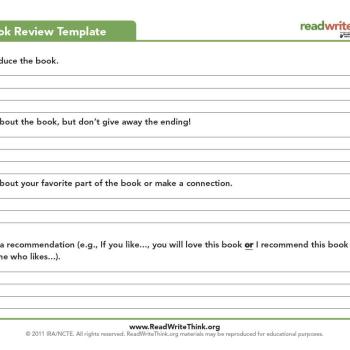
Book Review Template
Students can use this template as a means of communicating about a book that they have read.

Character Map
Who are the characters in this story? Students will examine what a character looks like, what a character does, and how other characters react to him or her.

Compare and Contrast Chart
This organizer can be used to help students explain similarities and differences between two things or ideas. After this organizer has been completed, it could easily be developed into a classroom discussion or writing topic on the information gathered.

Conflict Map
Ask students to remember a story with no problem or conflict. That would be difficult to do! With this printout, students learn to examine the critical plot element of conflict.
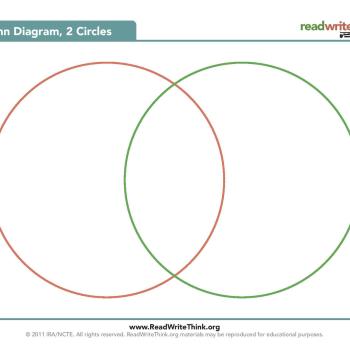
Venn Diagram, 2 Circles
Students use this graphic organizer to describe similarities and differences between two objects.

Diamante Poem
This tool will allow your students to create a diamante poem by reflecting on their knowledge of a topic and by using nouns, verbs, and adjectives in a creative manner.

Essay Map
Use this graphic organizer to develop an outline for an essay that includes an introductory statement, main ideas, supporting details, and a conclusion.

Choral Reading
During choral reading, students read together orally. Repeated, supported reading helps students read with greater expression and read unfamiliar words with greater ease.
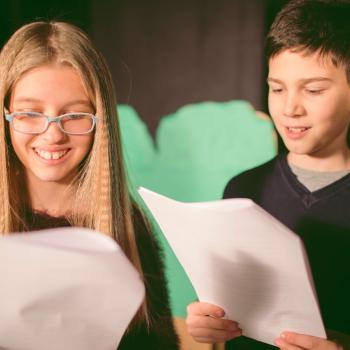
Readers Theatre
Readers Theatre integrates oral reading, literature, and the performing arts. This strategy can entice the most reluctant and disinterested reader to become engaged in reading.

Write Alouds
This strategy guide explains how to use write-aloud (also known as modeled writing) to teach effective writing strategies and improve students' independent writing ability.

Shared Writing
This strategy guide explains how to use shared writing to teach students effective strategies that will improve their own independent writing ability.
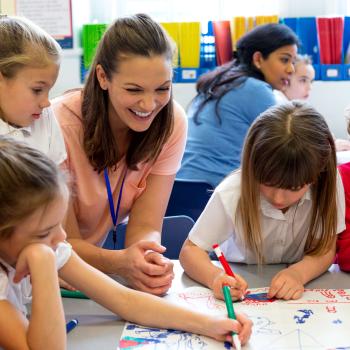
Guided Writing
This strategy guide explains how to use small-group, guided writing instruction to teach students effective strategies and improve their ability to produce text independently.

Making Connections
In this strategy guide, you'll learn to model how students can make three different kinds of connections (text-to-text, text-to-self, text-to-world). Students then use this knowledge to find their own personal connections to a text.

Introducing New Content with Seed Discussions
In this strategy guide, you'll learn how to elicit ideas and conversation about new concepts or content by effectively holding a Seed Discussion in your classroom.

Brainstorming and Reviewing Using the Carousel Strategy
This strategy guide introduces Carousel Brainstorming, also known as Rotating Review, and offers suggestions to implement this technique in your classroom for brainstorming about new topics or reviewing learned information.

Using the Think-Pair-Share Technique
In this strategy guide, you will learn how to organize students and classroom topics to encourage a high degree of classroom participation and assist students in developing a conceptual understanding of a topic through the use of the Think-Pair-Share technique.
Using the RAFT Writing Strategy
This strategy guide introduces the RAFT technique and offers practical ideas for using this technique to teach students to experiment with various perspectives in their writing.

Using the Jigsaw Cooperative Learning Technique
In this strategy guide, you will learn how to organize students and texts to allow for learning that meets the diverse needs of students but keeps student groups flexible.
Implementing the Writing Process
This strategy guide explains the writing process and offers practical methods for applying it in your classroom to help students become proficient writers.