Students find examples of adjectives in a shared reading. Then students "become" major characters in a book and describe themselves and other characters, using powerful adjectives.

Charlotte is Wise, Patient, and Caring: Adjectives and Character Traits

Composing Cinquain Poems with Basic Parts of Speech
Reinforce student understanding of parts of speech through the analysis of sample cinquain poems followed by the creation of original cinquains.

Seasonal Haiku: Writing Poems to Celebrate Any Season
After listening to haiku poetry, students use seasonal descriptive words to write their own haiku, following the traditional format. They then publish their poems by mounting them on illustrated backgrounds.

Playing with Prepositions through Poetry
Students play with and explore prepositions during a whole group reading of Ruth Heller's Behind the Mask, and then by composing and publishing prepositional poems based on the book's style.
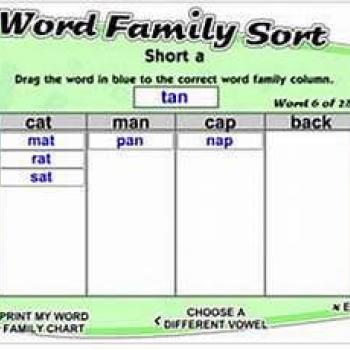
Word Family Sort
This online activity helps students recognize word patterns by having them sort a series of words into short-vowel word families.
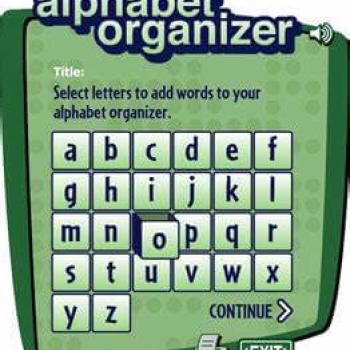
Alphabet Organizer
Students use this online tool to create an alphabet chart or pages for an alphabet book.
Eye on Idioms
The activity includes a series of exercises, in which students view the literal representations of idioms and then examine the metaphorical meanings of the idioms.
To Grammar or Not to Grammar: That Is Not the Question!
Argues that, taught in the context of writing, grammar can enhance and improve students' writing. Offers classroom examples showing how: good preparation for writing fosters good grammar and detail; students can use grammatical and syntactic constructions used by professional authors as models for their own writing; and how to help students learn revision strategies at the sentence and paragraph level.
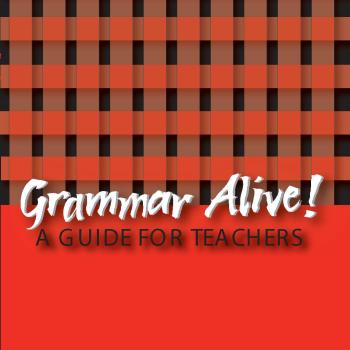
Grammar Alive!: A Guide for Teachers
NCTE's Assembly for the Teaching of English Grammar provides this much-needed resource for teachers who wonder what to do about grammar—how to teach it, how to apply it, how to learn what they themselves were never taught.
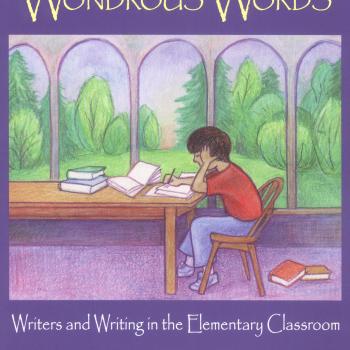
Wondrous Words: Writers and Writing in the Elementary Classroom
Katie Wood Ray explains in practical terms the theoretical underpinnings of how elementary and middle school students learn to write from their reading.

Spelling in Parts: Learning to Spell, Write, and Read Polysyllabic Words
How do you spell polysyllabic? While this word may be a bit too advanced for students, they will definitely be spelling polysyllabic words using a strategy called Spelling in Parts.
To, Too, or Two: Developing an Understanding of Homophones
The classroom becomes a stage in this interactive lesson in which students sing, act, and design comic strips to learn the meanings and spellings of common homophones.

Spelling Cheerleading: Integrating Movement and Spelling Generalizations
"2-4-6-8, students will be spelling great" in this lesson that teaches the y rule for adding suffixes through cheering the spelling of words aloud, word sorts, and writing stories.

Identifying and Classifying Verbs in Context
The interactive read-aloud in this lesson helps students to identify and classify the three verb typesaction, state-of-being or linking, and helping verbs.
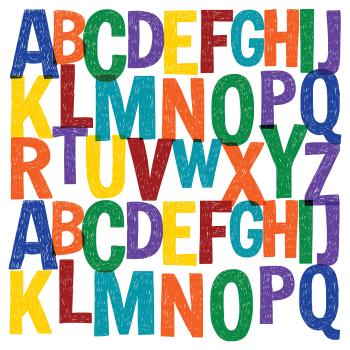
Q is for Duck: Using Alphabet Books With Struggling Writers
A is for zoo? Q is for duck? The alphabet as students know it is transformed when students create a class book that contains clever associations for each letter of the alphabet.

The Magic of Three: Techniques for the Writer's Craft
Students learn to use tricolons—a writer's technique of putting words and phrases into groups of threes—to add rhythm and power to their writing.
Rooting Out Meaning: Morpheme Match-Ups in the Primary Grades
In this lesson, students use morphemesEnglish words that have been formed by combining common word partsto explore word meanings.

How-To Writing: Motivating Students to Write for a Real Purpose
It's not easy surviving fourth grade (or third or fifth)! In this lesson, students brainstorm survival tips for future fourth graders and incorporate those tips into an essay.

Delicious, Tasty, Yummy: Enriching Writing with Adjectives and Synonyms
Students thoroughly explore identifying synonyms and adjectives before using them to add variety and interest to their own writing.

Dynamite Diamante Poetry
Introduce gerunds and review nouns, adjectives, and verbs through engaging read-alouds; then apply these concepts through collaborative word-sorting and poetry-writing activities.