ReadWriteThink - Powered by NCTE
  • About
  • Classroom Resources
    • Lesson Plans
    • Teaching Comics
    • Teaching With Primary Resources
    • Calendar
    • Printouts
    • Student Interactives
  • Collections
    • Assessment
    • Authors
    • Booklists
    • Media Literacy
    • Poetry
    • Primary Sources
    • Writing
  • Professional Development
    • Strategy Guides
    • Professional Library
    • Meetings & Events
  • Join NCTE
  • Contact Us
  • About
  • Classroom Resources
    • Lesson Plans
    • Teaching Comics
    • Teaching With Primary Resources
    • Calendar
    • Printouts
    • Student Interactives
  • Collections
    • Assessment
    • Authors
    • Booklists
    • Media Literacy
    • Poetry
    • Primary Sources
    • Writing
  • Professional Development
    • Strategy Guides
    • Professional Library
    • Meetings & Events
  • Join NCTE
  • Contact Us
  • Facebook
  • Twitter
  • Instagram
  • Pinterest
  • YouTube

Breadcrumb

  1. Home

Type

  • Classroom Resources
  • Professional Development

Grades

  • 1 (298)
  • 2 (308)
  • 3 (508)
  • 4 (525)
  • 5 (603)
  • 7 (750)
  • 8 (780)
  • 9 (787)
  • 10 (767)
  • 12 (751)
  • K (262)
  • (-) 6 (735)
  • (-) 11 (754)

Learning Objectives

  • collaboration (299)
  • Comprehension (349)
  • critical thinking (536)
  • digital literacy (125)
  • Grammar (36)
  • inquiry / research (262)
  • listening (112)
  • literary analysis (291)
  • Media literacy (182)
  • metacognition (268)
  • multicultural awareness (89)
  • multimodal literacy (212)
  • oral communication (155)
  • phonological awareness (5)
  • print awareness (52)
  • reading fluency (24)
  • reading genres (216)
  • Spelling (15)
  • text structure / story structure (160)
  • Vocabulary (104)
  • writing genres (286)
  • writing process (266)

Topics

  • arts
  • careers
  • community
  • drama
  • ELL
  • Family
  • fiction
  • Mathematics
  • Mobile Learning
  • nonfiction
  • poetry
  • science
  • seasons / holidays
  • social action
  • social studies / history
  • Sports
  • STEM
Exploring Friendship With <em>Bridge to Terabithia</em>
Grades
4 - 6
|
Lesson Plan
|
Standard Lesson
Exploring Friendship With Bridge to Terabithia
Students make predictions about Bridge to Terabithia and its characters, complete character studies, and relate the characters' experiences to their own as they identify ways to make and keep friends.

No Teachers Allowed: Student-Led Book Clubs Using QAR
Grades
3 - 6
|
Lesson Plan
|
Recurring Lesson
No Teachers Allowed: Student-Led Book Clubs Using QAR
Students are introduced to the Question-Answer Relationship (QAR) strategy through a read-aloud and question sort. Students then use the strategy to develop questions for a peer-led book discussion.
Media Literacy: Examining the World of Television Teens
Grades
6 - 8
|
Lesson Plan
|
Standard Lesson
Media Literacy: Examining the World of Television Teens
Pop culture and the classroom collide in this lesson when students go behind the scenes to analyze a television series for characterization to use in an original television show proposal.

Slipping, Sliding, Tumbling: Reinforcing Cause and Effect Through Diamante Poems
Grades
6 - 8
|
Lesson Plan
|
Standard Lesson
Slipping, Sliding, Tumbling: Reinforcing Cause and Effect Through Diamante Poems

Writing, revising, and publishing are just a few of the tasks students will complete in order to take their cause-and-effect diamante poems from an idea to a reality.

Music and Me: Visual Representations of Lyrics to Popular Music
Grades
9 - 12
|
Lesson Plan
|
Unit
Music and Me: Visual Representations of Lyrics to Popular Music
Students will whistle while they work on this lesson, creating a photomontage movie of their interpretation of a favorite song's lyrics that will end everyone's day on a high note.

Grades
6 - 8
|
Lesson Plan
|
Unit
Using Picture Books to Explore Identity, Stereotyping, and Discrimination
Students analyze the concepts of identity, stereotyping, and discrimination by reading picture books; identify how these concepts are dealt with in each book; and discuss concrete actions to stop discrimination.
Grades
9 - 12
|
Lesson Plan
|
Minilesson
What's My Subject? A Subject-Verb Agreement Minilesson

Students explore subject–verb agreement using real-life examples and then talk about the difference between formal and informal language and how to use this important grammatical rule.

Grades
6 - 8
|
Lesson Plan
|
Standard Lesson
My Life/Your Life: A Look at Your Parents' Past
Past and present come together when students interview their parents and create a skit that compares their parents' experiences as middle schoolers with the students' own lives.
Play Ball! Encouraging Critical Thinking Through Baseball Questions
Grades
6 - 8
|
Lesson Plan
|
Standard Lesson
Play Ball! Encouraging Critical Thinking Through Baseball Questions
Cooperation and critical thinking are the name of the game as students use baseball facts they find online to create trivia questions for a class Jeopardy game.
Exploring Author's Voice Using Jane Addams Award-Winning Books
Grades
6 - 8
|
Lesson Plan
|
Unit
Exploring Author's Voice Using Jane Addams Award-Winning Books
History has many faces in this lesson in which students read Jane Addams Award-winning books to learn about peace, social justice, world community, and equality.
Comparing Electronic and Print Texts About the Civil War Soldier
Grades
6 - 8
|
Lesson Plan
|
Standard Lesson
Comparing Electronic and Print Texts About the Civil War Soldier
Which side will win as students investigate both sides of the battle of using print versus online text for research as they learn about the lives of Civil War soldiers?
Postmodern Picture Books in Middle School
Grades
6 - 8
|
Lesson Plan
|
Standard Lesson
Postmodern Picture Books in Middle School
Students analyze the structure of a postmodern picture book, Black and White, to uncover how authors create unexpected plots and connections and form relationships between words and illustrations.

Cosmic Oranges: Observation and Inquiry Through Descriptive Writing and Art
Grades
6 - 8
|
Lesson Plan
|
Standard Lesson
Cosmic Oranges: Observation and Inquiry Through Descriptive Writing and Art
Students will eat up this lesson about oranges as they practice the skills that help them investigate and make detailed observations for descriptive purposes.
Grades
6 - 8
|
Lesson Plan
|
Standard Lesson
Dynamic Duo Text Talks: Examining the Content of Internet Sites
An Observation and Inquiry Sheet guides students as they analyze and compare their reactions to the value, engagement, and credibility of three websites related to Anne Frank and the Holocaust.
Grades
6 - 8
|
Lesson Plan
|
Standard Lesson
The Reading Performance: Understanding Fluency Through Oral Interpretation
Students discuss prosody, gain a new appreciation for literature intended for oral performance, and participate in activities that instill the value of technology in shaping their appreciation of literature.

Grades
6 - 8
|
Lesson Plan
|
Standard Lesson
The Big Bad Wolf: Analyzing Point of View in Texts
Was the Big Bad Wolf really all that bad? This lesson encourages students to analyze multiple viewpoints, view texts from different angles, and recognize gaps in narrative.
Using a Word Journal to Create a Personal Dictionary
Grades
6 - 8
|
Lesson Plan
|
Recurring Lesson
Using a Word Journal to Create a Personal Dictionary
Students will be the definition of vocabulary experts as they use the skills they learn in this lesson to track, define, and ultimately master unfamiliar words.
Grades
3 - 12
|
Student Interactive
|
Organizing & Summarizing
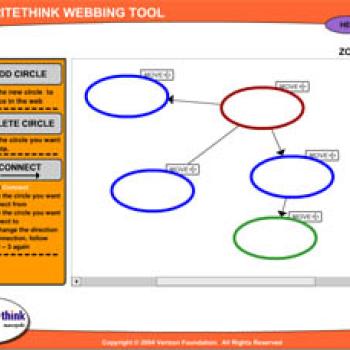
ReadWriteThink Webbing Tool

The Webbing Tool provides a free-form graphic organizer for activities that ask students to pursue hypertextual thinking and writing.
Grades
K - 12
|
Student Interactive
|
Organizing & Summarizing
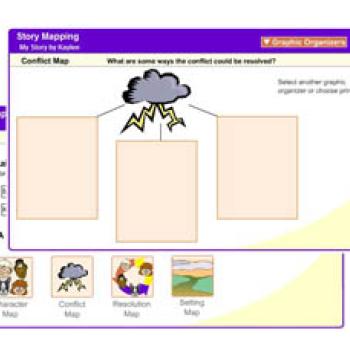
Story Map

The Story Map interactive is designed to assist students in prewriting and postreading activities by focusing on the key elements of character, setting, conflict, and resolution.
Word Mover
Grades
3 - 12
|
Student Interactive
|
Writing Poetry
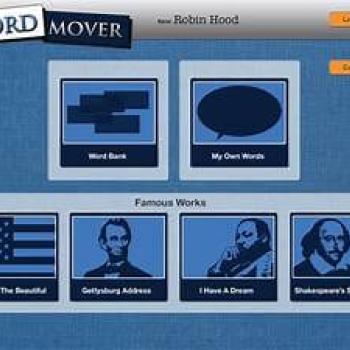
Word Mover

Word Mover allows children and teens to create "found poetry" by choosing from word banks and existing famous works; additionally, users can add new words to create a piece of poetry by moving/manipulating the text.

Pagination

  • First page « First
  • Previous page ‹‹
  • …
  • Page 37
  • Page 38
  • Page 39
  • Page 40
  • Page 41
  • Page 42
  • Page 43
  • Page 44
  • Page 45
  • …
  • Next page ››
  • Last page Last »

Explore Resources by Grade

  • KindergartenK
  • 1-2
  • 3-4
  • 5-6
  • 7-8
  • 9-10
  • 11-12

RWT-logo

Powered By NCTE

Footer 1 Menu

  • About
  • Classroom Resources
  • Professional Development
  • Collections
  • Contact Us

Footer 2 Menu

  • National Council of Teachers of English
  • Contribute to RWT
  • FAQs
  • Join NCTE

Footer 3 Menu

  • Legal Notices
  • Privacy Policy
  • Promotional Materials
  • Site Demonstrations

Want to stay in touch with RWT and NCTE? Sign up here!

  • Facebook
  • Twitter
  • Instagram
  • Pinterest
  • YouTube

© NCTE 2026. All rights reserved