Students learn about the life and music of John Lennon, write a short story from their lives integrating lyrics from some of their favorite songs, and create a class book of stories.

Songs of Our Lives: Using Lyrics to Write Stories
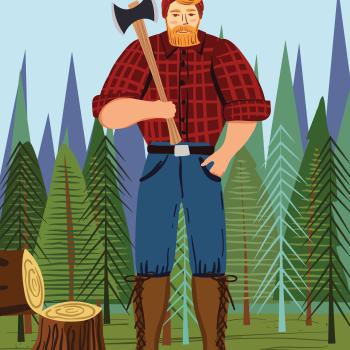
American Folklore: A Jigsaw Character Study
Groups of students read and discuss American folklore stories, each group reading a different story. Using a jigsaw strategy, the groups compare character traits and main plot points of the stories. A diverse selection of American folk tales is used for this lesson, which is adaptable to any text set.

Supporting Vocabulary Development with EASE
This lesson allows teachers to enrich students' oral and written vocabulary using the EASE sequence of instruction: Enunciate, Associate, Synthesize, and Emphasize the words you want students to use.

Note Writing in the Primary Classroom
This lesson provides a wealth of ideas for using notes in the classroom to promote authentic writing among children.
Writing Poetry with Rebus and Rhyme
This lesson encourages students to use rhyming words to write rebus poetry modeled on rebus books, which substitute pictures for the words that young students cannot yet identify or decode.

Literature Response in Primary Classrooms
This step-by-step literature response template for use with read-alouds asks students to use drawing and writing to respond to increasingly-complex prompts which address literary elements as well as personal connections.

Sí, Se Puede: Making a Difference, One Letter at a Time
After reading the book ¡Si, Se Puede!/Yes, We Can!: Janitor Strike in L.A., students learn about labor unions, strikes, and organizing for change. Students interview staff members in their school to learn about their daily work life, and write persuasive advocacy letters.

Boars and Baseball: Making Connections
In this lesson, students will make text-to-self, text-to-text, and text-to-world connections after reading In the Year of the Boar and Jackie Robinson. After sharing and discussing connections, students choose and plan a project that makes a personal connection to the text.

Exploring Perspectives on Desegregation Using Brown Girl Dreaming
Students read and discuss a selection of poems from Jacqueline Woodson's Brown Girl Dreaming to explore varying views on the process of desegregation in America.
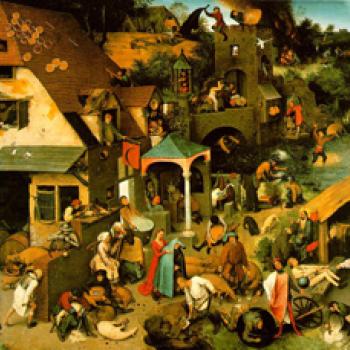
Proverbs: At Home and around the World
In this lesson, students work with proverbs from home and from around the world, exploring how these maxims are tied to a culture's values and everyday experience.

Persuasive Writing: What Can Writing in Family Message Journals Do for Students?
This lesson engages children in using writing to their families as a persuasive tool to get what they want and need.
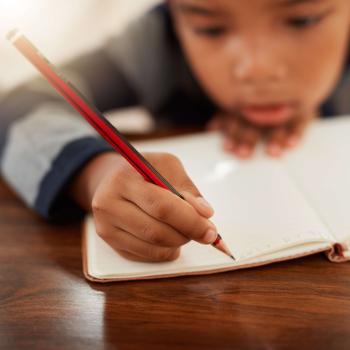
Family Message Journals Teach Many Purposes for Writing
This lesson encourages children to explore authentic reasons for writing by writing messages to their family in a family message journal.

Have Journal...Will Travel: Promoting Family Involvement in Literacy
Students build positive memories of literacy activities when they take turns taking home a book bag stuffed with items to encourage literacy interactions with their families.
Read Across America Day: Celebrate a Nation of Diverse Readers
Bring the celebration of reading and literacy into your classroom, library, school, and home all year long.
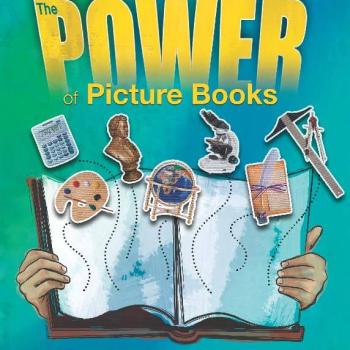
Power of Picture Books, The: Using Content Area Literature in Middle School
Featuring descriptions and activities for fifty exceptional titles, Mary Jo Fresch and Peggy Harkins offer a wealth of ideas for harnessing the power of picture books to improve reading and writing in the content areas.
A Conversation with Sara Zarr
Tune in to hear Sara Zarr discuss religious faith and some of the thinking behind her newest novel, Once Was Lost.

Connection Web
Students use this printout to expand on connections they have made to a text and use those details to write essays or create projects about the text.
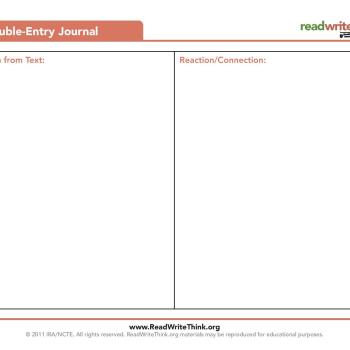
Double-Entry Journal
This printout helps students record ideas and situations from texts in one column, and their reactions in the second, thus making a connection between the text and themselves, another text, or the world.
A Conversation with Rita Williams-Garcia
It's rare to find historical fiction that weaves rich period detail into the lives of memorable and endearing characters, but Rita Williams-Garcia's middle-grade novels One Crazy Summer and P.S. Be Eleven do just that. Tune in to hear Rita explain how she drew on personal and historical contexts to develop her characters and tell their story. You'll also hear about her great love for her work and her commitment to spending as long as it takes to get the story right.

Making Connections
In this strategy guide, you'll learn to model how students can make three different kinds of connections (text-to-text, text-to-self, text-to-world). Students then use this knowledge to find their own personal connections to a text.