In this episode, you'll hear about what goes on behind the scenes in audiobook production. You'll also hear samples from an array of distinguished audio titles including YA classics as well as newer works of contemporary realistic fiction, dystopian fiction, historical fiction, and novels written in verse.

Appreciating Audiobooks

A Conversation with Candace Fleming
In the world of young adult literature, some of today's best and most powerful stories are being told by authors of nonfiction. Tune in to hear Candace Fleming discuss the origins of The Family Romanov, research as a process of questioning, and how authors of nonfiction are pushing the envelope in books for today's teens.

A Conversation with Walter Dean Myers
If there is anyone in the world of children's and young adult literature who could be described as a living legend, it's Walter Dean Myers. Tune in to hear how his own experiences as a reader have shaped his approach to storytelling, what he seeks to offer young people through his writing, and the thinking behind a select handful of his novels – books that incorporate concepts as varied as magical realism, the social contract, and oral histories with our nation's war veterans.

A Conversation with Rita Williams-Garcia
It's rare to find historical fiction that weaves rich period detail into the lives of memorable and endearing characters, but Rita Williams-Garcia's middle-grade novels One Crazy Summer and P.S. Be Eleven do just that. Tune in to hear Rita explain how she drew on personal and historical contexts to develop her characters and tell their story. You'll also hear about her great love for her work and her commitment to spending as long as it takes to get the story right.

Making Connections
In this strategy guide, you'll learn to model how students can make three different kinds of connections (text-to-text, text-to-self, text-to-world). Students then use this knowledge to find their own personal connections to a text.

Using the Think-Pair-Share Technique
In this strategy guide, you will learn how to organize students and classroom topics to encourage a high degree of classroom participation and assist students in developing a conceptual understanding of a topic through the use of the Think-Pair-Share technique.

Using the RAFT Writing Strategy
This strategy guide introduces the RAFT technique and offers practical ideas for using this technique to teach students to experiment with various perspectives in their writing.

Socratic Seminars
This strategy guide explains Socratic seminars and offers practical methods for applying the approach in your classroom to help students investigate multiple perspectives in a text.

Using the Jigsaw Cooperative Learning Technique
In this strategy guide, you will learn how to organize students and texts to allow for learning that meets the diverse needs of students but keeps student groups flexible.

Supporting Comprehension Strategies for English Language Learners
This Strategy Guide is for developing comprehension that incorporates the gradual release of responsibility model.

Teaching With Multiple Modalities
In this Strategy Guide, you'll see how one lesson utilizes tiered texts and multiple modalities in order to meet the learning style needs of students.

Evidence-based Discussions
These Strategy Guides offer varied ways to support students as they develop the skills and habits necessary to participate in evidence-based conversations.

Performing Literature to Promote Fluency and Comprehension
This study guide outlines three reading methods--Readers Theatre, choral reading, and performing poetry-- that can be used to promote fluency and comprehension.
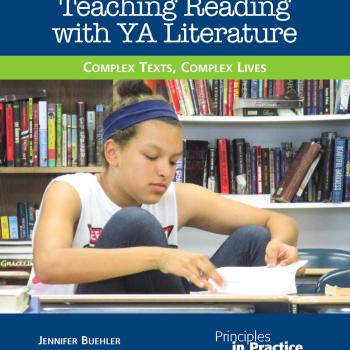
Teaching Reading with YA Literature: Complex Texts, Complex Lives
This book is designed to help teachers develop their own version of YA pedagogy and a vision for teaching YA lit in the middle and secondary classroom.

Facilitating Participation with Silent Conversations
This guide introduces silent conversations, a collaborative learning technique that has students
thinking, sharing, and reflecting about important questions—but through writing rather than talk.

Conducting Inner-Outer Circle Discussions
This guide shares the steps to take to get more students talking by dividing the group into speaking and non-speaking circles.

Using Concept Circles to Develop Academic Vocabulary
In this guide, you will learn how to use the Concept Circles strategy to support vocabulary development and comprehension of complex text.

Using Word Walls to Develop and Maintain Academic Vocabulary
In this guide, you will learn how to use Word Walls to support vocabulary development and retention.

Using Disciplinary Facets to Deepen Academic Vocabulary Knowledge
In this guide, you will learn how to use the disciplinary facets strategy to support vocabulary development across contexts and academic disciplines.

Consensus Decision Making
This strategy guide introduces Consensus Decision Making, a method for facilitating and engaging students in a critical discussion of the central ideas of a text.