By analyzing Dear Abby's "rant" about bad grammar usage, students become aware that attitudes about race, social class, moral and ethical character, and "proper" language use are intertwined.

Analyzing Grammar Pet Peeves

Beyond "What I Did on Vacation": Exploring the Genre of Travel Writing
After reading and analyzing short examples of travel writing and discussing conventions of the genre, students write their own travel articles.

Exploring Change through Allegory and Poetry
Students read an example of allegory, review literary concepts, complete literary elements maps and plot diagrams, create a pictorial allegory, and write diamante poems related to the theme of change.

Worth Its Weight: Letter Writing with "The Things They Carried"
This lesson uses a letter-writing activity based on Tim O'Brien's story "The Things They Carried" to build empathy as students examine the weight they symbolically carry in their own lives.

Discovering Memory: Li-Young Lee's Poem "Mnemonic" and the Brain
Students learn about memory by doing a memory-writing exercise, studying the brain to understand how it affects memory, reading Li-Young Lee's poem "Mnemonic," and creating projects to demonstrate their understanding.
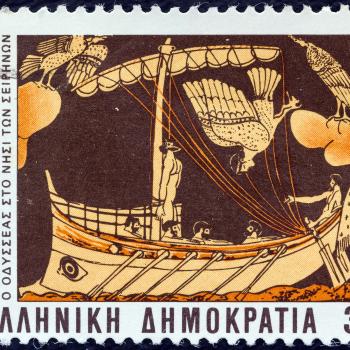
Weaving the Old into the New: Pairing The Odyssey with Contemporary Works
After exploring The Odyssey and a contemporary epic, students choose paired characters from the texts, complete a graphic organizer, and place their characters in hypothetical contemporary situations.

Many Years Later: Responding to Gwendolyn Brooks' "We Real Cool"
Students analyze the Gwendolyn Brooks' poem "We Real Cool" and then write about how the character's pool hall days might influence who the character becomes fifty years in the future.
The Children's Picture Book Project
In this lesson students evaluate published children's picture storybooks. Students then plan, write, illustrate, and publish their own children's picture books.

Thinking Inductively: A Close Reading of Seamus Heaney's "Blackberry Picking"
This lesson eases students' fear of interpreting complex poetry by teaching them a strategy with which they determine patterns of imagery, diction, and figurative language in order to unlock meaning.
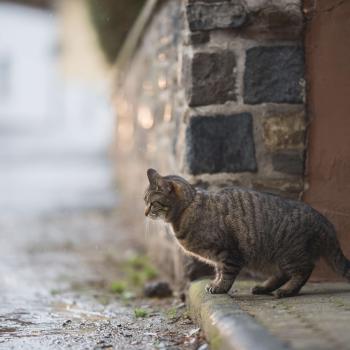
When Less IS More—Understanding Minimalist Fiction
This lesson pairs Ernest Hemingway's short story "Cat in the Rain' with Raymond Carver's "Little Things" to guide students to an understanding of the characteristics of minimalist fiction.
Assessing Cultural Relevance: Exploring Personal Connections to a Text
As a class, students evaluate a nonfiction or realistic fiction text for its cultural relevance to themselves personally and as a group.

BOOKMATCH: Scaffolding Independent Book Selection
This lesson will be turning heads and pages as students learn how to choose appropriate books for independent reading exercises and later evaluate their choices.

Recording Readers Theatre: Developing Comprehension and Fluency With Audio Texts
Students investigate audio texts of mystery stories, evaluate them in terms of both literary and audio qualities, and create Readers Theatre scripts, which they use to record their own podcasts.
Semicolons and Swift: Analyzing Punctuation and Meaning
This lesson will help punctuation make a mark on students as they read Jonathan Swift's work and analyze his use of punctuation.

Describe That Face: An Interactive Writing Game
Students write descriptions of characters, incorporate new vocabulary words, practice using simile and metaphor, engage in peer editing, and post their revised descriptions on the walls for a matching game.
Plotting a Plan to Improve Writing: Using Plot Scaffolds
Students really get into character in this lesson as they act out the parts of a script and analyze character motivations and dialogue.
Exploring Consumerism Where Ads and Art Intersect
Students add up the effect of images and persuasive language to analyze the art and words in advertisements.
In the Style of Ernie Pyle: Reporting on World War II
Students will think this lesson should make the headlines when they finish researching Ernie Pyle's work in preparation for writing their own news articles.
Write-Talks: Students Discovering Real Writers, Real Audiences, Real Purposes
There's a world of writers out there, and in this lesson students discover them as they listen to presentations from local writers and learn about what, why, and how they write in their day-to-day lives.
Pictures Tell the Story: Improving Comprehension With Persepolis
Students get the big picture of the Middle East when they read and analyze Marjane Satrapi's graphic novel Persepolis.