Boom! Br-r-ring! Cluck! Moo!Everywhere you turn, you find exciting sounds. Students use these sounds to write their own poems based on Dr. Seuss's Mr. Brown Can MOO! Can You?

Dr. Seuss's Sound Words: Playing with Phonics and Spelling

Sort, Hunt, Write: A Weekly Spelling Program
It's easy to make spelling fun. Using a variety of activities from sorting to using words in context will help deepen students' understanding of word patterns.

Dynamite Diamante Poetry
Introduce gerunds and review nouns, adjectives, and verbs through engaging read-alouds; then apply these concepts through collaborative word-sorting and poetry-writing activities.

Building Classroom Community Through the Exploration of Acrostic Poetry
What do your students think about each other? Find out as you teach them the concepts of acrostic poems and challenge them to write an uplifting acrostic about a classmate.

Phonic Generalizations in Chrysanthemum
Students learn about word families by reading Kevin Henkes's book Chrysanthemum, identifying words with certain vowel pair endings, and reading words with similar endings.

Whole-to-Parts Phonics Instruction: Teaching Letter-Sound Correspondences
Students will find that learning onset and rime is a handy skill when they read the Jack and Jill rhyme.

Word Recognition Strategies Using Nursery Rhymes
Whether you sing or recite familiar nursery rhymes in this standard lesson, students will learn how to create and categorize words that have similar endings.
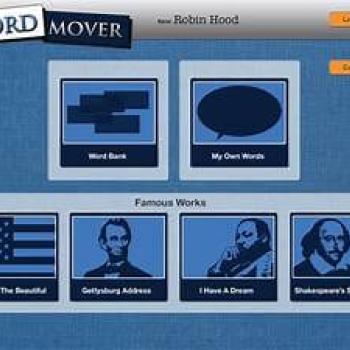
Word Mover
Word Mover allows children and teens to create "found poetry" by choosing from word banks and existing famous works; additionally, users can add new words to create a piece of poetry by moving/manipulating the text.