Students walk through the process of creating technical instructions by analyzing existing instructions, choosing an audience, writing their own instructions, receiving user feedback, and then revising and publishing their instructions.

Writing Technical Instructions
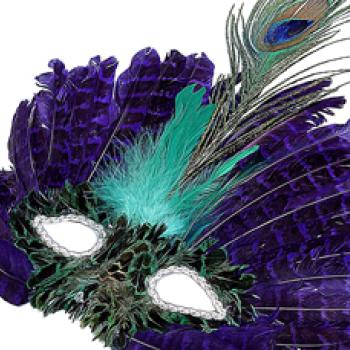
Polishing Preposition Skills through Poetry and Publication
Students deepen and refine their understanding of prepositions by reading Ruth Heller's Behind the Mask. They write preposition poetry and create a study guide using an online tool.

Analyzing and Comparing Medieval and Modern Ballads
Students explore the ballads genre by reading medieval ballads to deduce their characteristics, acting out the ballads, comparing medieval and modern ballads using Venn diagrams, and composing their own ballads.

Exploring Setting: Constructing Character, Point of View, Atmosphere, and Theme
Students read texts by Dybek, Dickens, Poe, and Morrison to explore how authors use language to create setting and, in turn, how setting constructs other elements in a literary work.
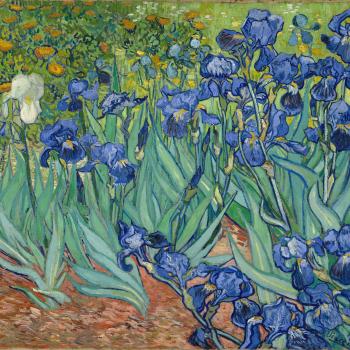
Ekphrasis: Using Art to Inspire Poetry
In this lesson, students explore ekphrasis—writing inspired by art. Students find pieces of art that inspire them and compose a booklet of poems about the pieces they have chosen.

Beyond "What I Did on Vacation": Exploring the Genre of Travel Writing
After reading and analyzing short examples of travel writing and discussing conventions of the genre, students write their own travel articles.

The Correspondence Project: A Lesson of Letters
After exploring business and friendly letter formats, students write letters for various audiences and real-world purposes.

Exploring Change through Allegory and Poetry
Students read an example of allegory, review literary concepts, complete literary elements maps and plot diagrams, create a pictorial allegory, and write diamante poems related to the theme of change.

Designing Effective Poster Presentations
Students explore the genre of posters, review informational writing and visual design, and then design poster presentations to share in class or at a school-wide fair.

Technology and Copyright Law: A "Futurespective"
Students research and report on instances of how copyright laws have adapted to encompass new technologies. They write articles predicting copyright issues that may arise with new and future technologies.

Copyright Law: From Digital Reprints to Downloads
Students investigate how and why copyright law has changed over time, and apply this information to recent copyright issues, creating persuasive arguments based on the perspective of a particular group.

Worth Its Weight: Letter Writing with "The Things They Carried"
This lesson uses a letter-writing activity based on Tim O'Brien's story "The Things They Carried" to build empathy as students examine the weight they symbolically carry in their own lives.

It's My Life: Multimodal Autobiography Project
Students express themselves verbally, visually, and musically by creating multimodal autobiographies, exchanging ideas with other students and sharing important events in their lives through PowerPoint presentations.
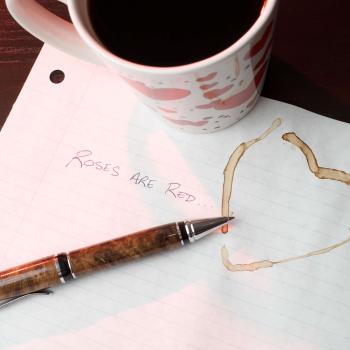
Finding Poetry in Prose: Reading and Writing Love Poems
After reading several poems that expand the definition of love poetry, students compose found poems based on a personal memoireither their own or a love story of another writer.

The Children's Picture Book Project
In this lesson students evaluate published children's picture storybooks. Students then plan, write, illustrate, and publish their own children's picture books.

Bio-graph: Graphing Life Events
Students interview other students, choose significant life events, rate them, graph them, and write about one or more, in this activity that integrates mathematical graphing with writing.

More than One Way to Create Vivid Verbs
This lesson teaches students how to use old verbs in a new way, thus creating new and fresh descriptive phrases.
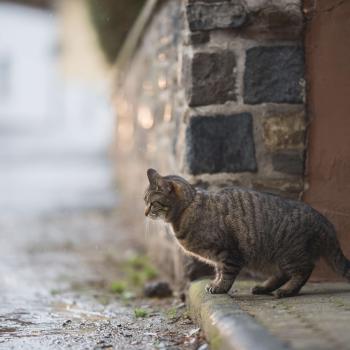
When Less IS More—Understanding Minimalist Fiction
This lesson pairs Ernest Hemingway's short story "Cat in the Rain' with Raymond Carver's "Little Things" to guide students to an understanding of the characteristics of minimalist fiction.

Textmasters: Shaking Up Textbook Reading in Science Classrooms
Engage students in content area reading with the Textmasters strategy, which allows students to collaborate with their peers in different roles that enable better understanding of the content.

Making It Visual for ELL Students: Teaching History Using Maus
Spark the engagement of English-language learners or reluctant readers with the graphic novel Maus. The visual information provided by the genre serves as a support for reading and critical engagement.