3, 2, 1... Blast off! Students learn new vocabulary by taking a virtual field trip to the moon, read-alouds, creating a picture dictionary, and completing a final writing activity.

Blast Off! Vocabulary Instruction Using a Virtual Moon Trip

Action ABC's: Learning Vocabulary With Verbs
Creating an illustrated alphabet book of action words, from attack to zap, reinforces the definition of verbs as it stretches and expands students' vocabulary.

Multipurpose Poetry: Introducing Science Concepts and Increasing Fluency
Creepy crawlers, hoppers, and fliers are the focus of this lesson in which students chorally read poems about insects and use the Internet to locate facts about their assigned insects.

Using Folk Tales: Vowel Influences on the Letter G
Gentle, gigantic, gracefuldo these g words describe the giant in Jack and the Beanstalk? Students will explore the hard and soft g sounds by studying fairy tales and animals.

Student of the Day: Create Sound/Letter Understanding With Names
Name games make learning letters fun and interactive in this lesson where students get to know more about each other as they spell out their classmates' names.

Exploring Compare and Contrast Structure in Expository Texts
Students build their understanding of the terms compare and contrast by participating in class discussions, using Internet resources, working collaboratively, and by visually representing information in a Venn diagram.

My World of Words: Building Vocabulary Lists
Working in small groups, students select vocabulary words and research their meanings. In a culminating activity that uses text and illustration, each student creates a "My World of Words Journal."

Teaching Science Through Picture Books: A Rainforest Lesson
Students read Welcome to the Green House, use note-taking strategies, find patterns in text structure, learn vocabulary in context, and write efferent and affective responses to the text.
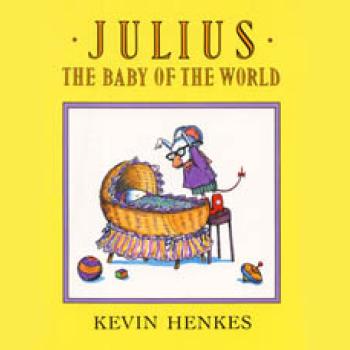
Text Talk: Julius, the Baby of the World
Students are asked to "talk" with Kevin Henkes' Julius, the Baby of the World by using open-ended questions to help them interpret the language, plot, and characters of the story.
Using a Word Journal to Create a Personal Dictionary
Students will be the definition of vocabulary experts as they use the skills they learn in this lesson to track, define, and ultimately master unfamiliar words.
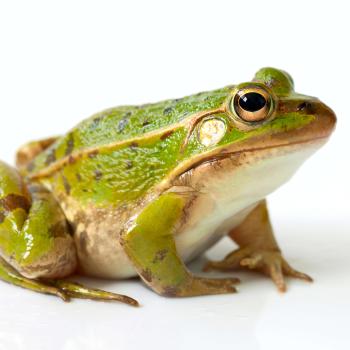
The Frog Beyond the Fairy Tale Character: Searching Informational Texts
Frogs often appear as the main character in fiction stories, but what do students really know about frogs? Students find out in this lesson in which they research real-life frogs.
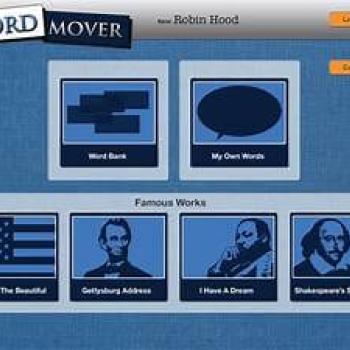
Word Mover
Word Mover allows children and teens to create "found poetry" by choosing from word banks and existing famous works; additionally, users can add new words to create a piece of poetry by moving/manipulating the text.
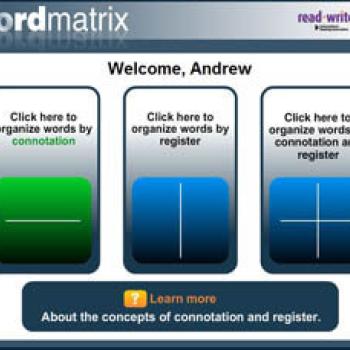
Word Matrix
Explore the similarities and differences among words typically considered synonyms with this tool that allows middle- and secondary-level students organize groups of words by connotation on one axis and by register on another.
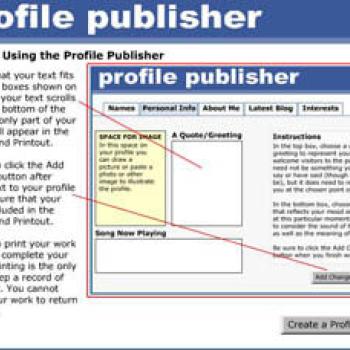
Profile Publisher
Students use the Profile Publisher to draft online social networking profiles, yearbook profiles, and newspaper or magazine profiles for themselves, other real or fictional characters.
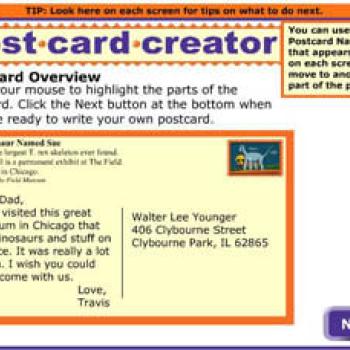
Postcard Creator
The Postcard Creator helps students learn to identify all the typical parts of a postcard, and then generate their own postcard messages by typing information into letter templates. After printing their texts, students can illustrate the front of their postcards in a variety of ways, including drawing, collage, and stickers.
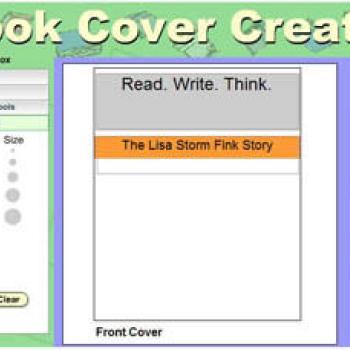
Book Cover Creator
The Book Cover Creator is designed to allow users to type and illustrate front book covers, front and back covers, and full dust jackets. Students can use the tool to create new covers for books that they read as well as to create covers for books they write individually or as a class.
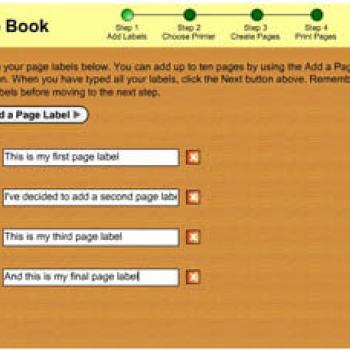
Flip Book
The Flip Book is designed to allow users to type and illustrate tabbed flip books up to ten pages long. Students and teachers can use the flip book for taking notes while reading, making picture books, collecting facts, or creating question and answer booklets.

Today is World Read Aloud Day.
Students celebrate the power of words by reading aloud to their classmates and spreading the word of global literacy to their friends and family.

Noah Webster published his American Dictionary of the English Language in 1828.
After dividing students into small groups, students play a variation of the game Balderdash to celebrate the publication of Webster's dictionary.
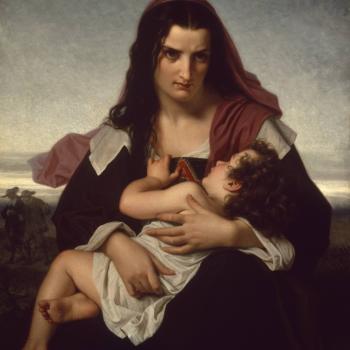
The Scarlet Letter was published in 1850.
Students brainstorm the possible meaning of the title The Scarlet Letter and what its significance might be. The class' responses are returned to once the reading has begun to see how their definitions have changed.