ReadWriteThink - Powered by NCTE
  • About
  • Classroom Resources
    • Lesson Plans
    • Teaching Comics
    • Teaching With Primary Resources
    • Calendar
    • Printouts
    • Student Interactives
  • Collections
    • Assessment
    • Authors
    • Booklists
    • Media Literacy
    • Poetry
    • Primary Sources
    • Writing
  • Professional Development
    • Strategy Guides
    • Professional Library
    • Meetings & Events
  • Join NCTE
  • Contact Us
  • About
  • Classroom Resources
    • Lesson Plans
    • Teaching Comics
    • Teaching With Primary Resources
    • Calendar
    • Printouts
    • Student Interactives
  • Collections
    • Assessment
    • Authors
    • Booklists
    • Media Literacy
    • Poetry
    • Primary Sources
    • Writing
  • Professional Development
    • Strategy Guides
    • Professional Library
    • Meetings & Events
  • Join NCTE
  • Contact Us
  • Facebook
  • Twitter
  • Instagram
  • Pinterest
  • YouTube

Breadcrumb

  1. Home

Type

  • Classroom Resources
  • Professional Development

Grades

  • 1 (109)
  • 2 (115)
  • 3 (183)
  • 4 (187)
  • 5 (207)
  • 6 (272)
  • 7 (273)
  • 8 (277)
  • 9 (295)
  • 10 (292)
  • 11 (282)
  • 12 (282)
  • K (104)

Learning Objectives

  • (-) reading genres (290)
  • (-) writing process (421)
  • collaboration (458)
  • Comprehension (508)
  • critical thinking (649)
  • digital literacy (154)
  • Grammar (57)
  • inquiry / research (350)
  • listening (182)
  • literary analysis (367)
  • Media literacy (205)
  • metacognition (302)
  • multicultural awareness (113)
  • multimodal literacy (260)
  • oral communication (224)
  • phonological awareness (61)
  • print awareness (89)
  • reading fluency (67)
  • Spelling (51)
  • text structure / story structure (242)
  • Vocabulary (191)
  • writing genres (382)

Topics

  • arts
  • careers
  • community
  • drama
  • ELL
  • Family
  • fiction
  • Mathematics
  • Mobile Learning
  • nonfiction
  • poetry
  • science
  • seasons / holidays
  • social action
  • social studies / history
  • Sports
  • STEM
Talking in Class: Using Discussion to Enhance Teaching and Learning
Grades
9 - 12
|
Professional Library
|
Book
Talking in Class: Using Discussion to Enhance Teaching and Learning
The authors guide high school teachers in developing skills in promoting and facilitating authentic discussion in the English language arts classroom.
Writing at the Threshold: Featuring 56 Ways to Prepare High School and College Students to Think and Write at the College Level
Grades
11 - 12
|
Professional Library
|
Book
Writing at the Threshold: Featuring 56 Ways to Prepare High School and College Students to Think and Write at the College Level
This book offers both an eloquent philosophy of composition instruction and a useful set of classroom-tested teaching ideas distilled from the author's 28 years of teaching writing.
What Is "College-Level" Writing?
Grades
9 - 12
|
Professional Library
|
Book
What Is "College-Level" Writing?
Just what defines "college-level" writing? This collection seeks to engage this essential question with care, patience, and pragmatism.
Lesson Plans for Teaching Writing
Grades
8 - 12
|
Professional Library
|
Book
Lesson Plans for Teaching Writing
This collection of lesson plans will help prepare high school and college students for college-level writing.
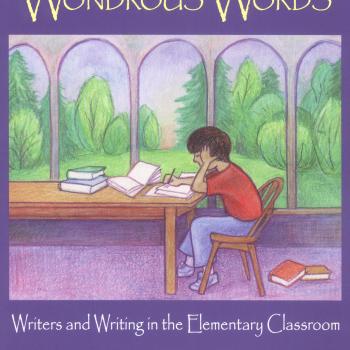
Wondrous Words: Writers and Writing in the Elementary Classroom
Grades
K - 6
|
Professional Library
|
Book
Wondrous Words: Writers and Writing in the Elementary Classroom
Katie Wood Ray explains in practical terms the theoretical underpinnings of how elementary and middle school students learn to write from their reading.
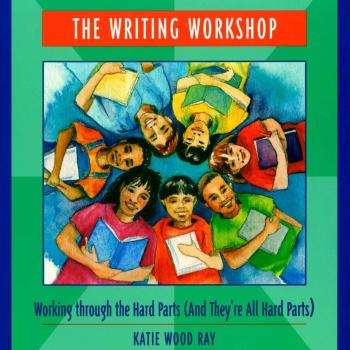
The Writing Workshop: Working through the Hard Parts (And They're All Hard Parts)
Grades
K - 8
|
Professional Library
|
Book
The Writing Workshop: Working through the Hard Parts (And They're All Hard Parts)
A practical, comprehensive, and illuminating guide for both new and experienced teachers that confronts the challenges of the writing workshop head-on.

9 - 12

Show, Don’t Tell: Implied Meaning and Subtext with Evidence

Teaching Comics
9 - 12

Dear Great Immigrant, Dear Great American Comic Letter

Teaching Comics
Swish! Pow! Whack! Teaching Onomatopoeia Through Sports Poetry
Grades
6 - 8
|
Lesson Plan
|
Standard Lesson
Swish! Pow! Whack! Teaching Onomatopoeia Through Sports Poetry
Students explore poetry about sports, looking closely at the use of onomatopoeia. After viewing a segment of a sporting event, students create their own onomatopoeic sports poems.
And I Quote: A Punctuation Proofreading Minilesson
Grades
9 - 12
|
Lesson Plan
|
Minilesson
And I Quote: A Punctuation Proofreading Minilesson
Students review the basic conventions for using quotations from literature or references from a research project, focusing on accurate punctuation and page layout, then apply the conventions to their texts.
The Ten-Minute Play: Encouraging Original Response to Challenging Texts
Grades
9 - 12
|
Lesson Plan
|
Unit
The Ten-Minute Play: Encouraging Original Response to Challenging Texts
Students use both analytical and creative skills to adapt passages from a novel with significant internal dialogue and conflict, such as Toni Morrison's Beloved, into a ten-minute play.
Persuading Readers with Endorsement Letters
Grades
9 - 12
|
Lesson Plan
|
Standard Lesson
Persuading Readers with Endorsement Letters
Students explore the genre of commercial endorsements, establishing characteristics and requirements for the genre. Each student then composes an endorsement of a product, service, company, or industry.

Help Wanted: Writing Professional Resumes
Grades
9 - 12
|
Lesson Plan
|
Unit
Help Wanted: Writing Professional Resumes

Students will create a beginning resume that represents their current work experience and demonstrates their knowledge of rhetorical situations for professional writing.
The Importance of Titles: From Big Blank Space to Small Good Thing
Grades
9 - 12
|
Lesson Plan
|
Standard Lesson
The Importance of Titles: From Big Blank Space to Small Good Thing
After examining two sets of stories that author Raymond Carver renamed in revision, students write a reflective essay in which they defend their choice of a title for one them.

Rummaging for Fiction: Using Found Photographs and Notes to Spark Story Ideas
Grades
9 - 12
|
Lesson Plan
|
Standard Lesson
Rummaging for Fiction: Using Found Photographs and Notes to Spark Story Ideas
In this lesson, students use found notes and found photographs as inspiration to help them identify subjects, settings, characters, and conflicts for pieces of creative writing.

Color of Silence: Sensory Imagery in Pat Mora's Poem "Echoes"
Grades
6 - 8
|
Lesson Plan
|
Standard Lesson
Color of Silence: Sensory Imagery in Pat Mora's Poem "Echoes"

Pat Mora's poem "Echoes" demonstrates that our senses are powerful tools for literary analysis and comprehension as students use their senses to discover new ways to read and write.
Having <em>My </em>Say: A Multigenre Autobiography Project
Grades
9 - 12
|
Lesson Plan
|
Unit
Having My Say: A Multigenre Autobiography Project

Students compose a multigenre paper, modeled after the Delany sister's autobiography, Having Our Say, that includes the autobiographical narrative essay as well as an informational nonfiction piece.

Writing Technical Instructions
Grades
9 - 12
|
Lesson Plan
|
Standard Lesson
Writing Technical Instructions
Students walk through the process of creating technical instructions by analyzing existing instructions, choosing an audience, writing their own instructions, receiving user feedback, and then revising and publishing their instructions.
Analyzing and Comparing Medieval and Modern Ballads
Grades
9 - 12
|
Lesson Plan
|
Standard Lesson
Analyzing and Comparing Medieval and Modern Ballads
Students explore the ballads genre by reading medieval ballads to deduce their characteristics, acting out the ballads, comparing medieval and modern ballads using Venn diagrams, and composing their own ballads.
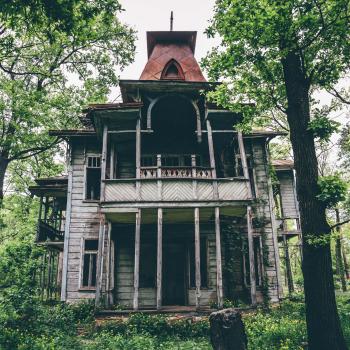
Exploring Setting: Constructing Character, Point of View, Atmosphere, and Theme
Grades
9 - 12
|
Lesson Plan
|
Standard Lesson
Exploring Setting: Constructing Character, Point of View, Atmosphere, and Theme
Students read texts by Dybek, Dickens, Poe, and Morrison to explore how authors use language to create setting and, in turn, how setting constructs other elements in a literary work.

Pagination

  • First page « First
  • Previous page ‹‹
  • …
  • Page 14
  • Page 15
  • Page 16
  • Page 17
  • Page 18
  • Page 19
  • Page 20
  • Page 21
  • Page 22
  • …
  • Next page ››
  • Last page Last »

Explore Resources by Grade

  • KindergartenK
  • 1-2
  • 3-4
  • 5-6
  • 7-8
  • 9-10
  • 11-12

RWT-logo

Powered By NCTE

Footer 1 Menu

  • About
  • Classroom Resources
  • Professional Development
  • Collections
  • Contact Us

Footer 2 Menu

  • National Council of Teachers of English
  • Contribute to RWT
  • FAQs
  • Join NCTE

Footer 3 Menu

  • Legal Notices
  • Privacy Policy
  • Promotional Materials
  • Site Demonstrations

Want to stay in touch with RWT and NCTE? Sign up here!

  • Facebook
  • Twitter
  • Instagram
  • Pinterest
  • YouTube

© NCTE 2026. All rights reserved