Students explore character development through experiences with picture books. They learn about the connections between reading and writing and apply the information they learn to revisions of their own writing.

Using Picture Books to Teach Characterization in Writing Workshop

Persuasive Writing: What Can Writing in Family Message Journals Do for Students?
This lesson engages children in using writing to their families as a persuasive tool to get what they want and need.

Letter Poems Deliver: Experimenting with Line Breaks in Poetry Writing
Students explore letter poems and experiment with writing letters as poems, using the placement of line breaks to enhance rhythm, sound, meaning, and appearance.

Writing a Flashback and Flash-Forward Story Using Movies and Texts as Models
Using the film The Sandlot, students are introduced to the literary devices of flashbacks and flash-forwards. They then write their own stories using those devices.
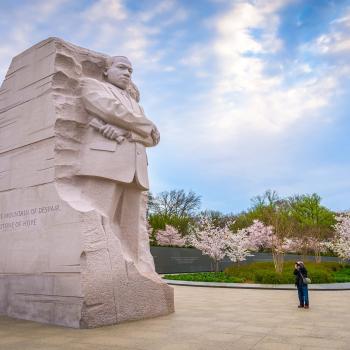
How Big Are Martin's Big Words? Thinking Big about the Future
Inspired by the book Martin's Big Words, students explore information on Dr. King to think about his "big" words, then they write about their own "big" words and dreams.
What Makes Poetry? Exploring Line Breaks
Students read various poems and explore why lines are broken where they are and how they affect rhythm, sound, meaning, and appearance in poetry.

Breaking Barriers, Building Bridges: Critical Discussion of Social Issues
Through a series of picture book read-alouds, students engage in critical discussion of complex issues of race, class, and gender.

Who's Got Mail? Using Literature to Promote Authentic Letter Writing
Students discuss and chart letter elements and write their own letters to adults at school, reinforcing letter-writing skills beyond the classroom lesson.
Family Message Journals Teach Many Purposes for Writing
This lesson encourages children to explore authentic reasons for writing by writing messages to their family in a family message journal.

Alliteration in Headline Poems
Students will be introduced to the term alliteration and create a headline poem consisting of 25 words that contain at least three examples of alliteration.

She Did What? Revising for Connotation
Did she walk, skip, amble, dance? In this minilesson, students explore connotation by acting out and revising the simple sentence "She walked into the room."

Launching Family Message Journals
This lesson introduces Family Message Journalsa teacher-tested tool for encouraging family involvement and supporting writing to reflect and to learn.

Graphic Life Map
In this autobiographical prewriting activity, students brainstorm important memories, choose graphics to represent these memories, and then rank the events as low or high points in their lives.
Writing Reports in Kindergarten? Yes!
This lesson encourages young students to see themselves as writers with a message to convey. Three types of reports are provided to show what kindergartners and emergent writers can do.
Using Repetition and Picture Cues to Foster Independent Young Readers
Kindergartners share their knowledge of letters and sounds in a large group setting, giving teachers an assessment opportunity. Each student contributes a page to make a repetitive classroom book.
Book Clubs: Reading for Fun
This lesson describes how small groups of students can plan meetings to discuss what they've read in a "just for fun" book club they've organizedand that they control.

Daily Book Boosts
Book Boostsone-minute raves at the end of independent reading timeare easy ways to suggest new titles to students, and they act as a way for students to have something to think about as they read.

Using Children's Natural Curiosity to Lead to Descriptive Writing
Inspired by the book It Begins with an A, kindergarten students are invited to turn their curiosity and guesswork into a class book, complete with illustrated objects and descriptive language

Story Character Homepage
Students analyze personal homepages, as well as a character in a book they have read, and then create a homepage for the character.

Poetry from Prose
Working in small groups, students compose found and parallel poems based on a descriptive passage they have chosen from a piece of literature they are reading.