Students use illustrations from The Mysteries of Harris Burdick as a guide to write mysteries
and then present their stories to the class for students to discuss to which illustration each
story corresponds.

The Mysteries of Harris Burdick: Using Illustrations to Guide Writing

Tragic Love: Introducing Shakespeare's Romeo and Juliet
This lesson introduces students to William Shakespeare's Romeo and Juliet by having them examine the ideas of tragedy and tragic love by connecting the story to their own lives.
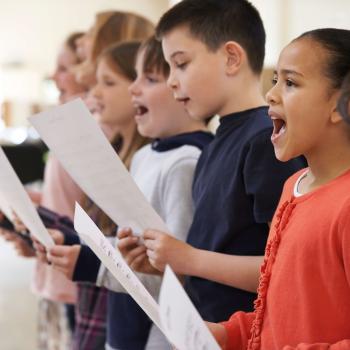
Improving Fluency through Group Literary Performance
Students participate in shared reading, choral reading, and readers theater, using books by Bill Martin, Jr. Repeated readings and literary performances help students with their reading accuracy, expression, and rate.

Building a Matrix for Leo Lionni Books: An Author Study
In this author study, students listen to and discuss four books by Leo Lionni. They identify similarities and differences in the stories and then compare two stories of their choice.

Who's Got Mail? Using Literature to Promote Authentic Letter Writing
Students discuss and chart letter elements and write their own letters to adults at school, reinforcing letter-writing skills beyond the classroom lesson.

The Solution Square: Strategies for Conflict Resolution
Students will square up a conflict and learn how to effectively resolve any issues using a Solution Square.
Developing Inferential Comprehension Through DL-TA and Discussion Webs
Students will love unwrapping this lesson about before, during, and after reading activities based on Margaree King Mitchell's book, Grandaddy's Gift.
The Big Green Monster Teaches Phonics in Reading and Writing
A big green monster helps students build their reading fluency and word recognition skills through choral reading, literacy center activities, and writing stories.

Spelling Cheerleading: Integrating Movement and Spelling Generalizations
"2-4-6-8, students will be spelling great" in this lesson that teaches the y rule for adding suffixes through cheering the spelling of words aloud, word sorts, and writing stories.

Using Writing and Role-Play to Engage the Reluctant Writer
What does the world look like through a javelina's eyes? Students become javelinas in this lesson when they analyze a character and write from his or her perspective.
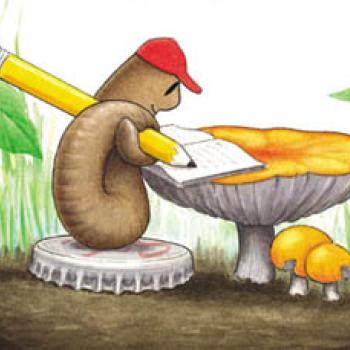
Fact or Fiction: Learning About Worms Using Diary of a Worm
Students often believe that fiction writers make everything up, seldom realizing how research worms its way into entertaining writing. In this lesson, students read Diary of a Worm to find out how fact merges with fiction.
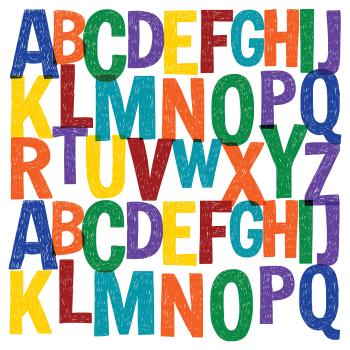
Q is for Duck: Using Alphabet Books With Struggling Writers
A is for zoo? Q is for duck? The alphabet as students know it is transformed when students create a class book that contains clever associations for each letter of the alphabet.

Thundering Tall Tales: Using Read-Aloud as a Springboard to Writing
Imagination and application are key to this tall tale lesson in which students take what they know about tall tales to spin a yarn of their own.

Sequencing: A Strategy to Succeed at Reading Comprehension
Did Paul Bunyan gouge out the Grand Canyon before or after he dug the Great Lakes? Students create a life-sized timeline showing the sequence of events in this tall tale.
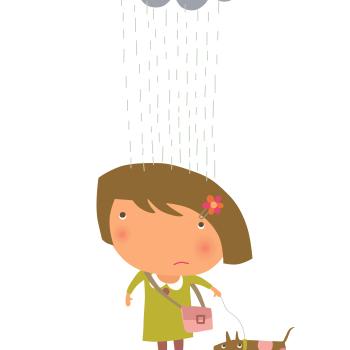
Exploring the Subtext Strategy: Thinking Beyond the Text
What is it like to have a terrible, horrible, no good, very bad day? Students find out in this lesson in which they "become" the characters in Judith Viorst's book.

Going Digital: Using e-Book Readers to Enhance the Reading Experience
Students use various tools and features of digital readers to develop vocabulary, support comprehension, respond to text, improve fluency, and enhance the reading experience.

Using Children's Literature to Develop Classroom Community
Conversation and cooperation bring out the best in students when they hold dialogues about their individual strengths, abilities, and talents.

Shared Poetry Reading: Teaching Print Concepts, Rhyme, and Vocabulary
The rhyme and reason behind this lesson is that students will need to develop important reading skills to increase their reading fluency.

Buzz! Whiz! Bang! Using Comic Books to Teach Onomatopoeia
This lesson is sure to sizzle, not fizzle, as students use comic strips to find onomatopoetic words, develop a vocabulary list from the words, and discuss why writers use onomatopoeia.

A Directed Listening-Thinking Activity for "The Tell-Tale Heart"
What's that sound? Students participate in a Directed ListeningThinking Activity (DLTA) using "The Tell-Tale Heart," make predictions, and respond in the form of an acrostic poem or comic strip.