ReadWriteThink - Powered by NCTE
  • About
  • Classroom Resources
    • Lesson Plans
    • Teaching Comics
    • Teaching With Primary Resources
    • Calendar
    • Printouts
    • Student Interactives
  • Collections
    • Assessment
    • Authors
    • Booklists
    • Media Literacy
    • Poetry
    • Primary Sources
    • Writing
  • Professional Development
    • Strategy Guides
    • Professional Library
    • Meetings & Events
  • Join NCTE
  • Contact Us
  • About
  • Classroom Resources
    • Lesson Plans
    • Teaching Comics
    • Teaching With Primary Resources
    • Calendar
    • Printouts
    • Student Interactives
  • Collections
    • Assessment
    • Authors
    • Booklists
    • Media Literacy
    • Poetry
    • Primary Sources
    • Writing
  • Professional Development
    • Strategy Guides
    • Professional Library
    • Meetings & Events
  • Join NCTE
  • Contact Us
  • Facebook
  • Twitter
  • Instagram
  • Pinterest
  • YouTube

Breadcrumb

  1. Home

Type

  • Classroom Resources
  • Professional Development

Grades

  • 1 (121)
  • 2 (131)
  • 3 (282)
  • 4 (290)
  • 5 (344)
  • 6 (409)
  • 7 (432)
  • 8 (440)
  • 9 (476)
  • 10 (472)
  • 11 (462)
  • 12 (461)
  • K (99)

Learning Objectives

  • (-) critical thinking (649)
  • (-) writing genres (382)
  • collaboration (458)
  • Comprehension (508)
  • digital literacy (154)
  • Grammar (57)
  • inquiry / research (350)
  • listening (182)
  • literary analysis (367)
  • Media literacy (205)
  • metacognition (302)
  • multicultural awareness (113)
  • multimodal literacy (260)
  • oral communication (224)
  • phonological awareness (61)
  • print awareness (89)
  • reading fluency (67)
  • reading genres (290)
  • Spelling (51)
  • text structure / story structure (242)
  • Vocabulary (191)
  • writing process (421)

Topics

  • arts
  • careers
  • community
  • drama
  • ELL
  • Family
  • fiction
  • Mathematics
  • Mobile Learning
  • nonfiction
  • poetry
  • science
  • seasons / holidays
  • social action
  • social studies / history
  • Sports
  • STEM
Book Report Alternative: Summary, Symbol, and Analysis in Bookmarks
Grades
6 - 8
|
Lesson Plan
|
Standard Lesson
Book Report Alternative: Summary, Symbol, and Analysis in Bookmarks
Students make bookmarks on computers and share their ideas with other readers at their school, while practicing summarizing, recognizing symbols, and writing reviews—all for an authentic audience.

Choose Your Own Adventure: A Hypertext Writing Experience
Grades
6 - 8
|
Lesson Plan
|
Unit
Choose Your Own Adventure: A Hypertext Writing Experience
Students analyze "choose your own adventure" stories and brainstorm to develop setting, characters, and plots for their own adventures stories and related Websites.
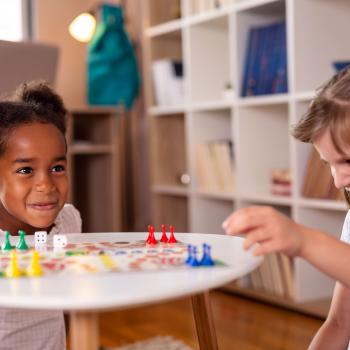
Technical Reading and Writing Using Board Games
Grades
3 - 5
|
Lesson Plan
|
Standard Lesson
Technical Reading and Writing Using Board Games
Students celebrate a novel they have read and get hands-on experience with technical writing by creating a board game based on the novel and writing the instructions for it.
A Picture's Worth a Thousand Words: From Image to Detailed Narrative
Grades
6 - 8
|
Lesson Plan
|
Standard Lesson
A Picture's Worth a Thousand Words: From Image to Detailed Narrative

The old cliche, "A picture is worth a thousand words" is put to the test when students write their own narrative interpretations of events shown in an image.

Dr. Seuss's Sound Words: Playing with Phonics and Spelling
Grades
K - 2
|
Lesson Plan
|
Standard Lesson
Dr. Seuss's Sound Words: Playing with Phonics and Spelling
Boom! Br-r-ring! Cluck! Moo!—Everywhere you turn, you find exciting sounds. Students use these sounds to write their own poems based on Dr. Seuss's Mr. Brown Can MOO! Can You?

Persuasive Writing: What Can Writing in Family Message Journals Do for Students?
Grades
K - 2
|
Lesson Plan
|
Standard Lesson
Persuasive Writing: What Can Writing in Family Message Journals Do for Students?
This lesson engages children in using writing to their families as a persuasive tool to get what they want and need.
Letter Poems Deliver: Experimenting with Line Breaks in Poetry Writing
Grades
3 - 5
|
Lesson Plan
|
Standard Lesson
Letter Poems Deliver: Experimenting with Line Breaks in Poetry Writing
Students explore letter poems and experiment with writing letters as poems, using the placement of line breaks to enhance rhythm, sound, meaning, and appearance.

Writing a Flashback and Flash-Forward Story Using Movies and Texts as Models
Grades
6 - 8
|
Lesson Plan
|
Standard Lesson
Writing a Flashback and Flash-Forward Story Using Movies and Texts as Models
Using the film The Sandlot, students are introduced to the literary devices of flashbacks and flash-forwards. They then write their own stories using those devices.
Breaking Barriers, Building Bridges: Critical Discussion of Social Issues
Grades
6 - 8
|
Lesson Plan
|
Standard Lesson
Breaking Barriers, Building Bridges: Critical Discussion of Social Issues
Through a series of picture book read-alouds, students engage in critical discussion of complex issues of race, class, and gender.
Who's Got Mail? Using Literature to Promote Authentic Letter Writing
Grades
3 - 5
|
Lesson Plan
|
Standard Lesson
Who's Got Mail? Using Literature to Promote Authentic Letter Writing
Students discuss and chart letter elements and write their own letters to adults at school, reinforcing letter-writing skills beyond the classroom lesson.
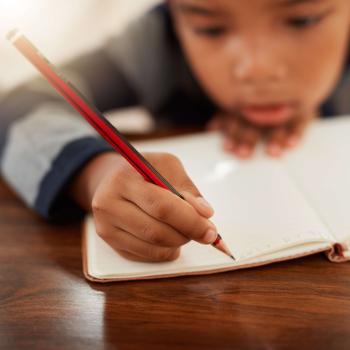
Family Message Journals Teach Many Purposes for Writing
Grades
K - 2
|
Lesson Plan
|
Standard Lesson
Family Message Journals Teach Many Purposes for Writing
This lesson encourages children to explore authentic reasons for writing by writing messages to their family in a family message journal.
Avalanche, Aztek, or Bravada? A Connotation Minilesson
Grades
6 - 8
|
Lesson Plan
|
Minilesson
Avalanche, Aztek, or Bravada? A Connotation Minilesson
Students examine familiar car names for underlying connotations then proceed through a series of steps, increasing their control over language, until they select words with powerful connotations in their own writing.

Graphic Life Map
Grades
6 - 8
|
Lesson Plan
|
Standard Lesson
Graphic Life Map
In this autobiographical prewriting activity, students brainstorm important memories, choose graphics to represent these memories, and then rank the events as low or high points in their lives.
Using Repetition and Picture Cues to Foster Independent Young Readers
Grades
K
|
Lesson Plan
|
Minilesson
Using Repetition and Picture Cues to Foster Independent Young Readers
Kindergartners share their knowledge of letters and sounds in a large group setting, giving teachers an assessment opportunity. Each student contributes a page to make a repetitive classroom book.

Native Americans Today
Grades
3 - 5
|
Lesson Plan
|
Standard Lesson
Native Americans Today
This lesson challenges students' views of Native Americans as a vanished people by asking them to compare their prior knowledge with information they gather while reading about contemporary Native Americans.
Composing Cinquain Poems: A Quick-Writing Activity
Grades
1 - 2
|
Lesson Plan
|
Minilesson
Composing Cinquain Poems: A Quick-Writing Activity
Students use themed graphic organizers to compose cinquain poems on topics common in the early elementary classroom.
Poetry from Prose
Grades
3 - 5
|
Lesson Plan
|
Standard Lesson
Poetry from Prose
Working in small groups, students compose found and parallel poems based on a descriptive passage they have chosen from a piece of literature they are reading.

Get the Reel Scoop: Comparing Books to Movies
Grades
3 - 5
|
Lesson Plan
Get the Reel Scoop: Comparing Books to Movies
Students compare a book to its film adaptation, and then perform readers theater of a scene from the book that they feel was not well represented in the movie version.
Composing Cinquain Poems with Basic Parts of Speech
Grades
3 - 5
|
Lesson Plan
|
Standard Lesson
Composing Cinquain Poems with Basic Parts of Speech
Reinforce student understanding of parts of speech through the analysis of sample cinquain poems followed by the creation of original cinquains.
Fairy Tales from Life
Grades
3 - 5
|
Lesson Plan
|
Unit
Fairy Tales from Life
Picture books provide the basis for an analysis of fairy tale elements before students write their own original tales.

Pagination

  • First page « First
  • Previous page ‹‹
  • …
  • Page 8
  • Page 9
  • Page 10
  • Page 11
  • Page 12
  • Page 13
  • Page 14
  • Page 15
  • Page 16
  • …
  • Next page ››
  • Last page Last »

Explore Resources by Grade

  • KindergartenK
  • 1-2
  • 3-4
  • 5-6
  • 7-8
  • 9-10
  • 11-12

RWT-logo

Powered By NCTE

Footer 1 Menu

  • About
  • Classroom Resources
  • Professional Development
  • Collections
  • Contact Us

Footer 2 Menu

  • National Council of Teachers of English
  • Contribute to RWT
  • FAQs
  • Join NCTE

Footer 3 Menu

  • Legal Notices
  • Privacy Policy
  • Promotional Materials
  • Site Demonstrations

Want to stay in touch with RWT and NCTE? Sign up here!

  • Facebook
  • Twitter
  • Instagram
  • Pinterest
  • YouTube

© NCTE 2026. All rights reserved