ReadWriteThink - Powered by NCTE
  • About
  • Classroom Resources
    • Lesson Plans
    • Teaching Comics
    • Teaching With Primary Resources
    • Calendar
    • Printouts
    • Student Interactives
  • Collections
    • Assessment
    • Authors
    • Booklists
    • Media Literacy
    • Poetry
    • Primary Sources
    • Writing
  • Professional Development
    • Strategy Guides
    • Professional Library
    • Meetings & Events
  • Join NCTE
  • Contact Us
  • About
  • Classroom Resources
    • Lesson Plans
    • Teaching Comics
    • Teaching With Primary Resources
    • Calendar
    • Printouts
    • Student Interactives
  • Collections
    • Assessment
    • Authors
    • Booklists
    • Media Literacy
    • Poetry
    • Primary Sources
    • Writing
  • Professional Development
    • Strategy Guides
    • Professional Library
    • Meetings & Events
  • Join NCTE
  • Contact Us
  • Facebook
  • Twitter
  • Instagram
  • Pinterest
  • YouTube

Breadcrumb

  1. Home

Type

  • Classroom Resources
  • Professional Development

Grades

  • 1 (13)
  • 2 (13)
  • 3 (24)
  • 4 (22)
  • 5 (28)
  • 6 (32)
  • 7 (38)
  • 8 (44)
  • 9 (45)
  • 10 (43)
  • 11 (41)
  • 12 (41)
  • K (7)

Learning Objectives

  • (-) metacognition (40)
  • (-) text structure / story structure (29)
  • collaboration (54)
  • Comprehension (66)
  • critical thinking (70)
  • digital literacy (17)
  • Grammar (15)
  • inquiry / research (30)
  • listening (32)
  • literary analysis (67)
  • Media literacy (14)
  • multicultural awareness (19)
  • multimodal literacy (28)
  • oral communication (30)
  • phonological awareness (11)
  • print awareness (12)
  • reading fluency (11)
  • reading genres (37)
  • Spelling (11)
  • Vocabulary (38)
  • writing genres (84)
  • writing process (71)

Topics

  • (-) poetry
  • arts
  • careers
  • community
  • drama
  • ELL
  • Family
  • fiction
  • Mathematics
  • Mobile Learning
  • nonfiction
  • science
  • seasons / holidays
  • social action
  • social studies / history
  • Sports
  • STEM
Songs of Our Lives: Using Lyrics to Write Stories
Grades
5 - 10
|
Lesson Plan
|
Standard Lesson
Songs of Our Lives: Using Lyrics to Write Stories
Students learn about the life and music of John Lennon, write a short story from their lives integrating lyrics from some of their favorite songs, and create a class book of stories.

Cut up, Cover up, and Come Away with Ideas for Writing!
Grades
6 - 8
|
Lesson Plan
|
Standard Lesson
Cut up, Cover up, and Come Away with Ideas for Writing!
Students rework their forgotten/abandoned drafts by cutting and covering up selected words. By creatively manipulating text, they explore portal writing, a strategy for envisioning a new story or story direction.

Facilitating Student-Led Seminar Discussions with <em>The Piano Lesson</em>
Grades
9 - 12
|
Lesson Plan
|
Standard Lesson
Facilitating Student-Led Seminar Discussions with The Piano Lesson
August Wilson's play The Piano Lesson invites students to ask a number of questions—big and small. Students learn how to create effective discussion questions and then put them to use in student-led discussions.

Sonic Patterns: Exploring Poetic Techniques Through Close Reading
Grades
9 - 12
|
Lesson Plan
|
Standard Lesson
Sonic Patterns: Exploring Poetic Techniques Through Close Reading

Students develop close reading skills connecting sound with sense in the poem "Those Winter Sundays," and write an original text that reflects their new learning.

Writing about Writing: An Extended Metaphor Assignment
Grades
9 - 12
|
Lesson Plan
|
Standard Lesson
Writing about Writing: An Extended Metaphor Assignment
After discussing the poem "The Writer" by Richard Wilbur, students analyze their own writing habits and create an extended metaphor describing themselves as writers.
Put That on the List: Independently Writing a Catalog Poem
Grades
9 - 12
|
Lesson Plan
|
Standard Lesson
Put That on the List: Independently Writing a Catalog Poem
In this follow-up to writing collaborative catalog poems, students write individual catalog poems about what really matters in their lives, based on Carver's poem "The Car."
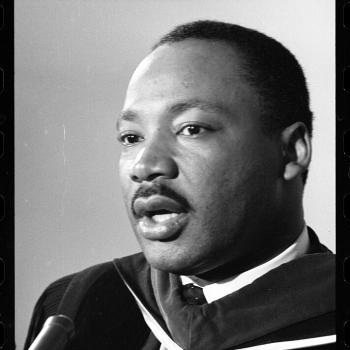
Exploring the Power of Martin Luther King, Jr.'s Words through Diamante Poetry
Grades
9 - 12
|
Lesson Plan
|
Standard Lesson
Exploring the Power of Martin Luther King, Jr.'s Words through Diamante Poetry

Students explore the ways that powerful and passionate words communicate the concepts of freedom, justice, discrimination, and the American Dream in Martin Luther King, Jr.'s "I Have a Dream" speech.
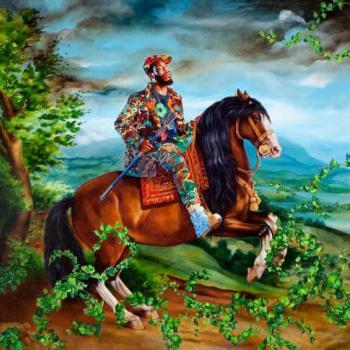
Locating Purpose in Allusion through Art and Poetry
Grades
9 - 12
|
Lesson Plan
|
Standard Lesson
Locating Purpose in Allusion through Art and Poetry
Through this lesson, students will learn how to use the literary term "allusion" in discussing how and why authors and artists draw on and transform subject material.

Talking Poetry with Blabberize
Grades
4 - 8
|
Lesson Plan
|
Standard Lesson
Talking Poetry with Blabberize

Students will be motivated to share their poetry through an online tool the features recording and animation.

Experiencing Haiku Through Mindfulness, Movement & Music
Grades
5 - 8
|
Lesson Plan
|
Unit
Experiencing Haiku Through Mindfulness, Movement & Music
By being present and mindful on nature walks, students write haiku using vivid sensory language; and explore body movement, music and art as visual and kinesthetic representations of their poetry.
Responding to Tragedy: Then and Now
Grades
8 - 12
|
Lesson Plan
|
Standard Lesson
Responding to Tragedy: Then and Now
After reading several poets' personal responses to the September 11th terrorist attacks, students write a "then and now" poem that puts their early memories of the event in conversation with their current understanding of and response to the tragedy.
Active Reading through Self-Assessment: The Student-Made Quiz
Grades
6 - 12
|
Lesson Plan
|
Recurring Lesson
Active Reading through Self-Assessment: The Student-Made Quiz

This recurring lesson encourages students to comprehend their reading through inquiry and collaboration. They choose important quotations from the text and work in groups to formulate "quiz" questions that their peers will answer.

Alliteration in Headline Poems
Grades
6 - 8
|
Lesson Plan
|
Minilesson
Alliteration in Headline Poems
Students will be introduced to the term alliteration and create a headline poem consisting of 25 words that contain at least three examples of alliteration.
Composing Cinquain Poems with Basic Parts of Speech
Grades
3 - 5
|
Lesson Plan
|
Standard Lesson
Composing Cinquain Poems with Basic Parts of Speech
Reinforce student understanding of parts of speech through the analysis of sample cinquain poems followed by the creation of original cinquains.
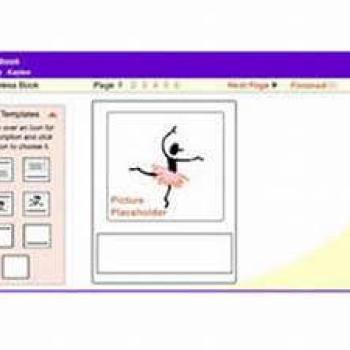
Stapleless Book
Grades
K - 12
|
Student Interactive
|
Writing & Publishing Prose
Stapleless Book

The Stapleless Book can be used for taking notes while reading, making picture books, collecting facts, or creating vocabulary booklets . . . the possibilities are endless!
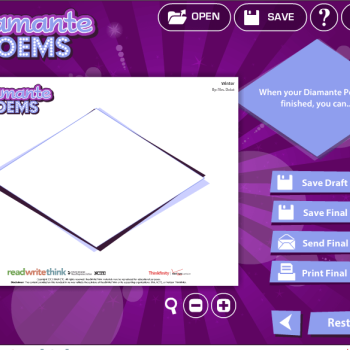
Diamante Poems
Grades
K - 12
|
Student Interactive
|
Writing Poetry
Diamante Poems

This online tool enables students to learn about and write diamante poems.
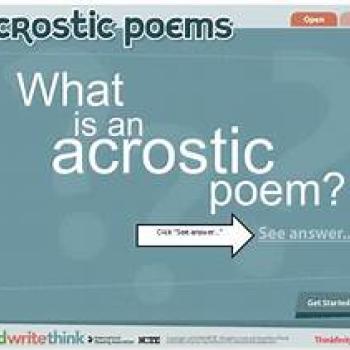
AcrosticPoem
Grades
K - 12
|
Student Interactive
|
Writing Poetry
Acrostic Poems

This online tool enables students to learn about and write acrostic poems. Elements of the writing process are also included.
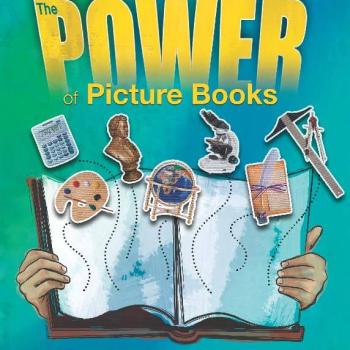
Power of Picture Books, The: Using Content Area Literature in Middle School
Grades
5 - 9
|
Professional Library
|
Book
Power of Picture Books, The: Using Content Area Literature in Middle School
Featuring descriptions and activities for fifty exceptional titles, Mary Jo Fresch and Peggy Harkins offer a wealth of ideas for harnessing the power of picture books to improve reading and writing in the content areas.
RAFT Writing Template
Grades
5 - 12
|
Printout
|
Writing Starter
RAFT Writing Template
Students can utilize this printout to organize their writing as they learn to use the RAFT strategy. This printout enables students to clearly define their role, audience, format, and topic for writing.
Using the Think-Pair-Share Technique
Grades
Grades
K - 12
|
Strategy Guide
Using the Think-Pair-Share Technique
In this strategy guide, you will learn how to organize students and classroom topics to encourage a high degree of classroom participation and assist students in developing a conceptual understanding of a topic through the use of the Think-Pair-Share technique.

Pagination

  • Page 1
  • Page 2
  • Page 3
  • Page 4
  • Next page ››
  • Last page Last »

Explore Resources by Grade

  • KindergartenK
  • 1-2
  • 3-4
  • 5-6
  • 7-8
  • 9-10
  • 11-12

RWT-logo

Powered By NCTE

Footer 1 Menu

  • About
  • Classroom Resources
  • Professional Development
  • Collections
  • Contact Us

Footer 2 Menu

  • National Council of Teachers of English
  • Contribute to RWT
  • FAQs
  • Join NCTE

Footer 3 Menu

  • Legal Notices
  • Privacy Policy
  • Promotional Materials
  • Site Demonstrations

Want to stay in touch with RWT and NCTE? Sign up here!

  • Facebook
  • Twitter
  • Instagram
  • Pinterest
  • YouTube

© NCTE 2026. All rights reserved