In this lesson, students build classroom community by exploring environmental print and a teacher-created display that focuses on a favorite book. They then create and share their own presentations.

Opening the Door for Reading: Sharing Favorite Texts to Build Community

How Does My Garden Grow? Writing in Science Field Journals
Students plant a garden and study its growth using the inquiry process of questioning and exploring. As they research and study, students record their observations in a field journal.

Literature as a Jumping Off Point for Nonfiction Inquiry
Students use text sets to research a topic inspired by a fiction book they have read. A text set is a collection of multiple text genres with a single focus.

As Slippery as an Eel: An Ocean Unit Exploring Simile and Metaphor
Students play with simile and metaphor as they study the ocean and use figurative language to write a class book about it.
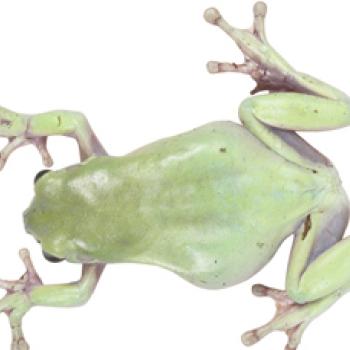
Bridging Literature and Mathematics by Visualizing Mathematical Concepts
During interactive read-aloud sessions, students identify how an author conveys mathematical information about animals' sizes and abilities. They then conduct research projects focusing on the same mathematical concepts.
The History Behind Song Lyrics
Students research the items listed in the song "We Didn't Start the Fire" by Billy Joel, noting their historical relevance, and then document their findings using an online chart.
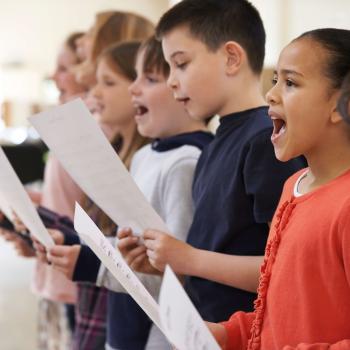
Improving Fluency through Group Literary Performance
Students participate in shared reading, choral reading, and readers theater, using books by Bill Martin, Jr. Repeated readings and literary performances help students with their reading accuracy, expression, and rate.

Weather Detectives: Questioning the Fact and Folklore of Weather Sayings
Students adopt a skeptical stance and become weather detectives who ask "Why?" and "Why not?" as they investigate the history and validity of some common weather sayings.
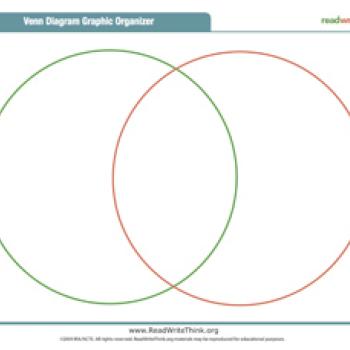
Introducing the Venn Diagram in the Kindergarten Classroom
In this lesson, kindergarten students manipulate hula hoops and real objects, as they use Venn diagrams to problem solve, explore, and record information to share with others.

Creating Question and Answer Books through Guided Research
This series of activities is designed to teach research strategies. Students use KWL charts to guide their inquiry and publish their results in a collaborative question and answer book.

Paying Attention to Technology: Exploring a Fictional Technology
Students complete a short survey to establish their beliefs about technology. They compare their opinions to the ideas in a novel that depicts technology (such as 1984 or Fahrenheit 451).
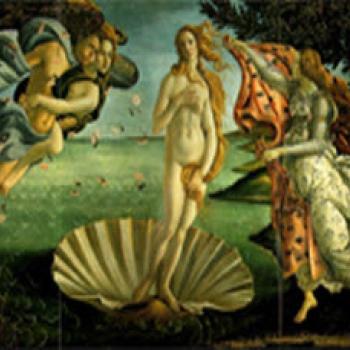
Renaissance Humanism in Hamlet and The Birth of Venus
After reading Shakespeare's Hamlet, students identify, analyze, and explain how elements in Botticelli's painting Birth of Venus and examples from the play illustrate the philosophy of Renaissance Humanism.

Animal Study: From Fiction to Facts
Students listen to fiction and nonfiction read-alouds and explore selected Websites to identify factual information about animals. This lesson focuses on ants, but can be adapted to any animal.

Webcams in the Classroom: Animal Inquiry and Observation
Students observe animals using one of the many webcams broadcasting from zoos and aquariums around the United States and the world, with a focus on observation, discussion, questioning, and research.

Graffiti Wall: Discussing and Responding to Literature Using Graphics
Tap students' desires to doodle and draw by having them create a Graffiti Wall, using graphics to discuss a piece of literature that has been read by the whole class.

Doodle Splash: Using Graphics to Discuss Literature
Students keep a doodle journal while reading short stories by a common author. In small groups, students then combine their doodles into a graphic representation of the text.
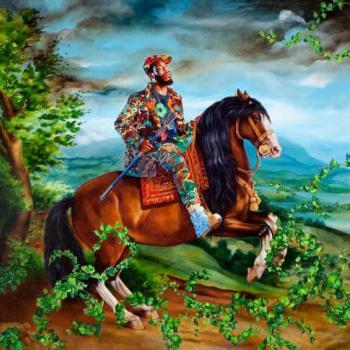
Locating Purpose in Allusion through Art and Poetry
Through this lesson, students will learn how to use the literary term "allusion" in discussing how and why authors and artists draw on and transform subject material.

Blending the Past with Today's Technology: Using Prezi to Prepare for Historical Fiction
To prepare for literature circles featuring historical novels, students research the decades of the 1930s to the 1990s and share their information using Prezi, a web application for creating multimedia presentations.

Animate that Haiku!
Following the traditional form of the haiku, students publish their own haikus using Animoto, an online web tool to produce slideshows that blend text and music.

Glogging About Natural Disasters
After researching various natural disasters, students share their findings with each other using glogs, or through poster presentations.