Through this lesson, primary students strengthen their phonemic awareness while using picture books featuring alliteration as models for their own writing.

Awareness of Alliteration: Enhancing Writing Through Mentor Texts

The Houdini Box: What Did Houdini Hide? Writing Creative Endings
Students are encouraged to understand a book that the teacher reads aloud to create a new ending for it using the writing process.

e-Book Reading and Response: Innovative Ways to Engage with Texts
Students in grades 5 through 12 read and respond to electronic books by using e-book tools and features, including digital note-taking capabilities.

Going Digital: Using e-Book Readers to Enhance the Reading Experience
Students use various tools and features of digital readers to develop vocabulary, support comprehension, respond to text, improve fluency, and enhance the reading experience.

Using Children's Literature to Develop Classroom Community
Conversation and cooperation bring out the best in students when they hold dialogues about their individual strengths, abilities, and talents.

Shared Poetry Reading: Teaching Print Concepts, Rhyme, and Vocabulary
The rhyme and reason behind this lesson is that students will need to develop important reading skills to increase their reading fluency.

Rooting Out Meaning: Morpheme Match-Ups in the Primary Grades
In this lesson, students use morphemesEnglish words that have been formed by combining common word partsto explore word meanings.
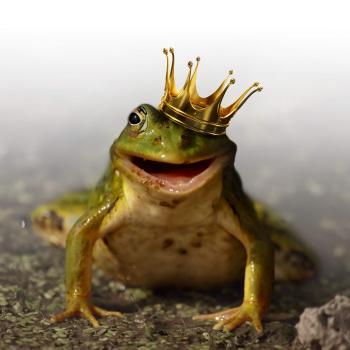
Teaching About Story Structure Using Fairy Tales
From "once upon a time" to "happily ever after," students learn to recognize story structure in fairy tales and create a logical sequence of events when writing original stories.

Buzz! Whiz! Bang! Using Comic Books to Teach Onomatopoeia
This lesson is sure to sizzle, not fizzle, as students use comic strips to find onomatopoetic words, develop a vocabulary list from the words, and discuss why writers use onomatopoeia.

What's in a Mystery? Exploring and Identifying Mystery Elements
Students identify the characteristics of mystery writing, outline a mystery story using a graphic organizer, write and revise their own mystery story, edit each other's work, and share their mysteries.

Inferring How and Why Characters Change
Students will really get into character when they read short stories and analyze the how's and why's of characters' behaviors.

A Directed Listening-Thinking Activity for "The Tell-Tale Heart"
What's that sound? Students participate in a Directed ListeningThinking Activity (DLTA) using "The Tell-Tale Heart," make predictions, and respond in the form of an acrostic poem or comic strip.
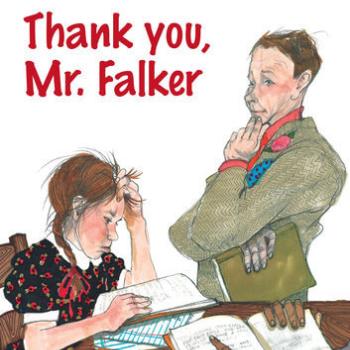
Digging Deeper: Developing Comprehension Using Thank You, Mr. Falker
A read-aloud of Patricia Polacco's Thank You, Mr. Falker helps promote deeper comprehension through questioning to achieve personal connections and discussions of character and theme.

The Pros and Cons of Discussion
Students use a Discussion Web to engage in meaningful discussion of the question, "Are people equal?"

The Connection Between Poetry and Music
Students won't miss a beat in this reading fluency lesson that combines music and poetry.

Word Study with Henry and Mudge
Henry and Mudge is used in this lesson to build students' word recognition through rereading, high-frequency word banks, word studies, and writing.
Solving Word Meanings: Engaging Strategies for Vocabulary Development
Vocabulary gumshoes use context clues and semantics to determine the meaning of unfamiliar words.
Collaborating, Writing, Linking: Using Wikis to Tell Stories Online
Students become online authors in this lesson in which they write and post a short story using wiki technology.

Give Them a Hand: Promoting Positive Interaction in Literature Circles
Students circle their desks as they analyze their own participation within a small group discussion.

Story Elements Alive!
What's in a narrative? Students find out in this lesson in which they explore four narrative elements—setting, characters, problem/solution, and plot, through purpose-driven read-alouds and independent reading.